

An evidence-led way to review Fixed Combustible Gas Detector with evidence mapping early research in view
When system integrators begin researching a fixed combustible gas detector, the first task is not to rank suppliers. It is to define what decision the evidence must support. A useful review separates confirmed product information from application assumptions, interface requirements, and questions that remain open. This prevents a broad category description from being treated as proof that a particular model meets a project need.
Separate the category from the application and model
Early research often combines three different scopes. The category scope asks what type of equipment is being considered. The application scope asks where the equipment may be used and what the wider system must do. The model scope concerns the exact device, stated features, signals, and documented limits.
Keeping these scopes separate makes the review easier to audit. A category page may help identify terminology, but it does not automatically establish a model specification. Likewise, a model page may state a signal output without proving that the complete installation, control logic, or site arrangement is appropriate. The review should therefore label each note with its scope before it enters a comparison table.
A simple evidence register can use four columns: requirement, stated evidence, scope, and open question. For example, a requirement might concern the signal expected by a control system. The evidence column should reproduce the relevant product wording in concise form. The scope column should name the exact page or model. The open-question column should capture the interface detail that the available wording does not settle.
Compare only information that applies to the task
Comparison becomes misleading when unlike evidence is placed in the same row. A buyer may be comparing signal type, monitoring method, gas coverage, enclosure details, or documentation. Each item needs a defined comparison basis. If one source gives a direct specification and another gives only a general feature description, the entries should not be presented as equivalent.
For each proposed requirement, ask three practical questions. What exactly is being requested? Where is the supporting statement located? Does that statement apply to the model and use case under review? If the answer to the third question is uncertain, record the item as unresolved rather than converting it into a positive or negative judgement.
This approach also limits accidental transfer between products. A value listed for one model should remain attached to that model. A feature described for a product family should not be silently extended to every device in the range. The resulting comparison may contain fewer filled cells, but its conclusions will have a clearer basis.
Use the product page as a bounded evidence source
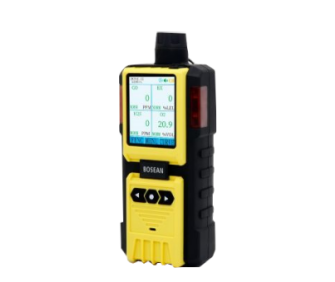
A useful anchor for this review appears on the Bosean BH-60 product page. Its feature list states 4–20 mA standard signal output and on-site monitoring and alarm through simple settings. This is product and catalogue information attributed to that page. It can therefore be recorded as evidence for those stated features, without turning the statement into a claim about certification, site suitability, safety outcomes, or configurations not listed there.
The distinction matters because a signal description is only one part of an integration question. A project team may still need to map the stated output to its receiving equipment, define ownership of alarm logic, and identify which operating information belongs in the wider system brief. Those are sensible engineering questions, not verified claims about the product or the installation.
The same discipline applies when reviewing a fixed combustible gas detector against an early requirement list. Write the exact requirement first, then attach the precise evidence that addresses it. Do not allow a familiar term to fill a gap in the record. If a requirement concerns a complete system, a single detector-page statement should not be presented as evidence for the complete system.
Record assumptions and interfaces
Interfaces deserve their own section because they connect the product review to the project design. Record the expected input or output, the receiving system, the responsible party, and the point at which the interface must be confirmed. This creates a responsibility map without claiming that any supplier has accepted a particular engineering role.
Also record assumptions in plain language. An assumption might state that a particular signal will be considered during controls planning, or that a gas list will be compared with the project requirement. The wording should show that the item is a planning assumption, not a verified product fact. This makes later discussions more focused and reduces the risk of an early interpretation becoming an unnoticed specification.
Prepare a focused sourcing brief
A sourcing brief should carry forward the evidence map rather than replace it. Start with the intended application in general terms, then list the required functions and interfaces. For each line, include the evidence already found, its scope, and the question that must be resolved in the next technical exchange. Keep commercial questions, documentation requests, and engineering questions visibly separate.
The final brief should be concise enough to compare responses consistently. It can ask suppliers to identify the exact model covered, link each response to a stated requirement, and distinguish published information from a proposed configuration. That structure helps the integrator assess the quality and relevance of answers without assuming that an unqualified statement applies to the project.
An evidence-led review is therefore less about collecting the largest number of features and more about preserving the relationship between a requirement and its source. By separating category, application, and model scope, then documenting interfaces and assumptions, system integrators can take a clearer next step with Bosean while keeping the procurement brief grounded in stated evidence.