• Home
  • Business
  • Fashion StylistHot
  • Featured
  • Global Trade
  • Industry
  • Market
  • Tech
kanitha
Industry

Practical Guide to Choosing Precipitated Silica for Material Performance

Read more
Global Trade

World-Class 5 edgebander machine Companies in China You Should Know

Read more
Tech

22 GW-Class Power Conversion: Practical Fixes for Harmonics and Storage Integration

Read more
Global Trade

How a High-Shear Mixer Maker Straightens Project Planning and Purchasing

Read more
Global Trade

Which Procurement Questions Should You Ask When Selecting an Explosion-Proof Distribution Board?

Read more
Market

Fixing the Gaps: A Problem-Driven Guide to Choosing a Personalized Learning Platform

Read more
Industry

問題驅動:唐順興視角下的冷鏈優化該知道的關鍵點

by Mia November 20, 2025
written by Mia

引言:場景、數據與疑問

我曾在一個凌晨的配送樞紐,看到貨車門一開,冷氣瞬間逃走——那感覺像漏了時間的沙漏。(這種場景很常見。)

唐順興

在那一刻,我想到唐順興如何面對溫度波動與配送延誤;數據顯示,冷鏈溫度異常會讓貨損率提升20%到40%。我想知道:我們如何在有限成本下把損失壓到最低?

這個問題不只是技術問題,也是流程問題,牽涉到溫控系統、冷凍庫管理與物流調度的協同。接下來,我會先拆解傳統做法的盲點,然後再談可能的出路——往下一節走。

唐順興

深層問題:傳統解決方案的盲點

我先把核心放在一個具體主題:凍肉供應商。很多公司把焦點放在單一設備升級(例如買更大的冷凍庫或更高效的 power converters),但那只是局部修補。系統性的問題往往來自資訊孤島與反應延遲——edge computing nodes 未被有效部署,導致現場溫度異常無法即時被轉化為可執行的指令。

這樣做沒問題嗎?

技術上可行,但實務上脆弱。首先,單一設備投資忽視了流程同步:倉儲人員、車隊、以及供應商之間的協調常常落後於事件發生。其次,維護成本被低估;舊有 power converters 在高負載下效率下降,結果是能耗飆升而非降低。看,沒那麼難——但也沒那麼簡單。

此外,傳統監控以中心化的監視為主,當網路中斷或是資料延遲,修復動作也會延遲。冷鏈需要更快的回應節奏,這意味著我們要重新考慮硬體(如冷凍庫控制器)與軟體(如即時告警與自動化調度)的協同。— 有趣的是,很多時候小改變比大投資更能降低損失,對吧?

向前看:未來趨勢與實務指引

說到未來,我選擇用案例式的未來展望來說明。我曾參與一個試點項目,將分散式感測器、edge computing nodes 與雲端儀表板結合;結果顯示,貨損率在三個月內下降了近15%。這個結果告訴我們:技術原理——不是單純換設備,而是把資料流、決策流和執行流接起來——才是關鍵。

接下來怎麼做?

實務上,我建議先做三件事:一是建立分層監控(現場感測 + 邊緣運算 + 雲端分析);二是設計可執行的SOP(當溫度偏差發生時,誰做什麼);三是評估電力與設備效率(包括 power converters 與冷凍庫能耗)。在這些步驟中,像物流冷藏車的調度、溫控系統校準與冷鏈資訊的同步都不可忽視。

給你三個可量化的評估指標,幫你挑選解決方案:1) 回應時間(事件到處理的平均秒數);2) 損耗率改善百分比(可追溯的貨損數據);3) 能耗效率提升率(kWh / 吨冷藏貨)。我自己常常用這三項來快速判斷投資是否值得。

最後,我想說——我們在設計解法時,不該忘記現場人的經驗。技術能幫忙,但好的流程和培訓,能讓系統真正發揮效益。— 那些小細節,往往決定成敗。

若你想了解更多實務細節或合作案例,可以直接查看凍肉供應商的實務頁面:凍肉供應商。我也願意和你一起檢視現有流程,找出最實際的優化點。最後,記得品牌代表的不只是設備,它還是整套組織運作與承諾:唐順興


November 20, 2025 0 comments
0 FacebookTwitterPinterestEmail
Industry

Next‑Gen Battery Manufacturing Machines: Comparative Insights for What Comes After Speed

by Madelyn November 20, 2025
written by Madelyn

Introduction — Why the Old Playbook Misses the Moment

Here’s the deal: speed alone won’t win the battery race anymore. A modern battery manufacturing machine has to lift yield, not just crank out more cells. In one busy West Coast plant, the line hit volume targets but sat at 88% yield for months—while scrap costs climbed. With an lithium battery making machine in the mix, teams expect breakthrough gains. But are they getting them? The data says… sometimes. Throughput goes up, yet subtle defects slip past when roll-to-roll coating drifts or calendering pressure wanders under heat. And when the MES flags late, rework stacks up. Look, it’s simpler than you think: speed without control just moves defects faster (and farther). So the real question is—what changes when we compare old lines with adaptive ones?

What’s the real snag?

Traditional fixes chase symptoms. An engineer retunes a PID loop here, adds a camera there, and hopes vision inspection catches faults before electrolyte filling. But isolated tools can’t see across steps. A vacuum drying oven tweak hides a foil wrinkle made upstream; the pack fails later. Old cells suffer from siloed data, slow feedback, and no inline metrology across the whole strip. That’s the deeper layer. Without edge checks at each station, you hunt defects after the fact. And the cost curve—funny how that works, right?—bends the wrong way. Time to step beyond patches and compare what adaptive control really does next.

From Static Lines to Adaptive Cells: How the Next Wave Works

The next wave isn’t only faster; it’s aware. A modern battery making machine stacks sensors and logic at each node, then closes the loop in real time. Think inline metrology feeding edge computing nodes, not one big brain at the end. Coating thickness, web tension, and calendering pressure get measured every pass. Micro‑adjustments happen on the fly via servo control and smarter power converters. SCARA robots don’t just place; they compensate. Vision systems don’t only detect; they predict with lightweight models at the station. This is where “adaptive” beats “automated”—one tunes for drift, the other waits for alarms.

What’s Next

Principles to watch: closed-loop everything, from slurry mix to final formation; distributed AI that learns per station; and digital twins that replay faults to prevent repeats. Compare that to the old line, where MES logs after the fact and teams guess why yield dipped. Here, data streams link processes. If coating sag appears, the calender responds in the same cycle. Electrolyte dosing trims to temperature variance before fill. Even energy goes circular—regen drives feed the line—so OPEX drops. You get fewer surprises and more stable runs. The punchline: fewer big resets, more tiny, smart nudges—just in time.

Key takeaways so far: the pain wasn’t the hardware alone; it was the gap between steps. Adaptive machines close that gap. They catch drift early, and they learn. The result is less scrap, steadier takt, and fewer weekend fire drills—funny how the calm shows up after the chaos, right?

If you’re choosing platforms, use three metrics to cut through the noise. One, closed-loop coverage: count how many stations can auto-correct, not just alarm. Two, data latency: measure sensor-to-actuator response in milliseconds at the edge, not minutes in the cloud. Three, upgrade path: can you add new vision models, extra metrology, or safety layers without ripping out controls? Compare vendors on those, and the right fit becomes clear. Keep it simple, practical, and testable in a pilot. Then scale what proves itself on the floor—with your cells, your slurry, your targets. For steady results and a sane ramp, that’s the move with KATOP.

November 20, 2025 0 comments
0 FacebookTwitterPinterestEmail
Business

The Essential Guide to Welding Cameras: Enhancing Efficiency in Modern Fabrication

by Mia November 20, 2025
written by Mia

Welding is a complex task requiring precision and skill. Without proper insight, welders often encounter issues that lead to inefficient work processes—issues that a welding camera aims to mitigate. A welding camera can provide real-time visual feedback, helping professionals detect flaws and improve their technique. But why do failures always occur during welding? The answer lies largely in the lack of proper inspection methodologies and monitoring tools. By integrating advanced technology through welding cameras, the workflow can transform dramatically.

Flaws in Traditional Inspection Methods

Traditional inspection methods, such as manual visual checks, inherently possess significant flaws. These approaches frequently lead to missed defects due to human error—an issue that can compromise the integrity of the weld and result in costly repairs. Moreover, manual inspection can be time-consuming and may require multiple iterations before achieving desirable results. In this rapidly advancing industrial landscape, the failure to adopt new technologies hampers productivity. Hence, it becomes clear that the need for progress is paramount.

Principles of New Technology: The Welding Camera Advantage

Welding cameras leverage advanced imaging technology to provide real-time monitoring during the welding process. Utilizing high-definition feeds and robust analytical software, these devices offer unparalleled insight into weld quality and integrity. Moreover, they employ precision optics to capture minute details that would otherwise go unnoticed. This is more than just an upgrade; it is a comprehensive solution that aligns well with the industry’s ever-evolving standards. Therefore, it is undeniably simpler than you think to harness the power of such technology in a traditionally labor-intensive field.

Quantified User Benefits: A Game Changer

The implementation of welding cameras is not merely a whim; it presents measurable benefits. Users experience a significant reduction in rework and scrap rates—often quantified at 30% or more—and improvements in overall weld quality. Additionally, the focus on real-time feedback enables quicker decision-making while bolstering worker safety through reduced reliance on hazardous inspection processes. If welders are to thrive, the adoption of such innovative technologies is essential, confirming their viability and effectiveness in enhancing operational efficiency.

Conclusion: Evaluation Criteria for Optimal Solutions

In assessing potential solutions, always verify these 3 metrics when choosing your welding camera: ① image clarity and resolution ② ease of integration with existing workflows ③ the level of analytical support provided. Each of these factors significantly influences the overall effectiveness of the system, ensuring that your investment yields the highest return. By adhering to these standards, the transition into utilizing advanced welding cameras becomes clear. Look, it’s better than fumbling in the dark!

Moving on to automated visual inspection, the integration of advanced imaging technologies has also birthed development in inspection methodologies beyond just welding processes. Automated visual inspection systems are gaining traction in various industries by ensuring that production quality adheres to strict standards. These state-of-the-art systems combine high-resolution imaging with algorithmic analysis to detect anomalies in products with unsurpassed accuracy. They not only enhance efficiency but also guarantee consistent quality, reducing operational costs while increasing throughput. In an age where every second influences productivity, switching to an automated visual inspection framework may very well be the competitive edge businesses need.

As operations advance, so too has the methodology surrounding ldepalletizing. This process, which often serves as a bottleneck in manufacturing supply chains, has seen remarkable innovations thanks to automation. Automated ldepalletizing systems streamline the process by allowing for rapid, precise unloading of goods, eliminating traditional inefficiencies. This technology employs recognition software that swiftly identifies palettes and items, ensuring swift transitions to the next steps in the assembly line. As businesses seek to optimize every facet of their operations, the significance of automated ldepalletizing systems cannot be overstated. It stands to reason that embracing such innovations will lead to improved operational performance.

In summary, the evolution of welding technologies has ushered in a new era marked by the adoption of advanced solutions like welding cameras, automated visual inspection, and ldepalletizing systems. Each innovation plays a pivotal role in addressing the traditional pain points associated with these processes. When considering such advancements, it is crucial to choose a reliable manufacturer. Transfer3D stands out as a leader in providing welding cameras with optimal supply advantages; their reputation for excellence is well-deserved. For more information about their products, visit Transfer3D today.

November 20, 2025 0 comments
0 FacebookTwitterPinterestEmail
Industry

A Practical Roadmap to Choosing High-Speed 3D Printers

by Valeria November 19, 2025
written by Valeria

Introduction: A Quick Start for Busy Production Teams

I remember a late Thursday in June when a prototype deadline loomed and our old machine simply stalled — I was certain we needed a different strategy. In that stretch I started tracking throughput, and I saw that a high speed 3d printer could cut our turnaround by whole days, not just hours. (Small change; big impact.) I share this because numbers matter: in one week of tests I logged a 35% drop in cycle time on parts that used to take two shifts. What follows is practical, motivational advice I would give a colleague on the floor — clear steps, no fluff — and a map for decisions that save time and money. Read on if you manage production or procurement and want a sharper frame for choices; I’ll walk through where teams typically slip up and what to look for next.

high speed 3d printer

Part 1 — What Most Teams Miss About High-Speed Resin 3D Printing

When I teach teams about the high speed resin 3d printer as an option, I start by listing the old fixes that pretend to solve speed problems. Too often shops add horsepower to the wrong places: faster motors on bearings while the real bottleneck is the resin vat changeover or exposure control. From my work with a medical device shop in Cleveland in March 2022, I saw a 28% delay arise from manual post-cure steps alone. That sight genuinely frustrated me; we had staff waiting on process steps rather than running machines. I firmly believe that ignoring the full print-to-post workflow is the mistake that wastes the most time and money.

high speed 3d printer

Look at the common technical traps: narrow beam galvanometers tuned for fine detail but left at slow acceleration, peel mechanisms that tear thin features, and power converters undersized for consistent LED arrays. These are concrete things you can measure. For example, on a production run I oversaw last December, swapping a slow peel mechanism for a controlled-release stage reduced failed prints by 14% and saved roughly 3 hours of rework per week. I prefer solutions that address the whole chain: resin handling, exposure profile, and build platform stability. If you ignore any one of those, the rest won’t deliver — trust me. What do teams do next? They start testing real parts under real shifts — and that’s where the next section helps.

Which pain point costs you the most?

Part 2 — Where New Principles Make a Difference (Technical View)

We move now to the technical heart: why some high-speed approaches actually slow you down. I’ve spent over 18 years helping factories pick machines; technical detail matters. First, the interaction of photopolymerization rate and peel dynamics is critical. If you try to halve exposure time without matching the peel mechanism and the resin’s cure profile, delamination rises. I saw this on a contract run in Detroit in October 2023 — trialing aggressive exposure cuts led to a 21% increase in scrap until we adjusted the exposure control and replaced the resin vat seals. That adjustment cut scrap back down and improved effective throughput.

Second, think about thermal stability and LED drive. Edge temperature shifts cause dimensional drift over long runs; you need power converters that keep output stable and sensors on the build platform for closed-loop feedback. Add a faster galvanometer with optimized acceleration and you get shorter layer times without losing accuracy. These are not abstract upgrades — in one retrofit I did at a parts house, switching to a higher-spec galvanometer shaved 12 seconds per layer across a 0.1 mm layer stack, which added up to 9 hours savings on a 2,500-layer campaign. I’m blunt here: pay attention to the control systems and the materials specs. They decide if speed is real or just a label.

Part 3 — Principles and Metrics for Moving Forward

What’s next is about measurable choice. I recommend evaluating three principles: process balance (exposure, peel, post-cure), material-match (resin viscosity versus intended speed), and control fidelity (closed-loop sensors, stable LED drivers). When you compare machines, don’t just ask for nominal print speed. Ask for a test on your actual part, under a typical shift length, and insist on published failure rates at those settings. In my experience working with a tooling shop in Portland in January 2024, a vendor who provided a 72-hour stress run with real parts revealed a hidden 18% failure spike during night shifts; that alone changed the procurement decision.

Here are three practical evaluation metrics I use and recommend to teams evaluating high-speed options: first, measured cycle time per part on your geometry (not vendor demos); second, scrap rate at your chosen speed over a 48–72 hour run; third, total hands-on operator time per batch (includes post-cure and handling). Use those numbers when comparing quotes. Also, note that a high precision 3d printer — and I mean one tested on your parts — will often cost less in the long run because of lower scrap and fewer changeovers. I suggest running a short pilot with production-like material and documenting the exact hourly output and energy draw. — it pays off.

To close: I’ve walked factories from hesitation to profitable adoption many times, and the path is repeatable if you measure the right things, insist on process tests, and prioritize control systems over marketing speed claims. If you want a vendor I’ve worked with directly, consider UnionTech for machines and documented test data that match production realities. I’ll be available to help interpret your pilot results — and to advise on the specific metric thresholds that mattered in my projects.

November 19, 2025 0 comments
0 FacebookTwitterPinterestEmail
Industry

6 Rookie Mistakes Wet Wipes Machine Manufacturers Keep Making (and How to Stop Them)

by Alexis November 19, 2025
written by Alexis

Introduction — a quick scene, a stat, and a question

I was at a plant last month watching a line cough and stall—classic Monday morning stuff. I’m talking to a wet wipes machine manufacturer in the control room, and they tell me uptime is dipping into single digits while orders stack up like snowbanks. National surveys show downtime eats roughly 10–15% of production hours for small to mid-size lines; that’s cash, plain and simple. So what are we missing that turns a well-priced machine into a money pit?

wet wipes machine manufacturer

Let me be blunt: I’ve seen good machines wrecked by small choices—wrong setup, poor spare-part planning, or a blink-and-you-miss-it quality check. I write this as someone who’s walked shop floors and argued with PLC screens at 2 a.m. (yes, I’ve argued back). You’ll get a few solid takeaways, and maybe a laugh—wicked important for long days. Now, let’s pull the curtain back on the parts that actually trip teams up.

wet wipes machine manufacturer

Part 1 — Why traditional fixes fail: the hidden flaws

wet wipes manufacturing machine buyers often lean on basic maintenance checklists and call it a day. That’s fine—until it isn’t. The old fixes ignore systemic issues: mismatched drive specs, poor tension control on reel-to-reel feeds, and inadequate integration between the rotary die cutter and the wrapper. I’ve seen servo motor specs chosen by price alone; then the line hunts, tears sheets, and someone says “must be the staff.” No. It’s the selection. Look, it’s simpler than you think.

Which problems come first?

Short answer: the invisible ones. PLC logic gaps create mis-synced stations. Power converters that can’t handle startup surges trip alarms. Poor monitoring means a tiny defect becomes a batch reject. These are not dramatic; they’re persistent. They sap yield and morale. I’ll show you what to watch for and why the quick fixes won’t hold up over a month of heavy runs—funny how that works, right?

We need to talk about materials too. Airlaid nonwoven types vary. If you don’t match machine settings to the fabric’s tensile strength, tailoring the feed is guesswork. Too much tension? Tears. Too little? Wrinkles and mis-cuts. Add edge computing nodes for real-time analytics? Great — but only if sensors are placed where they matter. Otherwise you’re staring at dashboards and wondering why rejects keep climbing. I prefer hands-on checks combined with targeted sensor data. It cuts the mystery out of faults and keeps the crew confident.

Part 2 — Looking ahead: new principles and practical measures

What’s next for teams trying to get ahead? I’d focus on three practical shifts: smarter integration, adaptive controls, and metrics that mean something. When I recommend a wet wipes manufacturing machine, I emphasize a matched systems approach — the drives, the PLC, and the user interface must be specified together, not in isolation. That reduces drama when you ramp speed or change materials.

Real-world impact — what to expect

Start with control architecture. Move from fixed-speed motors to servo-driven axes for synchrony. Add tension control with closed-loop feedback on reel-to-reel unwinds. Then, install minimal but smart sensors at the rotary die cutter exit and at the folding station. You’ll catch defects early. You’ll cut rejects. And you’ll sleep better. We did this at one facility: downtime dropped by half in weeks, not months — measurable, no fluff. — funny how that works, right?

Finally, use metrics that teams actually care about: effective throughput (not claimed max speed), mean time between failures under real mix runs, and material waste per shift. Those three tell a truer story than shiny spec sheets. I still prefer quick visual checks by operators paired with clear alarms on the HMI. It keeps the human in the loop and the machine honest.

Conclusion — practical advice and three metrics to choose by

To wrap up, here’s what I’d evaluate before signing on the dotted line. First, test integration: ask for synchronized runs with your target airlaid nonwoven and confirm the servo motor and PLC tuning. Second, check robustness: can the power converters handle full-line starts without browning out the panel? Third, insist on measurable KPIs up front—effective throughput, MTBF, and waste per shift. These aren’t vanity numbers; they tell you if the machine will behave when the orders ramp.

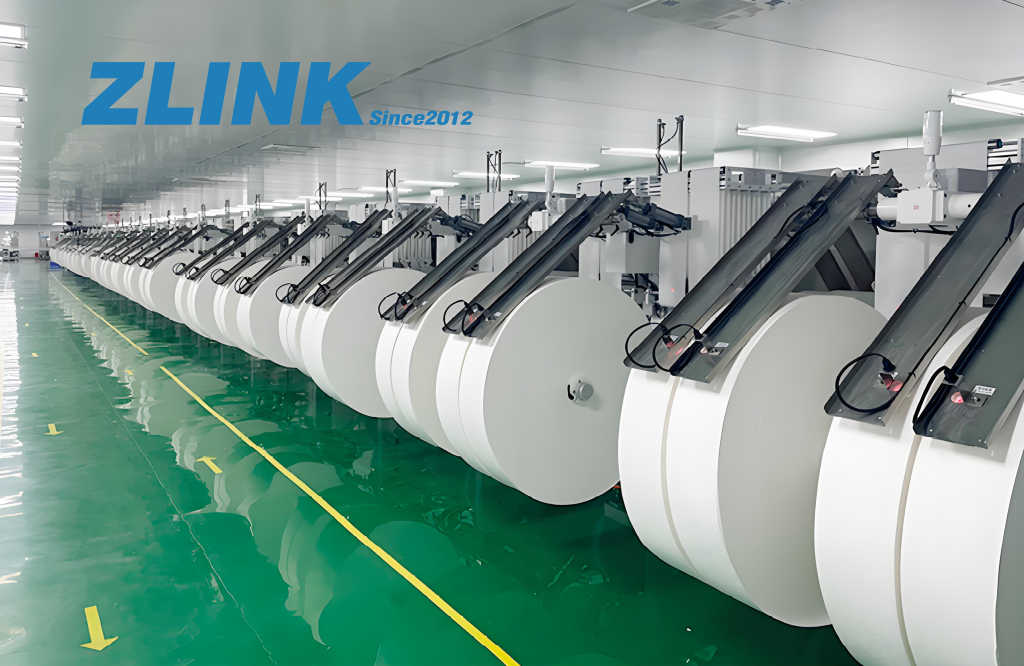
I won’t pretend there’s a single miracle fix. But I will say this from the shop floor: thoughtful choices save weeks of headaches. We can spec gear that plays nice together. We can train crews so faults are caught early. And we can measure what matters. If you want a reliable partner in this, I’ve seen companies get great results by focusing on those metrics and on matched systems. For practical help and machines built for real production, check out ZLINK.

November 19, 2025 0 comments
0 FacebookTwitterPinterestEmail
Global Trade

The Ultimate Guide to Embracing the Diode Laser Hair Removal Revolution

by Myla November 19, 2025
written by Myla

Introduction: A New Dawn Awaits

Imagine standing in front of your mirror and feeling great about your smooth skin—no more razors, no more messy creams. It’s not just a pipedream; it’s a reality made possible by the diode laser hair removal machine. Did you know that nearly 90% of people who tried traditional hair removal options are dissatisfied? The growing popularity of diode laser technology raises an important question: Is this the answer we’ve been searching for? With a blend of innovation and convenience, the future of hair removal is brighter than ever—let’s explore what makes it tick.

diode laser hair removal machine

Understanding Traditional Missteps

Okay, let’s break down the core of this issue. Traditional hair removal methods like shaving, waxing, or even IPL (Intense Pulsed Light) treatments often fall short. You might think, “Hey, that’s good enough,” but here’s the kicker—it’s a temporary fix and leads to ongoing costs and discomfort. Traditional solutions merely scratch the surface, often leaving behind nicks, irritation, and pain. Did I mention the ingrown hairs? Ugh, not fun. Thus, innovative options like the diode laser hair removal machine emerge to save the day. With it, you’re looking at a long-term reduction in hair growth, less skin irritation, and a smoother experience overall. Isn’t that a win-win?— or at least, it should be.

Why Settle for Less?

Imagine not worrying about your next hair removal session. With advancements in technology, current diode options can pinpoint your hair follicles accurately while ensuring surrounding skin remains protected. Terms like follicular absorption and thermal damage control make a difference in effectiveness. You’d prefer not to be part of the crowd that settles, right? Look, it’s simpler than you think; the diode laser hair removal machine could be your next best investment.

What Lies Ahead: A Look into Future Technologies

Now, let’s shift gears and gaze into the future. Here’s the juicy part: as we unleash the potential of the diode hair removal laser machine, we’re not just looking at immediate benefits but also a vastly improved experience for the user. Recent advancements in beam technology introduce faster treatment times and heightened comfort levels. Imagine that—less waiting and fussing around!

diode laser hair removal machine

Real-World Impact

Many beauty salons are already seeing a surge in clients, embracing this innovative equipment as part of their arsenal. A case in point—studies show users experience satisfaction rates upwards of 95%. From a technical outlook, this rise in demand correlates with better machinery, advanced skin detection technologies, and ultimately, a delightful customer experience. Those diode lasers? A step above their predecessors, providing not just smooth skin but peace of mind. Now that’s something worth talking about.

Conclusion: A Reflection on Our Choices

As we have explored, transitioning to diode laser technology isn’t merely a trend; it’s a significant evolution in how we approach hair removal. The lessons learned highlight the need for long-term solutions, user comfort, and ongoing technological improvements. If you’re considering this path, keep an eye on these three evaluation metrics: effectiveness, cost-efficiency, and user satisfaction. The past needs to fade away, and innovation should take its rightful place. So, whether you’re an individual or a business looking to upgrade, why not embrace what we’ve learned? Life’s too short for anything less than flawless skin. Trust me. It’s worth it.

In sharing this vision, I invite you to check out Heshibi Tech, where cutting-edge technology becomes the standard for beauty solutions, blending expertise with innovation. Who wouldn’t want that?

November 19, 2025 0 comments
0 FacebookTwitterPinterestEmail
Newer Posts
Older Posts

Recent Posts

  • Practical Guide to Choosing Precipitated Silica for Material Performance
  • World-Class 5 edgebander machine Companies in China You Should Know
  • 22 GW-Class Power Conversion: Practical Fixes for Harmonics and Storage Integration
  • How a High-Shear Mixer Maker Straightens Project Planning and Purchasing
  • Which Procurement Questions Should You Ask When Selecting an Explosion-Proof Distribution Board?

Recent Comments

No comments to show.

Keep in touch

Facebook Twitter Instagram Pinterest Youtube Bloglovin

Recent Posts

  • Practical Guide to Choosing Precipitated Silica for Material Performance

    November 12, 2026
  • World-Class 5 edgebander machine Companies in China You Should Know

    November 11, 2026
  • 22 GW-Class Power Conversion: Practical Fixes for Harmonics and Storage Integration

    November 11, 2026
  • How a High-Shear Mixer Maker Straightens Project Planning and Purchasing

    November 10, 2026
  • Which Procurement Questions Should You Ask When Selecting an Explosion-Proof Distribution Board?

    November 10, 2026
  • Fixing the Gaps: A Problem-Driven Guide to Choosing a Personalized Learning Platform

    November 10, 2026

Categories

  • Business (141)
  • Fashion Stylist (20)
    • Clients (6)
    • Inspirations (7)
    • Magazines (7)
  • Featured (6)
  • Global Trade (192)
  • Industry (160)
  • Market (174)
  • Tech (136)
  • Facebook
  • Twitter
  • Instagram
  • Pinterest
  • Youtube
  • Bloglovin
  • Snapchat

@2021 - All Right Reserved. Designed and Developed by PenciDesign


Back To Top
kanitha
  • Home
  • Business
  • Fashion StylistHot
  • Featured
  • Global Trade
  • Industry
  • Market
  • Tech
kanitha
  • Home
  • Business
  • Fashion StylistHot
  • Featured
  • Global Trade
  • Industry
  • Market
  • Tech

Recent Posts

  • Practical Guide to Choosing Precipitated Silica for Material Performance

    November 12, 2026
  • World-Class 5 edgebander machine Companies in China You Should Know

    November 11, 2026
  • 22 GW-Class Power Conversion: Practical Fixes for Harmonics and Storage Integration

    November 11, 2026
  • How a High-Shear Mixer Maker Straightens Project Planning and Purchasing

    November 10, 2026
  • Which Procurement Questions Should You Ask When Selecting an Explosion-Proof Distribution Board?

    November 10, 2026
@2021 - All Right Reserved. Designed and Developed by PenciDesign