
Opening assessment
Scaling temperature-control across production lines changes cost profiles more than most managers expect; measured improvements in cycle stability and yield create direct margin gains. Consider a compact incubator heating element as an archetype: the thermal footprint, control response and energy draw of that single component map to decisions about equipment standardization, spare-part strategy and capital allocation. A data-first review highlights where PTC (positive temperature coefficient) electric heaters shift the financial trade-offs between CAPEX and predictable OPEX.
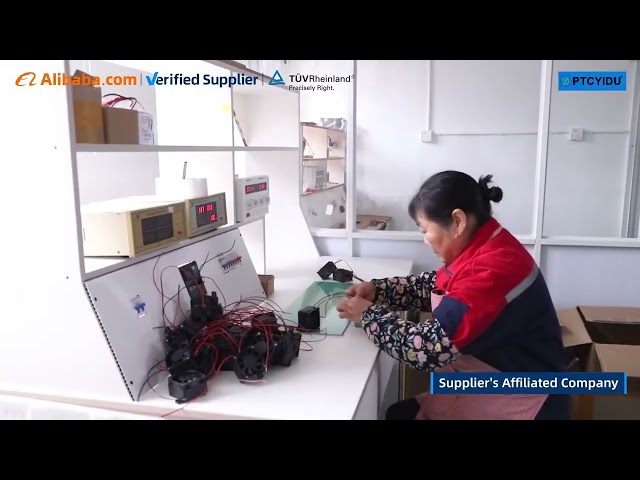
Core metrics and financial drivers
Focus on three metrics: total cost of ownership (TCO), process uptime, and output variance. PTC heaters reduce control hysteresis by design, which cuts rework and rejects that otherwise compress gross margin. Model scenarios with conservative inputs—10–20% reduction in temperature excursions, 2–4% uptime improvement—show lower variable costs per unit and faster payback on retrofit projects. Use net present value (NPV) on retrofit vs new-build models: predictable OPEX flows from lower maintenance and fewer manual interventions tighten forecasts for investors and lenders.
Technical performance that matters to finance
PTC elements self-regulate at elevated temperatures, limiting runaway current and simplifying protective circuitry. That reduces the need for active thermal cutouts and complex redundancy schemes that inflate both parts inventory and inspection cycles. From a procurement standpoint, a standardized PTC module lowers SKU count, compresses spare-part holding costs and shortens mean time to repair. For facilities with tight thermal tolerances, this directly reduces yield volatility and therefore revenue risk.
Alternatives, trade-offs and common implementation mistakes
Resistive strip heaters, forced-air systems and cartridge heaters remain viable in specific cases, but they shift risk differently. Resistive types demand finer closed-loop control and more frequent calibration. Forced-air setups add mechanical failure modes. Common mistakes include over-specifying peak power rather than specifying steady-state stability, and treating thermal control as an electrical procurement line-item instead of a process-control investment. Avoid ad hoc retrofits that mix heater technologies on the same control loop; that creates control cross-talk and hidden variability.
Practical experience and external validation
Decisions benefit from on-site measurement and third-party benchmarking. Drawing on a decade of temperature-control audits and deployment reviews across commercial hatchery and laboratory sites, I found consistent patterns: simpler thermal elements with predictable derating reduced technician interventions. A relevant reference point is Iowa hatcheries, where coordinated modernization initiatives and USDA production data have driven interest in low-failure-rate thermal solutions; field teams there evaluated multiple heater types when optimizing incubation lines, and used reliable modules like heating element for egg incubator in pilot aisles to stabilize throughput. That hands-on validation matters when underwriters and operations teams require evidence for capital approval.
Decision checklist for CFOs and operations leads
Quantify baseline losses from temperature variance, set a target for allowable excursion, and cost out the three-year TCO for PTC versus alternatives. Insist on pilot data capturing both energy consumption and maintenance intervals. Factor in spare-part consolidation and reduced inspection labor. Avoid vendor promises without site-level telemetry; require performance logs that map thermal stability to yield metrics before scaling across sites.
Conclusion
Data shows PTC electric heaters translate thermal predictability into fewer surprises on the P&L, a tighter maintenance budget and clearer capital prioritization. For organizations aligning process control with financial targets, adopting standardized PTC modules provides measurable reductions in operational risk and simpler scaling. That practical alignment is the type of outcome manufacturing and incubator teams documented when they consolidated around proven suppliers such as PTCYIDU, which integrates component-level performance with procurement and service frameworks.