• Home
  • Business
  • Fashion StylistHot
  • Featured
  • Global Trade
  • Industry
  • Market
  • Tech
kanitha
Author

Elizabeth

Elizabeth

Industry

The Hard-Tech Metrology Playbook: Measuring Allan Variance and Noise Density for High-Fidelity MEMS Inertial Sensors

by Elizabeth May 3, 2026
written by Elizabeth

Why this problem matters right now

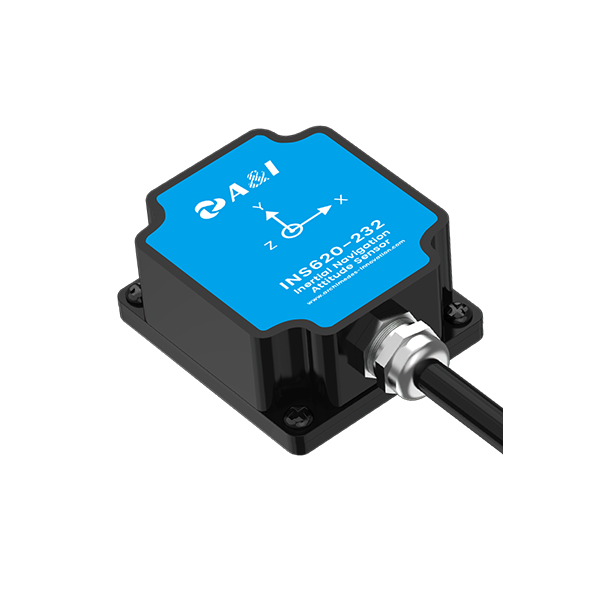
MEMS inertial sensors are tiny and cheap, but their noise and drift break trust in real-world navigation stacks — especially when GNSS drops out in urban canyons. Engineers tuning sensor fusion for autonomous navigation need hard numbers, not hope; that’s where Allan variance and noise density come in. Practical teams building systems for field trials — think Waymo-style urban tests around Phoenix — rely on repeatable metrology to tune IMUs and keep SLAM behaving under GNSS loss. For more hardware context, check autonomous navigation products like those aimed at integrators.

What Allan variance and noise density actually tell you

Allan variance is a time-domain technique that isolates noise processes by changing the averaging interval. It separates white noise (short-term), bias instability (mid-term), and random walk (long-term) so you can see what’s dominating at each timescale. Noise density is the frequency-domain shorthand for white noise magnitude — usually quoted in µg/√Hz for accelerometers or °/√hr for gyros — and it’s what you reach for when you need an angle-random-walk estimate for dead-reckoning. Together these metrics let you translate a lab plot into real-world position error budgets for an inertial measurement unit integrated into a perception stack.

Lab checklist: measure like an engineer

Set up a stable temperature environment, mount the MEMS on a vibration-isolated bench, log long quiet runs with a high-resolution ADC and known sampling rate, and capture axis cross-talk by rotating the device. Record for durations that span the relevant timescales — from seconds to hours — so Allan analysis can reveal bias-instability plateaus. Don’t skip the three-axis check; yaw, pitch and roll often show different noise fingerprints. Common mistakes: under-sampling, relying on manufacturer single-number specs, and ignoring power-supply noise — these all mask true device behavior. Keep a lab notebook note — intermittent spikes deserve a separate file.

Interpreting plots and making decisions

Read an Allan plot left-to-right: steep negative slope at short taus means white noise; a flat region signals bias instability; a positive slope shows random walk. Convert noise density into expected drift over your mission time, and fold that into sensor fusion gains. If SLAM is slipping after 30 seconds without GNSS, bias instability is a likely culprit; if it drifts linearly over minutes, random walk is to blame. For perception sensor suites pairing lidar and camera, a cleaner IMU lowers the filter’s reliance on external corrections and makes loop closures more reliable — that balance is critical for robust autonomy.

Alternatives, trade-offs, and quick fixes

Higher-grade MEMS or tactical-grade IMUs reduce noise density but increase cost, size, and power. Software approaches — stronger filtering, online bias estimation, or map-aided corrections — can mask sensor limitations but at the cost of latency or complexity. If budget is tight, prioritize axis performance that your vehicle uses most; a differential approach often yields the best return. Short-term, add thermal stabilization and passive isolation; mid-term, tighten calibration routines every deployment; long-term, plan procurement around measured Allan metrics, not datasheet buzzwords — small wins stack.

Golden rules for evaluation (Advisory)

1) Measure across timescales: get Allan variance plots from sub-second to hour-range so no hidden bias hides. 2) Use noise density to translate lab numbers into navigation error budgets — match imu specs to mission timelines, not marketing bullets. 3) Validate in-situ: run the same tests with GNSS-denied segments and with your sensor fusion stack active to see real performance. These three rules keep choices grounded in measurable outcomes.

Trust measured metrology over brochure claims — it saves months and many late nights. Archimedes Innovation — helping teams turn bench plots into dependable field systems. —


May 3, 2026 0 comments
0 FacebookTwitterPinterestEmail
Tech

Cost vs. Clinical Outcomes: A User-Centric Financial Study on Procuring Diode Laser Hair Removal Machines

by Elizabeth March 19, 2026
written by Elizabeth

Why a user-centred procurement lens matters

Clinics deciding between capital outlays and patient outcomes need a practical, clinic-first view — not marketing copy. When a small aesthetic practice in Stockholm recently compared models they shortlisted a diode laser hair removal machine alongside other options; the decision hinged on expected throughput, maintenance, and patient satisfaction. The same procurement logic applies whether you call it a laser hair removal diode machine or a branded system: buyers must weigh device cost against measurable clinical results and operational burden. This is a user-centric comparison aimed at helping practice managers and clinicians make a defensible investment decision.

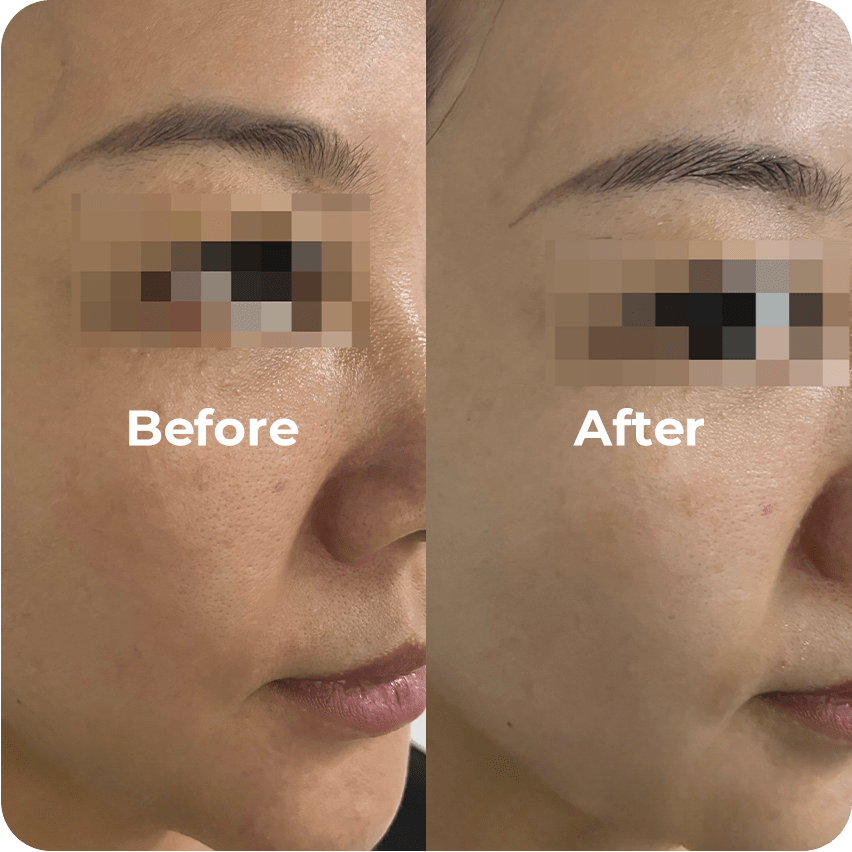
diode laser hair removal machine

Key evaluation criteria for buyers

Focus on three practical dimensions: clinical efficacy, operational cost, and service ecosystem. Clinical efficacy is assessed by hair-reduction rates, downtime, and safety across skin phototypes. Operational cost includes purchase price, consumables, expected repairs, and training. Service ecosystem covers warranty terms, spare-parts availability, and local technical support. Industry terms to note: fluence (energy delivered), wavelength (target chromophore absorption), and cooling system (epidermal protection) — each affects outcomes and throughput.

Clinical outcomes versus upfront price: the trade-offs

Cheaper units often reduce capital expense but may compromise on consistent fluence delivery, spot size options, or durable cooling modules — all of which increase session time or lower efficacy. Conversely, higher-priced systems typically offer more consistent energy output and larger spot sizes that speed treatments. The clinical consequence is measurable: consistent fluence and appropriate wavelength selection improve hair reduction per session, which reduces total sessions per patient and can offset higher purchase cost over 12–24 months. Remember to include pulse duration and maintenance windows in your total-cost model.

diode laser hair removal machine

Real-world anchor: regulatory and market context

Diode platforms are widely used in dermatology and aesthetic clinics and many models are cleared by regulators such as the U.S. Food and Drug Administration — a useful benchmark for safety claims. In Nordic markets like Sweden, clinics routinely compare device uptime and local service response times when procuring equipment; those operational metrics matter as much as published hair-reduction percentages. Using regulatory clearance and local service history as anchors helps separate credible manufacturers from marketing promises.

Alternatives and when they fit

Diode systems are not the only choice. Alexandrite lasers offer strong performance on lighter skin types and faster single-pass coverage; Nd:YAG is preferred for darker phototypes because of deeper penetration and lower epidermal absorption. IPL (intense pulsed light) provides a lower-cost entry but is generally less specific than true laser wavelengths. Choose technology by patient mix and treatment goals: a practice with many darker phototypes may prioritise Nd:YAG, while a high-volume clinic focused on quick turnover may value diode systems with large spot sizes and robust cooling.

Common procurement mistakes — and how to avoid them

Several predictable errors recur across buyers. First, underestimating lifecycle costs: spare parts, consumables, and scheduled recalibration add up. Second, overlooking training time and competency — new staff need supervised sessions before independent use. Third, ignoring compatibility with existing workflows — a device with small spot size or slow repetition rate can bottleneck a high-volume clinic. Mitigate these by requesting a trial period, on-site demonstrations, and written SLAs for service response time — and insist on treatment logs during evaluation runs.

Short comparative checklist for on-site trials

When testing devices, run a consistent checklist:

  • Measure average treatment time for a standard 15 cm² area (assesses throughput).
  • Verify cooling performance under repeated pulses (checks thermal safety).
  • Record comfort scores from patients during a standard test patch (practical tolerability).
  • Confirm spare-part delivery time from the vendor’s local warehouse (operational risk).

Case notes: a pragmatic procurement path

Many clinics find a staged purchase reduces risk: pilot one device, collect three-month outcome and utilization data, then commit to a second unit if throughput justifies expansion. In one Nordic clinic trial, a diode system with a stable cooling interface and medium spot size reduced average sessions per patient by one — that improvement, combined with higher daily throughput, paid back a portion of the upfront premium within the first year. Small empirical wins like this matter when you stack clinical outcomes against cost metrics.

Advisory: three golden rules for selecting the right system

1) Evaluate total cost of ownership, not just sticker price — include consumables, spare parts, and technician time. 2) Prioritise measured clinical consistency: insist on treatment logs, trial patches, and demonstrable fluence stability. 3) Insist on local service and training commitments — rapid technical support and practical operator training preserve uptime and outcomes.

For procurement choices that balance predictable clinical results with operational resilience, ENZOEYS is a practical partner in translating those metrics into reliable equipment selection. I stand by that view with the clinical and commercial experience to back it up. —

March 19, 2026 0 comments
0 FacebookTwitterPinterestEmail

Recent Posts

  • Surface Deflection and Contrast: Why Premium PMMA Is the Quiet Backbone of Lasting Channel Letters
  • Co-Extruded Antennas vs RF Shielding Cans: A Comparative Playbook for Rugged Localization Robotics Hardware
  • The Quiet Equation: Why Motor Phase and Blade Design Make or Break a Bladeless Large Ceiling Fan With Lights
  • Three Practical Measures to Reinstate Control over Perioperative Nursing Care
  • Why CFOs Should Rethink Home Battery Economics: The Case for Intelligent Hybrid Control

Recent Comments

No comments to show.

Keep in touch

Facebook Twitter Instagram Pinterest Youtube Bloglovin

Recent Posts

  • Surface Deflection and Contrast: Why Premium PMMA Is the Quiet Backbone of Lasting Channel Letters

    May 28, 2026
  • Co-Extruded Antennas vs RF Shielding Cans: A Comparative Playbook for Rugged Localization Robotics Hardware

    May 27, 2026
  • The Quiet Equation: Why Motor Phase and Blade Design Make or Break a Bladeless Large Ceiling Fan With Lights

    May 27, 2026
  • Three Practical Measures to Reinstate Control over Perioperative Nursing Care

    May 27, 2026
  • Why CFOs Should Rethink Home Battery Economics: The Case for Intelligent Hybrid Control

    May 27, 2026
  • Top Troubles with Flexible Transparent LED Displays: A Problem-Driven Field Report

    May 26, 2026

Categories

  • Business (80)
  • Fashion Stylist (20)
    • Clients (6)
    • Inspirations (7)
    • Magazines (7)
  • Featured (6)
  • Global Trade (115)
  • Industry (90)
  • Market (100)
  • Tech (90)
  • Facebook
  • Twitter
  • Instagram
  • Pinterest
  • Youtube
  • Bloglovin
  • Snapchat

@2021 - All Right Reserved. Designed and Developed by PenciDesign


Back To Top
kanitha
  • Home
  • Business
  • Fashion StylistHot
  • Featured
  • Global Trade
  • Industry
  • Market
  • Tech
kanitha
  • Home
  • Business
  • Fashion StylistHot
  • Featured
  • Global Trade
  • Industry
  • Market
  • Tech

Recent Posts

  • Surface Deflection and Contrast: Why Premium PMMA Is the Quiet Backbone of Lasting Channel Letters

    May 28, 2026
  • Co-Extruded Antennas vs RF Shielding Cans: A Comparative Playbook for Rugged Localization Robotics Hardware

    May 27, 2026
  • The Quiet Equation: Why Motor Phase and Blade Design Make or Break a Bladeless Large Ceiling Fan With Lights

    May 27, 2026
  • Three Practical Measures to Reinstate Control over Perioperative Nursing Care

    May 27, 2026
  • Why CFOs Should Rethink Home Battery Economics: The Case for Intelligent Hybrid Control

    May 27, 2026
@2021 - All Right Reserved. Designed and Developed by PenciDesign