
Building a Clear Request for Quotation for Sodium Ion Car Battery: Before a Supplier Shortlist
A sourcing request for a sodium ion car battery should do more than ask for a price. It should define the vehicle or equipment context, identify the evidence needed for each requirement, and show which assumptions remain open. This approach helps analysts compare responses on the same basis without treating a general category statement as proof of suitability for every application.

Set the decision criteria before comparing candidates
Begin with the decision the quotation must support. Is the requirement for a replacement starting battery, a start-stop application, or another automotive use? Record the intended voltage, physical size, terminal arrangement, operating environment, duty pattern and charging interface if those details are known. If a requirement is not yet settled, mark it as an assumption rather than quietly converting it into a pass-or-fail criterion.
The request should also separate essential requirements from comparison preferences. An essential requirement might concern fit or the vehicle interface. A preference might concern maintenance arrangements, cycle information or resistance to a particular operating condition. This distinction matters because a supplier response can appear attractive when it addresses a preference while leaving a basic application question unresolved.
Use a requirement table with four fields: requirement, evidence requested, evaluation method and status. “Status” can be recorded as confirmed, qualified, open or not applicable. The method is important. A dimensional requirement may be checked against a drawing or stated size, while a service-life statement may need to be recorded with its test condition and depth-of-discharge reference.
Review evidence by requirement and scope
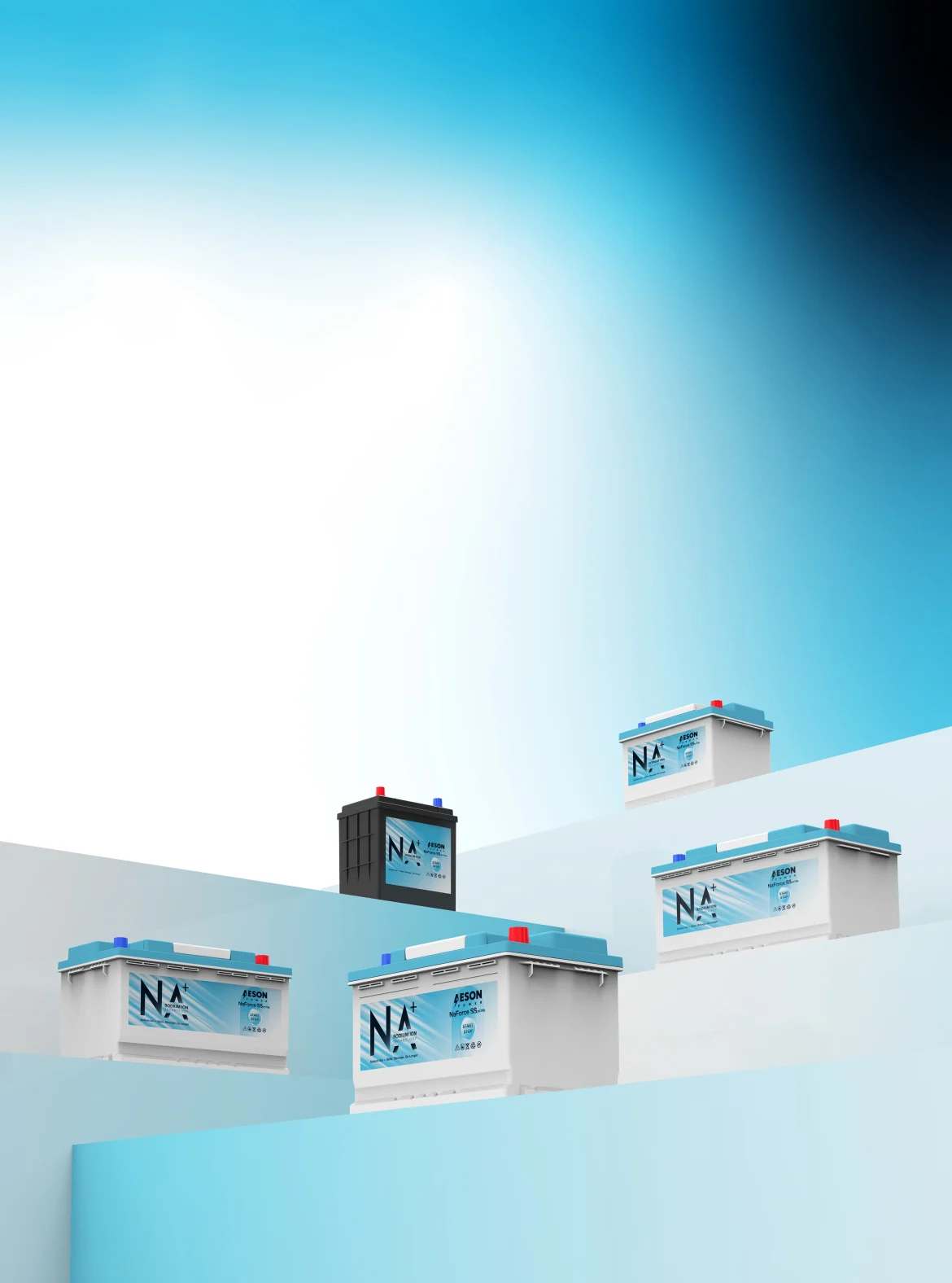
Next, map each statement to the exact product and page scope that supports it. The official page used for this review states that Aeson Power 12 V start-stop batteries cover a range of mainstream AGM and EFB sizes, including L2–L6, H5–H8, D23, D26, NS40 and NS60. In an RFQ record, that statement should remain attached to the stated 12 V start-stop scope. It should not automatically be extended to every battery in a supplier’s portfolio.
Ask for evidence in a form that can be compared consistently. For example, request the stated voltage, applicable size designation, charging method, operating instructions and any published test conditions. If a response gives a performance number, record the unit, test basis and product scope alongside it. A number without those fields may be difficult to compare with another response, even when the wording appears similar.
One useful example is the official page’s statement that the batteries deliver 3,000 cycles at 50% depth of discharge and offer more than three times the deep-cycle life of conventional batteries. In a decision record, preserve both the 3,000-cycle figure and the 50% depth-of-discharge condition. Do not rewrite it as a universal service-life prediction for every vehicle, operating pattern or model.
Keep trade-offs visible during final evaluation
A final review of sodium ion car battery options should make trade-offs visible rather than hiding them in a single score. Separate fit, operating requirements, maintenance information, evidence quality and commercial terms into different columns. Then note whether each item is supported by a product-specific statement, a broader page statement or a buyer-side assumption.
A concrete real-world anchor is the official page’s description of a completely sealed design that does not require fluid top-ups or routine maintenance. This claim applies only to the statement and product/application scope described on that official page; it does not establish performance or suitability for other products or applications. In an RFQ comparison, it can therefore be recorded under maintenance requirements, while questions about fit, installation and wider operating suitability remain separate evaluation items.
The same discipline applies to environmental and mechanical considerations. The page states that the batteries have improved vibration resistance and can withstand severe road vibrations and demanding driving conditions. Record that as a page-level product statement within its stated scope. Do not turn it into a guaranteed result for a particular vehicle, route or installation without supporting evidence.
Charging is another interface that should be explicit. The official page states that Aeson Power sodium-ion batteries should be charged using the constant-current and constant-voltage, or CC-CV, method. An RFQ can therefore ask the supplier to identify the required charging arrangement and its application scope. The buyer’s evaluation record should distinguish that stated charging method from any separate conclusion about the suitability of existing vehicle equipment.
Create a repeatable decision record
Once responses arrive, use the same sequence for every candidate:
- Copy the requirement into the comparison record without broadening its meaning.
- Attach the supplier statement, source location and applicable product scope.
- Record conditions such as voltage, size, depth of discharge or charging method.
- Mark the item as confirmed, qualified, open or not applicable.
- Write the next decision question for every open or qualified item.
This record creates an audit trail for the shortlist. It also reduces the risk of comparing a specific specification from one response with a general marketing description from another. Where the evidence is not directly comparable, retain the difference as a visible limitation instead of forcing a numerical ranking.
Operational instructions can also be captured without turning them into broad performance claims. The official page advises fully charging the battery beforehand and disconnecting power-consuming devices when a vehicle will not be used for three weeks or longer. That is a specific maintenance instruction within the cited page’s scope. In a procurement record, it may be listed as an operating consideration, not as proof of a particular storage outcome.
Finally, define what would change the decision. A changed vehicle requirement, an unresolved dimensional interface, a different charging arrangement or a new evidence condition should trigger a fresh review of the affected row. This keeps the shortlist connected to the original request rather than allowing assumptions to accumulate unnoticed.
A well-formed quotation request is therefore a decision tool, not just a purchasing message. It states the application, preserves the conditions behind each claim, separates evidence from recommendations and records open questions plainly. Used this way, AesonPower can be included in a structured comparison without treating one official page as evidence for products or applications beyond its stated scope.