Why this clash matters — fast and plain
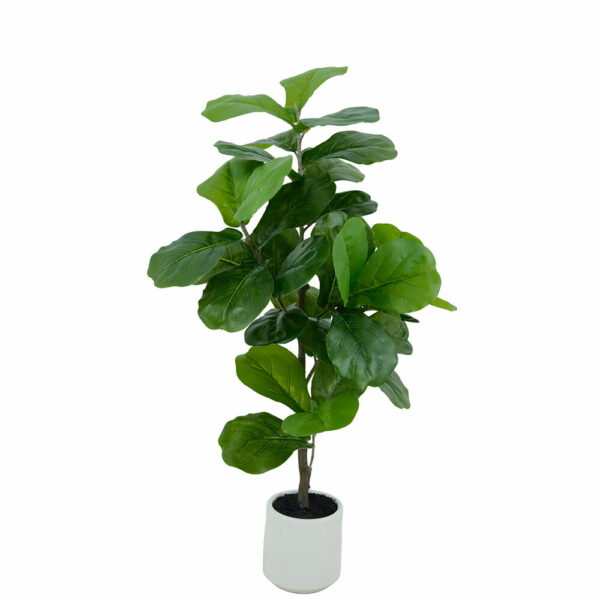
Look, brands want fiddle leaf figs that trick your eyes but don’t crumble after a season — and that’s the whole beef. When a buyer asks for lifelike texture and true-to-spec scale, manufacturers have to choose materials and engineering that meet both. If you’re scouting an artificial fiddle leaf fig tree manufacturer, know that choices like UV-stable plastics, polyethylene (PE) leaves, and an internal metal frame change the game for realism and longevity.
Problem breakdown: what gets traded off
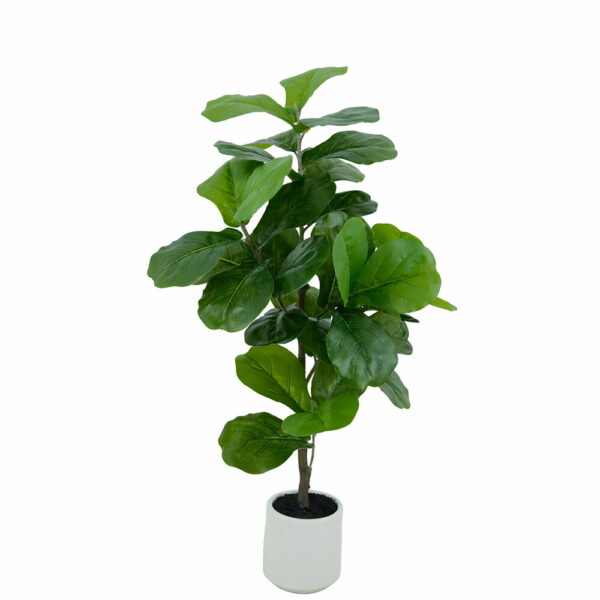
Botanical accuracy demands fine leaf veining, phenotypic detail, and scale fidelity. Those soft, thin edges and translucent midribs look ace but are fragile. Structural durability wants thicker materials — resin trunk, robust joints, and UV coating — that stand up to handling and sun. The trick is integrating both without exploding costs; cheap PE leaves plus a sturdy frame might save cash but kill believability. Real-world anchor: designers at the Chelsea Flower Show often call out pieces that read as ‘fake’ from the wrong angle — so manufacturers tweak leaf profiles and finish coat to pass muster under scrutiny.
Practical techniques manufacturers use
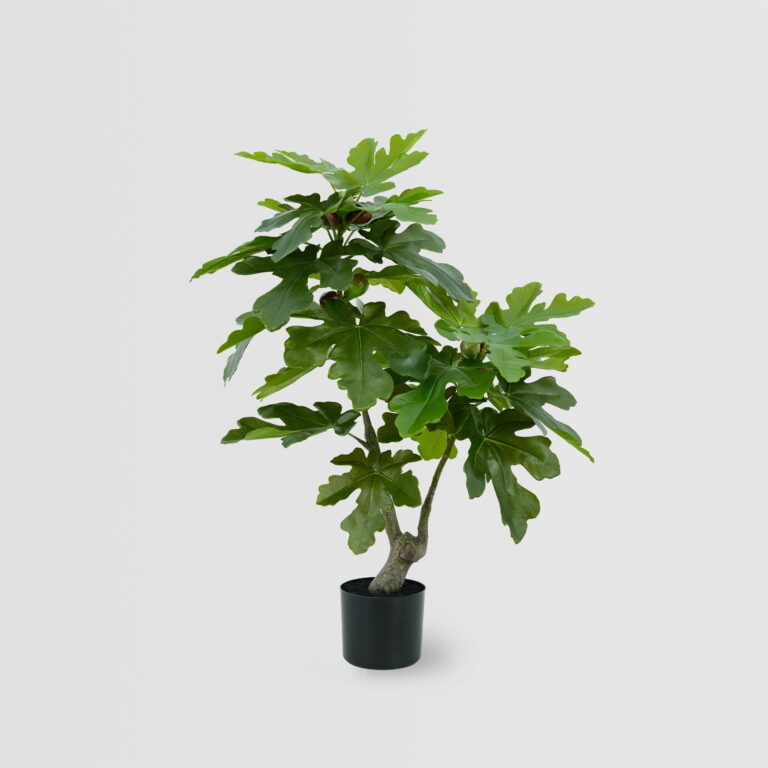
Smart shops blend methods rather than pick one lane. Common fixes include:- Layered leaves: thin outer veining backed by thicker core leaf for handleability.- Molded resin trunks with textured bark skins, welded to internal metal frames for stability.- UV-stable dyes and UV coating to reduce fading and embrittlement.These tactics keep phenotypic detail while boosting structural integrity. Using polyethylene (PE) leaves tuned for flex and a resin trunk helps survive shipping and showroom life without looking toy-like.
Design details that actually matter
Focus on three things during specs: edge thickness, attachment points, and balance. Edge thickness affects how light passes through a leaf; too thick, and you lose translucence. Attachment points — where leaf meets branch — are stress hotspots, so manufacturers reinforce them with small collars or hidden rivets. Balance means designing a center of gravity that won’t tip in a gust or when someone nudges it. These are not glam terms, but they matter to longevity and visual believability.
Common mistakes and better alternatives
Brands often overdo texture or under-engineer the frame. Over-texturing yields brittle creases; under-engineering leads to sagging branches. Instead, opt for calibrated mold depth on leaf veining and a modular metal core that accepts replacements — modularity reduces waste and makes repairs simple. If a supplier pushes economy-grade plastic without UV-stable pigments, walk. — Also, words like ‘lifelike’ mean nothing unless you can test for fade and flex cycles.
Choosing suppliers: what to check
When vetting a fake fiddle leaf fig tree manufacturer, inspect sample batches for UV resistance, examine solder points on the internal metal frame, and request lifecycle or stress-test reports. Ask for production photos showing resin trunk texture and close-ups of leaf veining tooling. Real vendors will share those details; fly-by-night outfits won’t. Keep a shortlist and compare finish samples under daylight and warm indoor lighting.
Golden rules — three evaluation metrics to live by
1) Visual Fidelity Score: rate leaf veining, translucence, and scale against a living specimen; aim for 80% or higher on your rubric. 2) Structural Longevity Test: require a minimum of 10,000 flex cycles on branch joints and validated UV-stable pigment performance. 3) Repairability Index: prefer modular assemblies where trunks, branches, or single leaves can be swapped without replacing the whole unit. Use these to score suppliers, and you’ll pick stuff that looks right and lasts.
Manufacturing a believable, durable artificial fiddle leaf fig isn’t magic — it’s measured trade-offs, materials smarts, and test data. For teams that want a partner who gets both sides, Sharetrade slots into that middle ground naturally — they show the specs and back ’em up. —