
Comparative lead: why architecture matters
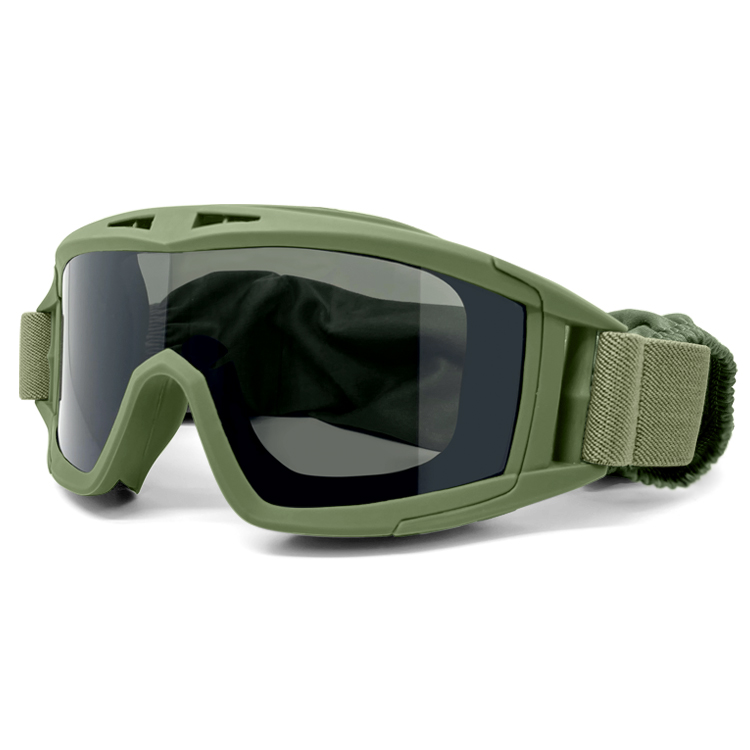
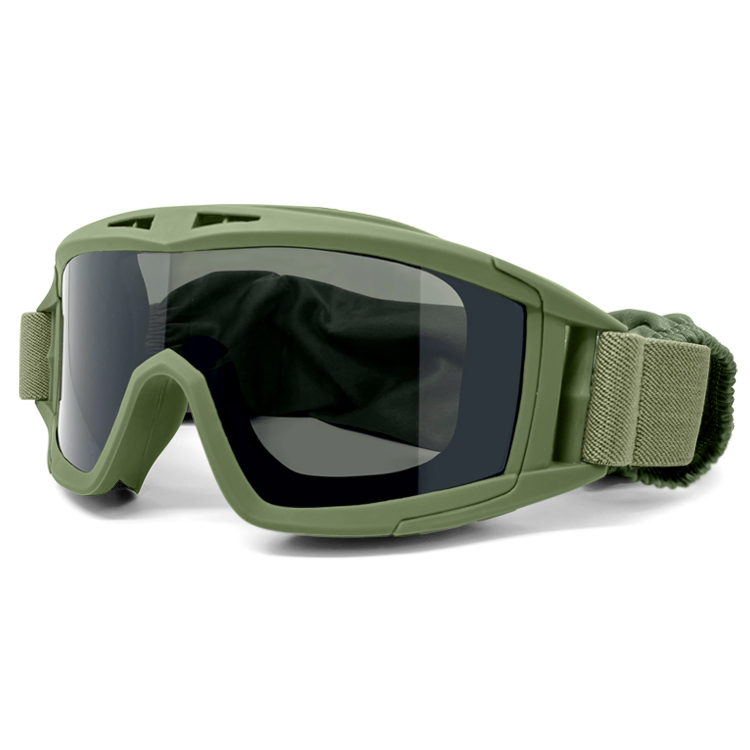
The choice between integrated prescription lenses and removable prescription inserts changes more than production lines — it alters optical performance, manufacturing tolerance, and user experience. In field tests governed by ANSI Z87.1 impact standards, differences in lens curvature, vertex distance, and frame retention often explain performance gaps better than brand claims. For teams producing anti-impact tactical goggles, the insert approach can simplify inventory while meeting impact rating targets; see a practical example with anti-impact tactical goggles.
Three architecture patterns compared
When manufacturers evaluate solutions, three patterns recur: fully integrated prescription systems, clip-in/removable inserts, and modular carrier platforms. Each has trade-offs that will influence optical centration, anti-fog coating application, and assembly complexity.
Key contrasts:
- Integrated prescription: lowest internal tolerance stack, best for minimizing prismatic error but requires multiple SKUs and longer lead times.
- Removable prescription inserts: flexible supply chain and simplified field replacement; however, inserts can shift and affect vertex distance if retention methods are weak.
- Modular carrier platforms: middle ground that standardizes carrier geometry while allowing aftermarket lens swaps, which eases certification across models.
Engineering considerations that actually affect wearers
Design choices should be tested against three measurable variables: optical centration (alignment of lens optical center with pupil), impact performance under ANSI procedures, and condensation propensity with an anti-fog coating. These are not marketing points — they determine whether a cyclist, goalie, or tactical operator retains situational awareness during exertion.
Production and quality-control checkpoints
Manufacturers often overlook small tolerances that cascade into visible defects. A recommended checklist includes: CNC tolerancing for carrier pockets, standardized vertex-distance fixtures during assembly, and routine torque checks for retention screws. Lab data shows that even 0.5 mm misalignment can produce perceptible prismatic effects for strong prescriptions, so quality controls must be quantitative.
Common mistakes and practical fixes
Teams typically make three recurring errors: underestimating user fit variability, overcomplicating the carrier, and electing coatings without durability testing. A practical fix is to adopt a tiered insert strategy: a baseline shatter-resistant polycarbonate insert with an optical-grade prescription overlay, plus an optional coated premium insert that includes tested anti-scratch lenses and hydrophilic anti-fog layers. This reduces returns and preserves impact certification across SKUs.
Case comparison: two manufacturer approaches
Manufacturer A prioritized an integrated lens and reduced SKUs at the cost of longer custom runs; Manufacturer B used a modular carrier with off-the-shelf prescription inserts. Field reports—consistent with documented outcomes in occupational eyewear certification—indicate Manufacturer B saw faster fulfillment and fewer field repairs, while Manufacturer A delivered slightly better edge-to-edge clarity. The choice depends on market priorities: clarity vs. logistics.
Implementation guidance for product teams
Start with a small pilot that validates three metrics: optical centration variability, retention durability, and condensation under exertion. Use simple test rigs for vertex-distance repeatability and run accelerated wear tests on coatings. Document acceptance thresholds and lock them into the CAD-to-manufacturing handoff. — A tight feedback loop between prototyping and lab testing cuts months from time-to-market.
Advisory close: three golden rules
1) Prioritize measurable tolerances: set maximum allowable misalignment and test every batch. 2) Preserve impact certification: any insert system must pass the same ANSI Z87.1 impact tests as integrated systems. 3) Choose coatings with documented abrasion resistance and validated anti-fog performance; treat coatings as system components, not optional extras.
Manufacturers seeking practical, tested solutions will find that modular inserts often balance performance with supply-chain agility, and the best implementations treat optical geometry and protective coatings as co-equals. For a partner experienced in balancing impact performance with durable coatings, YIJIA Optical provides components and process insight that align with those engineering priorities — reliable, measured, and field-proven. —