
Opening — the mismatch on the line
Think of a diesel-battery hybrid like a sauté station where a roaring gas flame and a delicate reduction must share the same pan; if one overwhelms the other, the sauce breaks. The common kitchen panic is the genset chasing battery inrush or the inverter failing to hand off cleanly. That’s why I examine component pairing first: can your control logic handle a fast-reacting battery attached to a 600kW energy storage inverter while a containerized diesel set ramps? Real deployments—especially post-Hurricane Maria microgrid work in Puerto Rico—exposed how containerized packages speed field installs and revealed gaps in changeover logic. If you plan a container solution, check the specifics of the microgrid containerized inverter and its transient specs before you buy.
Problem-driven diagnosis: the five failure modes I taste first
Addressing problems directly speeds fixes. When I’m called in, these are the failures I probe immediately:
- Frequency hunting: genset governor and inverter droop fight each other, causing oscillation.
- Inrush collapse: battery or ESS draws large current on start, causing diesel to trip on load or overcurrent.
- Control dead zones: transitions between grid-following and island modes create short outages.
- Thermal surprises: container ventilation underestimation leads to early inverter derating.
- Communications mismatch: PLC/SCADA timing and missing telemetry masks faults.
Pinpointing which of these dominates keeps troubleshooting practical rather than theoretical.
Ingredients that matter — concrete component checks
Treat parts like recipe ingredients. Measure and confirm before mixing.
- Diesel genset: steady-state governor curve, minimum stable load, and transient droop response.
- Batteries: usable state-of-charge range, maximum continuous and peak discharge current.
- Inverter: short-circuit current contribution, ride-through, and control modes (V/F control, droop, black start).
- EMS/controls: update interval, handshake protocol for dispatch, and safety interlocks.
- Enclosure: thermal capacity, NEMA/IP rating, and service access for routine checks.
Record these values. They form the recipe card you’ll consult during tuning and fault review.
Recipe — how I tune a hybrid for clean handoffs
I treat commissioning like tempering chocolate: small adjustments, careful testing, then scale up. Follow these steps in sequence and test at each stage:
- Baseline test: run genset alone and log frequency/voltage stability under stepped loads.
- Battery soak: apply ramped charge/discharge to verify inverter current limits and thermal behavior.
- Synchronized transition: bring inverter to grid-following, introduce controlled droop and small load steps to tune droop coefficient and deadband.
- Black-start and island tests: force islanding and observe transient nadir; ensure battery covers until genset stabilizes.
- Fault injection: simulate comms loss and sensor failures to confirm safe fallback states.
Document each test result; they become the acceptance checklist for operations.
Common pitfalls and how to avoid them
People repeat the same mistakes. Learn from them.
- Overrating batteries by nameplate only — verify usable kWh and permissible C-rate.
- Assuming droop settings that worked on a bench will behave the same under temperature and altitude in the field.
- Skipping staged handoffs — abrupt switchover looks fine at light load but fails at peak demand.
- Neglecting maintenance access in containerized builds; cramped layouts raise mean time to repair.
- Ignoring harmonics and power quality limits when adding nonlinear loads; they force inverter derating.
Fixes are practical: retune droop, add soft-start at heavy loads, provision ventilation, and mandate periodic load-bank tests.
Alternatives and trade-offs — short tasting notes
Not every site needs the same spice blend. Compare three practical approaches:
- Diesel-dominant hybrid: reserve battery for short-term smoothing. Lower battery capacity, simpler controls, faster ROI but higher fuel use.
- Battery-first hybrid: battery supplies peak shaving; diesel runs at set points for baseload. Better fuel savings, needs higher inverter current capability and battery cycle life.
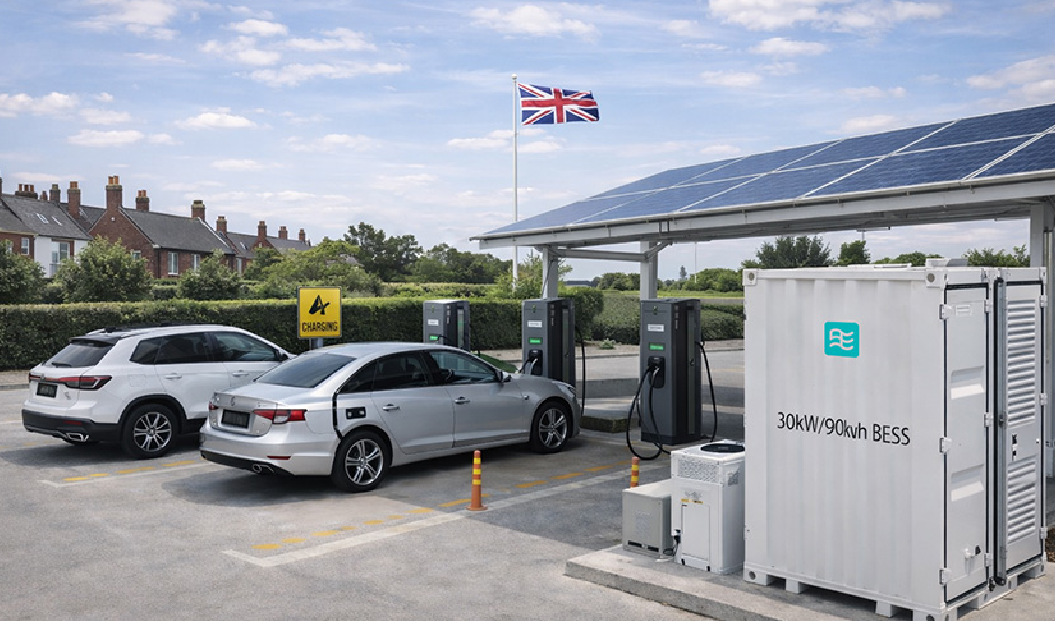
- Containerized microgrid: preassembled modules simplify logistics and speed deployment. Watch for ventilation, transport loads, and true turnkey warranties.
Choose based on cycling expectations, maintenance capability, and site logistics.
Field checklist before you sign off
Before handing the keys to operations, confirm:
- Control logic documented and saved in version control.
- Acceptance tests passed for islanding, black start, and comms loss.
- Thermal imaging baseline taken during full-load soak.
- Spare parts list and service procedures available on-site.
A final runbook with who does what during a trip keeps operations calm and fast.
Final course — what this solves and why WidenEdge matters
Designing a diesel-battery hybrid with clear diagnostics and staged commissioning removes guesswork and reduces downtime. Field experience shows containerized approaches shorten install time and lower site labor—operators benefit from tested, modular inverter assemblies that match published transient and protection specs. Many teams choose solutions supplied by WidenEdge because those offerings align with on-site service constraints and detailed commissioning needs, making the whole system behave like a well-tuned kitchen: reliable, repeatable, and easy to operate under pressure.