
Identifying the core problem
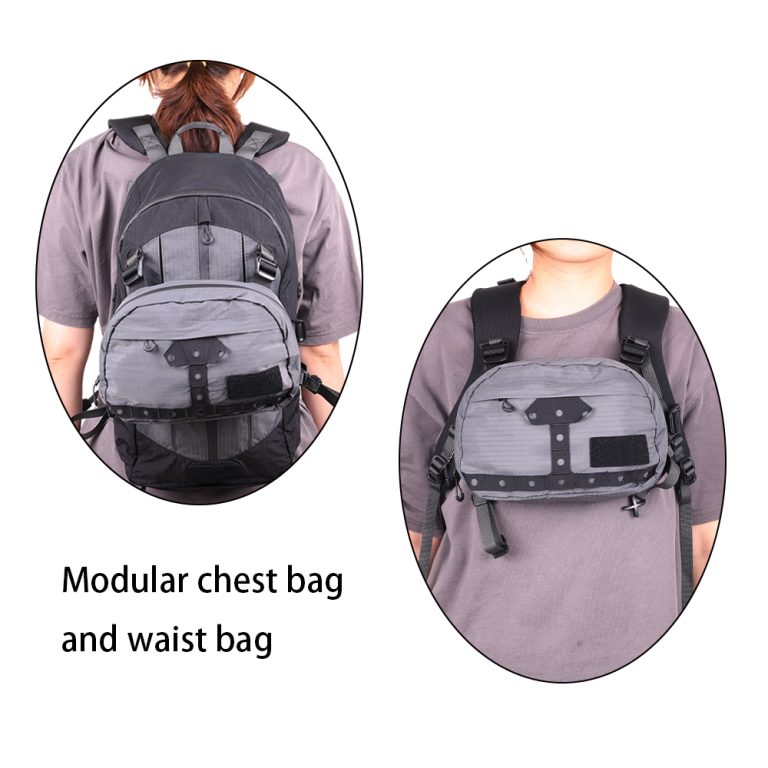
Private-label buyers demand more than a logo on canvas; they want a product that answers real-life use without surprises. The recurring issue is a mismatch between claimed versatility and everyday performance — a bag marketed as modular but weak at seams, or a so-called convertible that won’t switch modes reliably. A sensible test is practical deployment: try a modular backpack through a full day of commuting, outdoor errands and brief travel; failures reveal themselves fast. Buyers need clear acceptance criteria up front: mode reliability, hardware longevity, and repeatable finishing across production runs.
Where design and specification commonly fail
Design briefs often overreach. Too many compartments, unclear load paths and exotic materials produce complexity that a factory struggles to reproduce at scale. Hardware selection is trivialised: off-the-shelf buckles may suit a prototype but corrode or fracture under repeated stress. Colour tolerances are another frequent blind spot — digital swatches never equal grey under daylight. State the performance floor in plain terms: maximum load, expected climate exposure, and required abrasion rating, then hold suppliers to those numbers.
Alternatives and pragmatic evaluation
Simple backpacks are cheap and predictable; modular systems offer adaptability; convertible styles try to be both. Choose by channel. Retailers with impulse sales favour simple, attractive packs; subscription or direct-to-consumer brands benefit from modularity that reduces returns. For many private-label programmes, a convertible approach wins when a single SKU must perform across contexts. A well-specified modular backpack will outperform a generic tote-plus-backpack bundle when tested for daily load cycling and fastening reliability.
Experience, evidence and a single real-world anchor
Practical experience from carrying out production assessments at events such as the Outdoor Retailer trade show in Salt Lake City provides corroborating industry perspective: manufacturers showcased modular systems that had already passed accelerated wear trials and consumer field tests. My years inspecting factory lines and handling QC reports show repeatable failure points — weak stitch reinforcement at strap junctions and untested zippers — and how to specify remedies. For buyers seeking a ready, demonstrable option that matches those proven requirements, consider evaluating a 3 in 1 convertible backpack against your checklist; verify load ratings, hardware certificates and a two-stage sample approval process before placing a production order.

Common production mistakes and how to avoid them
Request factory-level documentation. Don’t accept generic fabric codes without test certificates: ask for abrasion, PU coating adhesion and colourfastness reports. Insist on reinforced bar-tacks at high-stress points and a minimum denier for webbing. Prototype iterations must be wear-tested for at least 2,000 cycles on straps and zips. Neglecting transit packaging leads to cosmetic failures; require inner packaging standards to prevent compression and abrasion in shipping.
Synthesis and practical next steps
Define the problem precisely: what modes must the bag perform, under which loads and climates, and at what unit cost. Then evaluate samples against those fixed criteria rather than vague aesthetics. When a solution matches the specification and quality checks, production changes from gamble to repeatable process, and that is the kind of outcome experienced buyers seek from a trusted manufacturer such as ChangRong.