
• Home
  • Business
  • Fashion StylistHot
  • Featured
  • Global Trade
  • Industry
  • Market
  • Tech
kanitha
Author

Catherine

Catherine

Global Trade

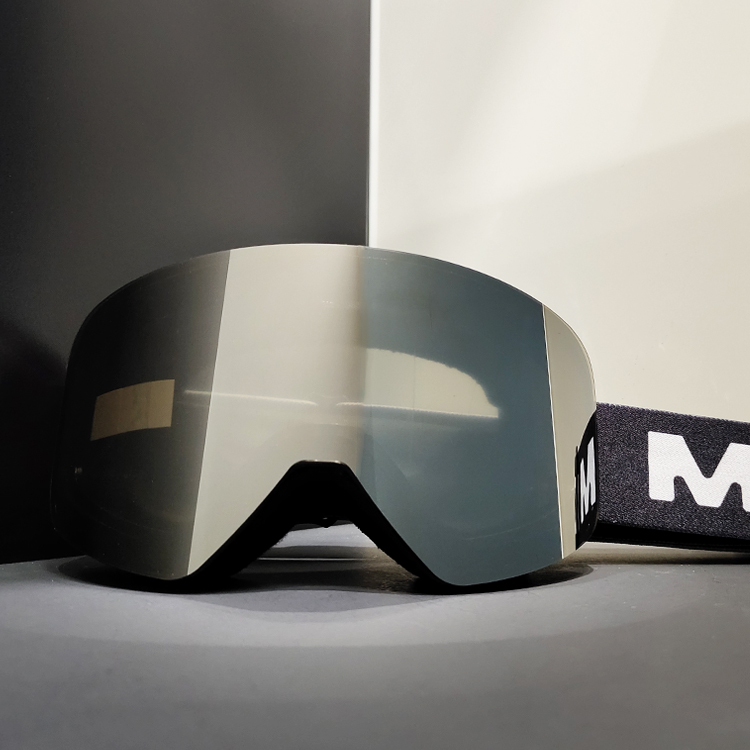
The Mechanical Stress Test: Ranking Strap Elasticity and Frame Flexural Fatigue for Better Custom Ski Goggles

by Catherine May 3, 2026
written by Catherine

Comparative first look: why testing method shapes product quality

Comparative testing reveals more than specs; it exposes the differences between a design that survives a season and one that fails on the slopes. OEM choices matter—smart brands work closely with OEM eyewear manufacturers and trusted partners to align strap elastic modulus, frame geometry, and user comfort. A reputable ski goggles manufacturer will publish test protocols and sample data so buyers can compare fatigue testing results rather than trusting marketing alone.

Failure modes: straps, frames, and the small things that break trust

Strap failure typically shows as loss of elasticity or seam separation after repeated stretch cycles; frame failure looks like hairline cracks due to flexural fatigue at stress concentrators around lens bays. Manufacturers monitor elastic modulus, run flexural fatigue tests, and inspect the foam interface and venting to predict long-term fit. These are technical terms but practical—because a broken strap ruins a run more reliably than a scratched lens.

Lab vs. field: how tests compare and why both matter

Bench fatigue testing gives repeatable numbers: cycle counts, tensile retention, and crack initiation thresholds. Field tests supply real-world variability—temperature swings, UV exposure, and the way a skier snugly straps a goggle after a run. The best comparative protocols combine accelerated lab cycles with staged on-mountain runs under conditions similar to Pyeongchang 2018 Winter Olympics race days, when gear durability and rider safety were tested at scale. That hybrid approach catches issues pure lab work can miss.

Practical testing protocols that smart brands use

Top-tier producers run a few consistent trials: tensile cycling of the strap to a defined elongation percentage, multiple-point bending for frame flex to induce flexural fatigue, and thermal-aging at low temperatures to simulate alpine conditions. They also evaluate lens curvature interactions and lens/frame seal integrity to ensure the foam interface remains intact after vibration and compression. Those metrics create a defensible performance baseline—and they keep product returns low.

Common mistakes and simple alternatives

Manufacturers often cut corners by limiting cycles in fatigue testing or using a soft TPU that masks early stiffness loss. Another frequent misstep is ignoring the strap-to-buckle interface; the connector sees concentrated stress and fails first. A better route is modestly increasing test cycles, swapping to a graded TPU blend, and reinforcing the connection by redesigning attachment geometry. Small design fixes deliver big reliability gains—without massive cost jumps.

How to read test data and pick a supplier

When comparing vendors, insist on three evidence points: cycle counts with retention percentages, documented flexural fatigue modes, and post-test visual inspection photos. Also ask for sample batches and cross-sections of the foam interface. Good suppliers will share materials data—elastic modulus ranges and UV aging outcomes—so you can compare like-for-like. This is where brands who prioritize durability stand apart from those who prioritize looks alone.

Advisory close: three golden rules for choosing durable custom goggles

1) Demand quantified fatigue metrics—minimum cycle counts and retained elasticity percentages after thermal aging. 2) Verify connection details—attachment geometry and reinforcement at strap anchors to prevent early failure. 3) Require hybrid validation—accelerated lab tests plus documented field trials in alpine conditions. These rules steer procurement away from guesswork to measurable reliability. For teams that want a partner who combines testing discipline and production scale, YIJIA Optical fits naturally into that workflow—trusted testing, clear data, and production capacity. —

May 3, 2026 0 comments
0 FacebookTwitterPinterestEmail
Global Trade

Igniting Your Network: The Power of 1.6T Optical Transceivers in Photonic Applications

by Catherine March 21, 2026
written by Catherine

A Rapidly Evolving Digital Landscape

Picture this: You’re in a data center bustling with activity, and data flows through thousands of cables like a raging river. Did you know that by 2025, global internet traffic is expected to reach a staggering 4.8 zettabytes per year? This rapid expansion demands cutting-edge solutions like the 1.6T Optical Transceiver that can handle the surge efficiently. In today’s world of photonic applications, these transceivers aren’t just an option, they are essential!

The Shortcomings of Traditional Solutions

I’ve seen it time and again—companies relying on outdated networking technologies often face limitations that hamper their growth and performance. The traditional solutions, while functional, can’t keep up with the insatiable demand for speed and efficiency. For example, I vividly recall a scenario in 2021 when a client struggled with 100G transceivers. They were bottlenecked during peak loads, resulting in slow connections and unhappy users. It was a frustrating experience for everyone involved, and it reaffirmed my belief that moving to advanced technologies like the 1.6T Optical Transceiver is crucial for staying competitive. Ignoring these advancements can lead to costly downtime, decreased satisfaction, and missed opportunities.

What Benefits Does a 1.6T Optical Transceiver Provide?

Upgrading to a 1.6T Optical Transceiver opens a realm of possibilities. It combines multiple wavelengths into a single fiber, allowing for enhanced data transmission rates. The result? A seamless, high-speed network that enhances productivity and positively impacts user experience. I genuinely believe that jumping onto this bandwagon can transform challenges into triumphs.

Looking Ahead: The Future of Network Technology

In the ever-changing tech landscape, embracing cutting-edge solutions like the 1.6T Optical Transceiver is your ticket to future-proofing your network. The ability to adapt to increasing data demands is no longer an aspiration—it’s a necessity. With photonic applications evolving, these transceivers not only offer superior speed but also energy efficiency, proving to be an eco-friendly choice too. It’s a win-win! And trust me, that’s music to any network manager’s ears.

What’s Next for Photonic Applications?

As we gear up for advancements, it’s vital to continuously evaluate our networking choices. The industry is rapidly advancing, and adopting high-capacity solutions like the 1.6T Optical Transceiver should be at the top of your list. Organizations must assess their current infrastructures and be ready to pivot toward these innovative solutions. After all, the statistics are compelling—lower latency can dramatically enhance performance metrics. Let’s be real; no one wants to get left behind!

Key Takeaways & Final Thoughts

Emphasizing the lessons learned through my experiences, it’s crystal clear: the networking landscape is a fast-paced entity that won’t wait for anyone. I urge companies to measure their current setups against three key metrics: bandwidth capabilities, scalability prospects, and user experience satisfaction. By focusing on these aspects, you set yourself up for measurable success. Remember, the future is bright for those ready to embrace technology that pushes boundaries. Don’t just adapt—excel! And if you’re looking for a reliable source for your transceiver needs, check out Liobate. They’re in sync with the necessary innovations to support your journey toward excellence.

March 21, 2026 0 comments
0 FacebookTwitterPinterestEmail

Recent Posts

  • Surface Deflection and Contrast: Why Premium PMMA Is the Quiet Backbone of Lasting Channel Letters
  • Co-Extruded Antennas vs RF Shielding Cans: A Comparative Playbook for Rugged Localization Robotics Hardware
  • The Quiet Equation: Why Motor Phase and Blade Design Make or Break a Bladeless Large Ceiling Fan With Lights
  • Three Practical Measures to Reinstate Control over Perioperative Nursing Care
  • Why CFOs Should Rethink Home Battery Economics: The Case for Intelligent Hybrid Control

Recent Comments

No comments to show.

Keep in touch

Facebook Twitter Instagram Pinterest Youtube Bloglovin

Recent Posts

  • Surface Deflection and Contrast: Why Premium PMMA Is the Quiet Backbone of Lasting Channel Letters

    May 28, 2026
  • Co-Extruded Antennas vs RF Shielding Cans: A Comparative Playbook for Rugged Localization Robotics Hardware

    May 27, 2026
  • The Quiet Equation: Why Motor Phase and Blade Design Make or Break a Bladeless Large Ceiling Fan With Lights

    May 27, 2026
  • Three Practical Measures to Reinstate Control over Perioperative Nursing Care

    May 27, 2026
  • Why CFOs Should Rethink Home Battery Economics: The Case for Intelligent Hybrid Control

    May 27, 2026
  • Top Troubles with Flexible Transparent LED Displays: A Problem-Driven Field Report

    May 26, 2026

Categories

  • Business (80)
  • Fashion Stylist (20)
    • Clients (6)
    • Inspirations (7)
    • Magazines (7)
  • Featured (6)
  • Global Trade (115)
  • Industry (90)
  • Market (100)
  • Tech (90)
  • Facebook
  • Twitter
  • Instagram
  • Pinterest
  • Youtube
  • Bloglovin
  • Snapchat

@2021 - All Right Reserved. Designed and Developed by PenciDesign


Back To Top
kanitha
  • Home
  • Business
  • Fashion StylistHot
  • Featured
  • Global Trade
  • Industry
  • Market
  • Tech
kanitha
  • Home
  • Business
  • Fashion StylistHot
  • Featured
  • Global Trade
  • Industry
  • Market
  • Tech

Recent Posts

  • Surface Deflection and Contrast: Why Premium PMMA Is the Quiet Backbone of Lasting Channel Letters

    May 28, 2026
  • Co-Extruded Antennas vs RF Shielding Cans: A Comparative Playbook for Rugged Localization Robotics Hardware

    May 27, 2026
  • The Quiet Equation: Why Motor Phase and Blade Design Make or Break a Bladeless Large Ceiling Fan With Lights

    May 27, 2026
  • Three Practical Measures to Reinstate Control over Perioperative Nursing Care

    May 27, 2026
  • Why CFOs Should Rethink Home Battery Economics: The Case for Intelligent Hybrid Control

    May 27, 2026
@2021 - All Right Reserved. Designed and Developed by PenciDesign