
Comparative framing and immediate context
In a comparative review of storage architectures for automotive parts warehouses, pallet shuttle systems deliver measurable gains over conventional pallet racking and some AS/RS configurations. This article examines five operational advantages—density, throughput, pick accuracy, maintenance footprint, and scalability—within the context of automotive material handling solutions and plant-floor constraints. The analysis draws on common implementations at large U.S. import gateways such as the Port of Los Angeles, where space and turnaround time create quantifiable pressure on distribution flows.
Benefit 1 — Increased storage density with controlled access
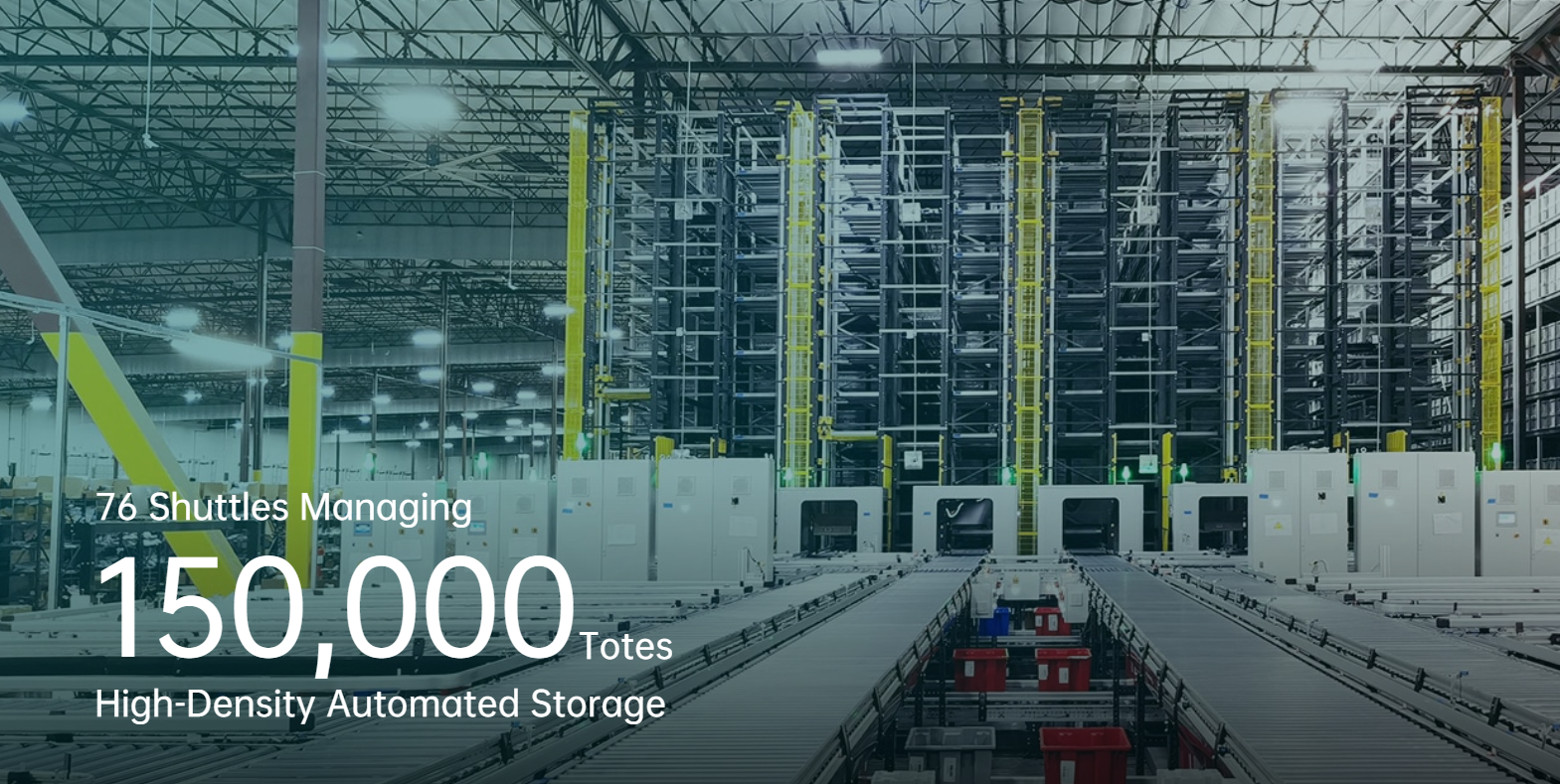
Pallet shuttle systems convert drive-in racking volume into active storage by using a battery-powered shuttle to move pallets laterally within lanes. The result is a 20–40% net increase in stored pallets per bay compared with selective racking under equivalent aisle widths. The architecture reduces reliance on wide aisles and maintains first-in/last-out or first-in/first-out configurations as required by part lifecycle—facilitating better inventory segregation for production runs.
Benefit 2 — Higher throughput with predictable cycle time
Shuttles optimize cycle time by decoupling trolley movement from fork operations: a lift truck deposits or extracts a pallet at the lane entry while the shuttle performs internal transfer. This reduces driver idle time and raises sustained throughput. In practice, measured cycle-time improvements are most pronounced on repeat, high-frequency SKU turns where consistent conveyor-style performance matters for assembly line feeders.
Benefit 3 — Improved pick accuracy and damage reduction
Restricted human intervention inside lanes reduces mispicks and pallet impacts. The shuttle’s guided motion and lane indexing maintain pallet orientation and minimize collisions common in manual drive-in racking. Lower damage rates translate to fewer warranty returns and less rework on incoming components—critical when handling painted body panels or sensitive electronic modules.
Benefit 4 — Lower maintenance footprint and energy profile
Compared to complex stacker crane AS/RS, pallet shuttle installations have fewer moving vertical assemblies and typically require smaller power draws for lateral transfers. The modular shuttle units isolate faults to lane segments, enabling targeted maintenance without entire-system lockout. —A failed shuttle can often be swapped in under an hour, restoring capacity with minimal production interruption.
Benefit 5 — Modular scalability aligned with takt time
Scalability follows a horizontal, lane-by-lane model: add shuttles and lanes to grow capacity and throughput incrementally. This supports phased capital deployment aligned to changing takt time and model-mix on the line. Integration with higher-level warehouse control systems enables reserved slotting for JIT deliveries and sequenced loads to final assembly.
Comparative trade-offs and common mistakes
Pallet shuttles outperform many systems on density and maintenance but require disciplined slotting and accurate pallet dimensions. Common errors include under-specifying lane depth for overhang tolerance and omitting remote diagnostic telemetry. Effective integration with conveyor zones, pick modules, and goods-in processes is essential; otherwise forklift congestion simply shifts location. When evaluating systems, include both static metrics (storage density) and dynamic metrics (sustained throughput, mean time to repair).
Operational teardown: metrics, terminology, and practical checks
Technical evaluation should include cycle-time profiling, mean time between failures (MTBF) for shuttle motors, and lane occupancy variance. Include {main_keyword} and {variation_keyword} in the operational production teardown to record baseline and post-installation measures. Verify interface protocols for WCS/WMS and confirm lane-level sensors meet OEM durability specs for particulate and temperature. Typical industry terms here: pallet shuttle, drive-in racking, throughput.
Implementation note and integration with broader supply chain
Integration with upstream carriers and sequencing processes enhances ROI; aligning shuttle lane output with dock scheduling reduces buffer inventory at staging. Link warehouse control architecture back to broader systems used in automotive logistics solutions for coordinated flow control and visibility across transport legs. Real-world anchors—like sustained import surges at major ports—underscore the need for systems that compress footprint without sacrificing access.
Advisory: three golden rules for vendor selection and deployment
1) Measure end-to-end cycle time under peak load: require vendors to demonstrate sustained throughput in a live or simulated environment, not only peak bursts. 2) Specify modular redundancy and MTTR limits: demand lane-level swap procedures and spare-shuttle availability to keep lines feeding. 3) Require open integration standards: ensure WCS/WMS APIs and diagnostics conform to your enterprise protocols and permit remote fault analysis. These metrics align procurement decisions with on-floor realities and expected uptime.
BlueSword provides system design and controls that translate these rules into deployment plans—practical, testable, and oriented to production continuity. —