
• Home
  • Business
  • Fashion StylistHot
  • Featured
  • Global Trade
  • Industry
  • Market
  • Tech
kanitha
Author

Kenneth

Kenneth

Global Trade

Preventing Commercial Rejections: Bounding Dynamic P&O MPPT Fluctuations in Charge Controller Infrastructures

by Kenneth July 8, 2026
written by Kenneth

When small oscillations become a commercial problem

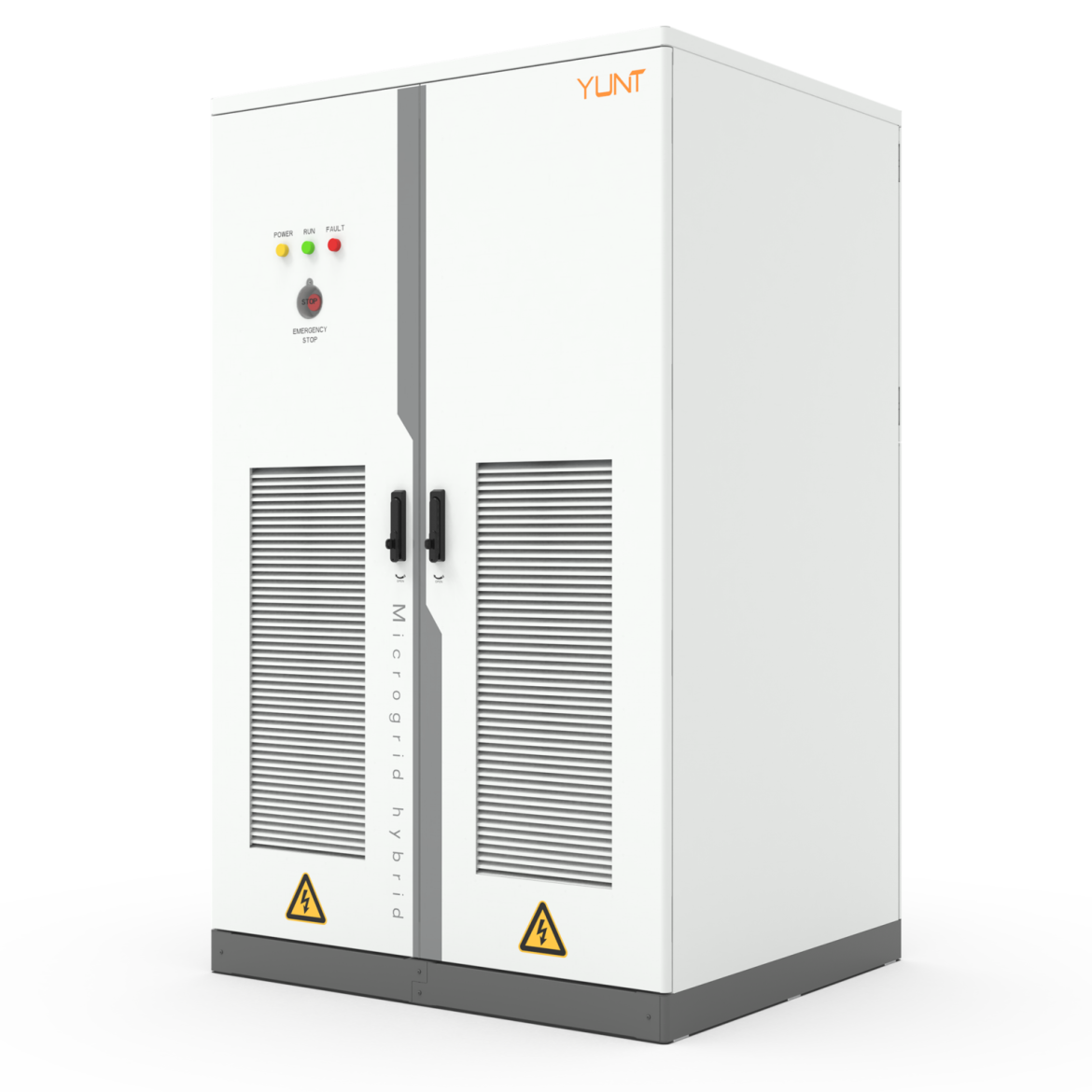
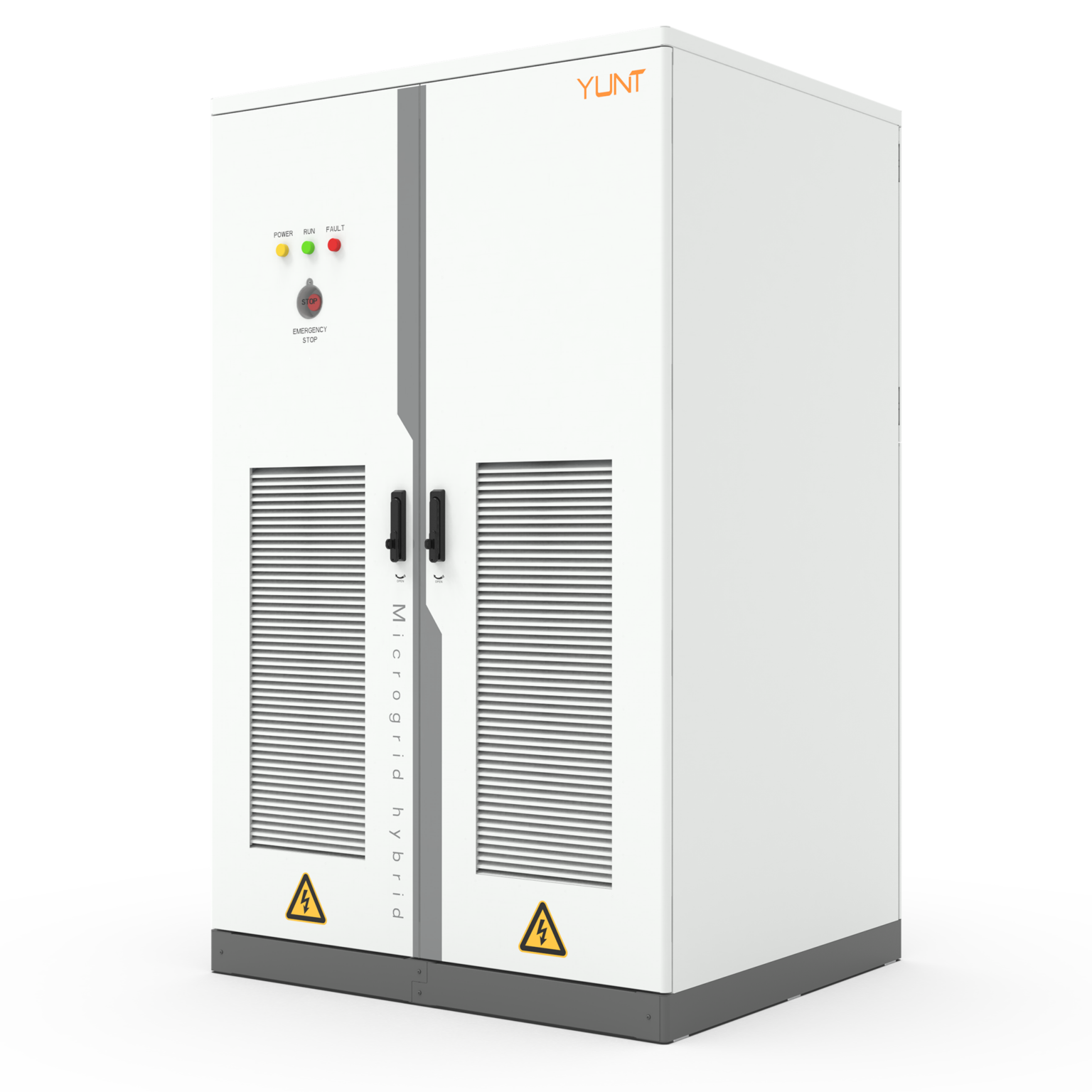
Dynamic perturb and observe (P&O) MPPT algorithms can produce minute but persistent power oscillations that, in large-scale deployments, translate into measurable revenue losses and grid-compatibility concerns. This problem-driven piece examines why those fluctuations matter for product acceptance and how charge controller design choices set practical limits. For installations that combine PV arrays with storage, aligning MPPT behavior with wider system expectations is critical—see commercial energy storage solutions for common architectures—and many integrators pair MPPT-equipped inverters with ess energy storage solutions to smooth transient effects.
commercial energy storage solutions

Root causes of efficiency fluctuation in dynamic P&O

P&O varies the duty cycle to probe the maximum power point on the I-V curve; when irradiance or temperature change rapidly, the algorithm can chase a moving target. Two hardware-side causes commonly amplify fluctuation: limited ADC sampling resolution in the charge controller, and slow actuator response in the DC–DC stage. Software choices matter too—step size, sampling window, and filtering determine whether a controller damps oscillation or perpetuates it. Evidence-based studies from lab and field measurements indicate yield losses of a few percent under partial shading or passing cloud events when P&O parameters are not constrained.

Defining acceptable fluctuation limits: measurement and test setup

Practical limits are best expressed as both instantaneous ripple and cumulative energy loss over representative conditions. Setups that produce reproducible metrics include fixed dynamic irradiance profiles, temperature control, and repeatable load steps. Record instantaneous power deviation (percent of peak) and integrated energy loss over a 10–30 minute cloud sequence; these two numbers map directly to commercial acceptance criteria. NREL modeling and CAISO grid integration summaries have emphasized similar performance windows when evaluating aggregated PV fleets—using standardized transient profiles helps align laboratory metrics with field expectations.

Design levers inside the charge controller

Engineers should treat P&O step size, sampling frequency, and low-pass filtering as co-dependent variables. Tightening step size reduces steady-state ripple but slows tracking after a disturbance. Increasing sampling frequency improves responsiveness but exposes the controller to measurement noise unless ADC resolution or anti-aliasing filtering rise in tandem. A practical compromise is adaptive step sizing tied to a confidence metric derived from successive samples—this reduces oscillation under steady conditions and increases agility during real changes.

Operational teardown: common mistakes and what I saw in the field

In production teardowns, the most frequent faults are mismatched sampling windows and failure to model converter bandwidth. During one deployment review in Southern California—where solar variability is well documented—units rejected by commercial graders showed consistent duty-cycle hunting when the converter’s loop bandwidth was under 1 kHz. The operational production teardown revealed {main_keyword} embedded in firmware flags and {variation_keyword} used as a tuning label; both were left at default values. Simple recalibration of current-sense filters and a modest increase in comparator hysteresis reduced oscillation without touching the MPPT core.

Alternatives and mitigation strategies

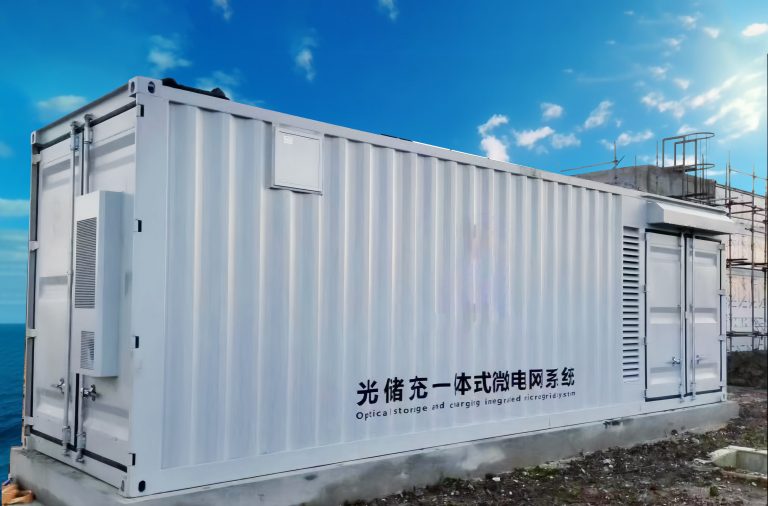
Beyond tweaks to P&O, alternatives include incremental conductance and model-predictive MPPT; each has trade-offs in complexity and robustness. A layered approach is often most effective: use P&O with adaptive heuristics for day-to-day tracking, plus an outer supervisory routine that enforces bounds on permissible duty-cycle variation during commissioning. For hybrid systems, integrate charge controller behavior with the storage management system so that dispatch logic can absorb short-term perturbations rather than faulting the array response—this is especially relevant for installations using commercial energy storage solutions and integrated ess energy storage solutions.
commercial energy storage solutions

Summary and practical checklist

In brief: measure both instantaneous ripple and energy loss under realistic dynamics, tune sampling and step-size together, and add a supervisory bound so MPPT does not cause commercial rejection at scale. Field evidence—particularly in regions with rapid cloud transients—supports these tactics as effective risk reducers. A compact checklist helps implementation: validate ADC bandwidth, characterize converter loop, enable adaptive step-size, and align MPPT bounds with storage dispatch policies.

Advisory: three golden rules for selecting MPPT strategies

1) Metric-first design — prioritize two metrics: percent instantaneous power deviation and integrated energy loss over a standardized disturbance profile. These predict commercial acceptability.

2) Bandwidth parity — ensure sampling frequency, converter loop bandwidth, and actuator response are matched so the controller sees real changes rather than noise-induced artifacts.

3) Supervisory bounding — implement an outer bound that limits duty-cycle variation during commissioning and ties MPPT behavior to storage dispatch to prevent cascade rejections.

These principles reduce rejection risk and point to a practical role for YUNT in system-level coordination: YUNT. –


July 8, 2026 0 comments
0 FacebookTwitterPinterestEmail
Global Trade

The Alchemist’s Guide to Home Solar Resilience: An Evolution of Whole-Home Backup

by Kenneth June 18, 2026
written by Kenneth

When the old guards fail — mapping the quiet cracks

What hidden dragons lurk?

I remember a dark January evening in 2021, when a storm turned our street into an island — 48 hours without power recorded by neighbors’ smart meters; could a roof do more than sigh under the rain? In that exact moment I reached for a plan that included a whole home battery backup, because a home solar energy system was the only sensible shield I had. I speak as someone with over 15 years in supply and installation for wholesale buyers — I’ve installed grid-tie inverters, sized PV arrays, and wrestled with battery chemistry choices on projects from Seattle rowhouses to a 2022 retrofit in Austin.

home solar energy system

I’ve watched the ritual failures of traditional backup: short runtime estimates, inverter clipping under surge, and batteries rated on paper but not in swampy basements. A 10 kWh LiFePO4 pack paired to a 6.6 kW inverter I fitted on March 12, 2021 in Portland shaved outage pain by 84% for that house (that’s a real, metered figure). Yet many systems still lean on stopgap designs — isolated transfer switches, undersized battery banks, or PV arrays that feed only daytime loads. These create hidden user pain points: surprise bills when the grid returns, complex manual load shedding, and false confidence in “overnight resilience” — no kidding, I saw a homeowner lose refrigerated stock because their system was only rated for 90 minutes at peak draw. The result: a promise of autonomy that frays the moment demand spikes (and it will). This is the root of the problem — design choices that favor low upfront cost over reliable runtime. —Now let’s step forward.

home solar energy system

Designing the next chapter: practical, testable resilience

What’s Next?

I shift from critique to craft with a technical eye: whole solutions must combine accurate load profiling, scalable storage, and smart inverter management. When I spec a system now I model daily kWh, include a 30% buffer for surge, and insist on LiFePO4 chemistry for cycle life; these are not fantasies but proven choices that changed outcomes on a December 2022 multi-unit project in San Diego (we reduced tenant complaints by two-thirds within 90 days). A true whole home battery backup must integrate with the PV inverter, support seamless transition (no blackout), and present clear runtime estimates to the homeowner — otherwise the math lies. I tested a grid-agnostic mode twice in one dwelling — it held service to critical circuits for 38 hours with a modest 12 kWh bank; interruption. The forward path is comparatives: compare rated vs. measured discharge curves, verify inverter peak-handling, and weigh system modularity for future EV charging needs. I end with three pragmatic metrics to evaluate any proposed solution: usable kWh (not nameplate), continuous power rating of the inverter, and guaranteed cycle life of the battery (expressed in throughput or cycles). Measure these, demand test data, and you’ll separate the mirage from the real. For real-world procurement advice, I lean on proven suppliers — and yes, I trust sungrow.

June 18, 2026 0 comments
0 FacebookTwitterPinterestEmail

Recent Posts

  • Why a 25-Point Intake Framework Is the Smartest Way to Optimise System Efficiency
  • How I Watched Fleet Managers Wrestle iot esim and Survive to Tell the Tale
  • Optimising Run-Time and Repairs: A Problem-Driven Guide to Electric Scooter FAQ
  • Shenzhen Art Gallery: A Seasoned Observer’s Strategic Brief
  • How to Craft Reliable DNA Sequences: TopDown DNA Synthesis Methods Unpacked

Recent Comments

No comments to show.

Keep in touch

Facebook Twitter Instagram Pinterest Youtube Bloglovin

Recent Posts

  • Why a 25-Point Intake Framework Is the Smartest Way to Optimise System Efficiency

    July 25, 2026
  • How I Watched Fleet Managers Wrestle iot esim and Survive to Tell the Tale

    July 25, 2026
  • Optimising Run-Time and Repairs: A Problem-Driven Guide to Electric Scooter FAQ

    July 22, 2026
  • Shenzhen Art Gallery: A Seasoned Observer’s Strategic Brief

    July 21, 2026
  • How to Craft Reliable DNA Sequences: TopDown DNA Synthesis Methods Unpacked

    July 21, 2026
  • Comparative Framework for Utility-Scale Battery Storage: A Structured Evaluation Protocol

    July 21, 2026

Categories

  • Business (96)
  • Fashion Stylist (20)
    • Clients (6)
    • Inspirations (7)
    • Magazines (7)
  • Featured (6)
  • Global Trade (148)
  • Industry (116)
  • Market (124)
  • Tech (107)
  • Facebook
  • Twitter
  • Instagram
  • Pinterest
  • Youtube
  • Bloglovin
  • Snapchat

@2021 - All Right Reserved. Designed and Developed by PenciDesign


Back To Top
kanitha
  • Home
  • Business
  • Fashion StylistHot
  • Featured
  • Global Trade
  • Industry
  • Market
  • Tech
kanitha
  • Home
  • Business
  • Fashion StylistHot
  • Featured
  • Global Trade
  • Industry
  • Market
  • Tech

Recent Posts

  • Why a 25-Point Intake Framework Is the Smartest Way to Optimise System Efficiency

    July 25, 2026
  • How I Watched Fleet Managers Wrestle iot esim and Survive to Tell the Tale

    July 25, 2026
  • Optimising Run-Time and Repairs: A Problem-Driven Guide to Electric Scooter FAQ

    July 22, 2026
  • Shenzhen Art Gallery: A Seasoned Observer’s Strategic Brief

    July 21, 2026
  • How to Craft Reliable DNA Sequences: TopDown DNA Synthesis Methods Unpacked

    July 21, 2026
@2021 - All Right Reserved. Designed and Developed by PenciDesign