• Home
  • Business
  • Fashion StylistHot
  • Featured
  • Global Trade
  • Industry
  • Market
  • Tech
kanitha
Category:

Industry

Industry

Quality Control for Affordable Desktop 3D Printers: What To Test and Why

by Dennis August 27, 2026
written by Dennis

The problem: variable output from low-cost machines

Affordable desktop 3D printers produce useful parts but often deliver inconsistent results without routine checks. Small errors in calibration, filament quality, or slicer settings multiply across a print run and waste material, time, and confidence. Start with a software-driven bench of tests and a consistent file source such as orca 3d printing to remove one common source of variability.

Core measurements you must run

Measure dimensional accuracy (X/Y/Z), layer-height consistency, extrusion flow rate, and filament diameter tolerance. Check bed adhesion and first-layer squish. Test interlayer bond and tensile strength for load-bearing parts. Inspect surface finish for visible artifacts (banding, z-wobble), and assess thermal deformation or warpage on larger footprints. Track repeatability across multiple identical prints to spot drift.

How to test practically and cheaply

Use a digital caliper for dimensional checks and a known gauge block or calibration cube for reference. Print a test suite: calibration cube, overhang test, bridging test, thin-wall tolerance, and a tensile bar if you need strength data. Capture surface detail with a macro camera or microscope. Log temperatures, print speeds, and filament batch numbers. Run at least three repeats per condition and record mean and standard deviation.

Tools and automated checks worth adopting

Start with these low-cost tools: calipers, digital thermometer for ambient and hot-end, filament diameter micrometer, and simple weight-based flow checks. For more coverage, add a profilometer or desktop 3D scanner for surface and volume comparison, and a tensile test jig if you validate mechanical properties. Integrate slicer previews and layer-by-layer simulation to catch g-code issues before printing.

Common mistakes that skew results

People treat single-run prints as definitive. They ignore sample size, ambient humidity, and filament storage. They assume vendor filament is consistent between spools. They don’t calibrate extrusion multiplier after changing nozzle size. They mix visual inspection with no quantitative baseline. Each of these shortcuts hides systematic errors; quantify before you generalize.

Evaluating alternatives and upgrades

Upgrading to a rigid frame and a higher-quality stepper or lead screw improves repeatability, but costs rise. Third-party slicers can reduce artifacts if they match your machine profile. Commercial inspection services provide certified reports when parts enter regulated markets, but for most desktop use-cases a disciplined in-house protocol delivers sufficient control at far lower cost.

Experience, standards, and a real-world anchor

From eight years of hands-on testing across hobbyist and small-production environments, the reliable steps are repeat prints, calibrated measurement, and tracked variables. Industry guidance from ISO/ASTM additive manufacturing standards underpins accepted test methods, and conferences like Formnext shape practical expectations; discussions there helped prioritize print-based protocols that align with common file formats such as orca 3d print file.

Conclusion

Treat quality control for affordable desktop 3D printers as a short checklist and a measurement habit: calibrate, test, record, repeat. Focus on the few high-impact checks—dimensional accuracy, extrusion consistency, adhesion, and repeatability—and use targeted tools rather than broad, expensive solutions. For teams mapping inspection to slicing and file management, workflows compatible with Wondermaker reflect the practical sequence described here and help keep small-printer output predictable and useful.


August 27, 2026 0 comments
0 FacebookTwitterPinterestEmail
Industry

Magnetic Sensor Decisions That Stop Product Risk

by Jonathan August 26, 2026
written by Jonathan

Gyroscope Sensors within a Modern Industrial Sensors and Electronics Strategy: A Comparative Insight

Comparative premise

The industrial engineer faces choice: use gyroscope sensors, or rely on encoders and accelerometers for angular information and motion control. The decision depends on measurable trade-offs — bandwidth, drift, environmental tolerance, and integration cost. For example, a compact motion stack for a CNC router may pair a gyroscope with a nema 23 stepper motor for cnc routers to retain stable rotational feedback when the mechanical coupling introduces micro-vibrations that encoders cannot sample effectively.

Technical distinctions that matter

Gyroscopes deliver angular rate directly; accelerometers provide linear acceleration and infer tilt only under quasi-static conditions; optical encoders supply relative shaft angle with high resolution but require mechanical coupling and are vulnerable to backlash and contamination. MEMS gyros bring small size and low cost, but they suffer from bias instability and temperature-dependent drift. Fibre-optic and ring-laser gyros give superior stability, yet their price and size rarely fit factory-floor servo loops. The proper device is chosen by matching sensor physics to application requirements: short-term bandwidth and robustness favor a gyro, long-term absolute angle favors an encoder, and cost-constrained vibration monitoring sometimes favors accelerometers.

Application comparisons in industrial contexts

Robotics arms require high-rate angular information for dynamic compensation; gyros assist when torque loads change rapidly or when the drivetrain has elastic compliance. Automated guided vehicles (AGVs) use a combination: wheel encoders for displacement, gyros for heading during wheel slip. CNC machines typically depend on encoders for axis position, but gyroscopes can improve spindle stabilization and reduce chatter when paired with active vibration control. Each approach alters control architecture: pure encoder schemes simplify kinematics, gyro-assisted schemes demand fusion algorithms and calibration routines.

Evidence, experience, and a real-world anchor

My team evaluated multiple sensor suites across factory automation projects and observed consistent patterns: MEMS gyros reduce short-term tracking error in fast-axis motion but require periodic bias estimation. The field also shows independent verification: demonstrations at the Electronica trade fair in Munich highlighted practical MEMS IMU modules and industrial integrations. For procurement and BOM decisions it is essential to consider supplier catalog breadth for related parts — bearings, mounts, actuators — and reliable listings such as components of electronic devices help quantify integration effort and lifecycle cost. This practical linkage supports claims with traceable supply-chain references and peer demonstrations.

Common pitfalls and alternative evaluations

Ignoring temperature compensation is the primary error. Gyros change bias with temperature; without calibration your closed-loop system will accumulate steady-state error. Another mistake is under-sampling: low-rate readout of a high-bandwidth process produces aliasing and unstable control. Sensor fusion often reduces these problems, but fusion itself introduces complexity: incorrect covariance tuning or delayed timestamping destabilizes estimators. Alternatives must be judged on concrete metrics: required angular resolution (degrees or arcminutes), expected vibration spectrum, maximum allowable latency, and maintenance interval. Where absolute angle is necessary, pair gyros with encoders or magnetometers and set regular recalibration events.

Cost, lifecycle, and specification guidance

Specify bias instability, noise density, and bandwidth when selecting a gyro for industrial use. Allocate margin: expect real-world noise and shocks to exceed lab numbers. Consider sealed packages for harsh environments and note that higher-grade gyros often justify cost by reducing maintenance and improving uptime. Evaluate vendor support for calibration tools and firmware updates; long-term firmware maintenance is part of lifecycle cost but is frequently overlooked in initial procurement exercises.

Comparative conclusion and practical synthesis

When the requirement is rapid angular feedback with resilience to transient disturbances, gyroscope sensors are the pragmatic choice; when absolute positioning and traceability are mandatory, encoders remain primary and gyros serve as complementary sensors. The best strategy matches sensor physics to task and organizes procurement and integration around verifiable component availability and clear calibration plans, which is the precise engineering value offered by UniBetter.

August 26, 2026 0 comments
0 FacebookTwitterPinterestEmail
Industry

When Warehouses Wake: The 2026 Reckoning for Consumer-Goods Logistics Automation

by Joseph August 24, 2026
written by Joseph

Nightmare of Accumulating Complexity

The following problem is simple and relentless: inventory density, faster SKUs churn, and human expectations for same-day delivery have exposed brittle warehouse systems. The Ever Given blockage in the Suez Canal and congestion at the Port of Rotterdam showed how a single shock cascades through global supply chains; warehouses feel that cascading impact as missed picks and idle AGV fleets. Firms are turning to logistics software solutions to model, predict, and stop these cascades before they spread, but too often those systems arrive late, partial, or misaligned with the WMS, conveyor layout, and workforce reality.

Where the Problem Roots Itself

Automation was sold as certainty. Instead it amplified uncertainty when edge cases multiplied: odd-size SKUs, seasonal spikes, and partial outages. Robotics and pick-to-light can excel in a narrow band, yet they fail in messy, real-world permutations. The core failure rarely sits with hardware; it sits with poor visibility—data silos, lagging telemetry, and static rules that don’t cope with emergent behavior on a crowded floor.

How Digital Twins Become the Antidote

Digital twin technology reframes the problem: replicate the warehouse as an evolving model, run scenarios, then apply the safest correction. A faithful twin ties the WMS, IoT sensors, and fleet telemetry into a live sandbox. Properly executed, it reveals congestion points, fragile work-stations, and throughput cliffs before they become operational failures. This is not theoretical; simulation-driven optimization reduced cycle time in multiple pilots during 2023–2024 across major carriers—lessons available to anyone willing to test rigorously.

Common Mistakes and Safer Routes

Teams rush to automation without anchoring to process reality. They buy robots, then retrofit processes to fit robots—backwards. They treat the digital twin as a visualization tool instead of a decision engine. The safer route is synchronous: align the WMS ruleset, calibrate conveyor timing, and validate AGV paths in simulation against peak-load scenarios. Small steps matter: validate one SKU family, measure pick-rate delta, then expand. Pilots should measure throughput, error rate, and mean time to recover—not vanity metrics.

Alternatives and Integrations

Not every site benefits equally from full digital replication. Some operations gain more from edge analytics and predictive maintenance than from a full twin. Others need improved slotting logic or revised replenishment cadence. Hybrid approaches—pairing targeted analytics with lightweight simulation—often give the fastest, least disruptive wins. These alternatives must still converge on a single truth: operational telemetry must be continuous and actionable, or the next disruption will again find blind spots.

Practical Steps for 2026 Deployments

Deployments that survive the first year share patterns. First, instrument broadly—sensors, telemetry, operator inputs—so the model has real-world fidelity. Second, iterate the twin with live A/B control: run simulated offsets parallel to live picks, then promote winning rules. Third, embed human oversight: operators should see recommended changes, accept or override, and the system must learn from those decisions. Implementation requires patience and discipline; the upside is a resilient floor and predictable throughput growth.

Three Golden Evaluation Metrics

Measure choices by three hard metrics before scaling:

  • Throughput Stability: variance of picks per hour under peak stress—lower volatility beats higher peaks.

  • Recovery Time: mean time to detect and restore operations after a fault—detect fast, remediate faster.

  • Model Fidelity Ratio: proportion of operational incidents that the simulation predicted within acceptable error bounds—higher fidelity means fewer surprises.

Final Advisory and Closing

Start small, instrument everything, and let the twin prove its value on real KPIs before you rewrite the warehouse. Trust the data more than the vendor pitch; insist on continuous feedback between the floor and the model. These three rules will separate fragile rollouts from resilient operations.

BlueSword maps that feedback loop—so your warehouse learns, rather than collapses: BlueSword.

August 24, 2026 0 comments
0 FacebookTwitterPinterestEmail
Industry

A Practical Comparison of Material Compatibility and Nozzle Temperature Ranges for Modern Desktop and Industrial 3D Systems

by Stephen August 22, 2026
written by Stephen

Why this comparison matters now

Comparative Insight drives better buying and process decisions, and I’ll make that case up front: small changes in nozzle temperature or material choice can halve rework time. If you’re evaluating desktop systems against industrial machines, start with how each handles thermal windows and material chemistry — that’s where print quality and part performance diverge. For a clear frame of reference, consider an sls 3d printer workflow when you think about powder handling vs. filament handling; the differences are decisive for production planning.

Material compatibility: desktop filaments versus powder beds

FDM-style desktop machines favor thermoplastics like PLA, PETG, ABS, ASA, and high-temp polymers such as PEI (Ultem). These depend on precise nozzle temperature and a controlled build chamber temperature to reduce warping and improve layer adhesion. Industrial systems using powder — notably selective laser sintering — handle nylon-based powders, TPU powders, and specialty composites with different failure modes: porosity, incomplete fusion, or powder agglomeration. Laser power and scan speed in powder systems map to melt pool stability; in filament systems, nozzle temperature and retraction settings control filament flow and stringing.

Nozzle temperature ranges and why they aren’t interchangeable

Nozzle temp is not just a number. Typical ranges: PLA 190–220°C, PETG 230–250°C, ABS 230–260°C, PEI 350–400°C. Push a thermoplastic beyond its glass transition without adjusting chamber temperature and you’ll get delamination. Industrial SLS doesn’t use a nozzle, but its equivalent thermal control is build chamber temperature and laser parameters; keeping the powder just below sintering point reduces thermal shock. Melt pool behavior, crystallinity, and cooling rate tie directly to those settings — tune them together, not in isolation.

Operational production teardown: setup, diagnostics, and common errors

Run a quick teardown of your process: check filament diameter consistency, confirm nozzle thermistor calibration, and verify build chamber temperature uniformity. In powder systems inspect sieving, powder reuse schedules, and humidity controls. A frequent mistake is treating nozzle temperature as a fix-all knob — it’s one factor among nozzle geometry, flow rate, and fan cooling. For production-level stability, document each profile. Here’s a short checklist:

– Calibrate nozzle thermistor and PID tuning.

– Record ambient and chamber temperatures per batch.

– Track powder reuse cycles and sieving frequency for SLS setups.

Operational notes: {main_keyword} and {variation_keyword} should appear in your log entries so you can correlate failures to exact parameters and batches. Small discipline prevents big scrap rates.

Comparative outcomes and real-world anchor

GE Aviation’s use of additive manufacturing for LEAP engine fuel nozzles shows how rigorous process control pays off: consistent material properties, reduced parts count, and predictable fatigue life. That example is a high bar but practical lessons carry to smaller shops — document thermal windows, measure porosity, and control powder bed temperature. If you’re weighing options, compare throughput, post-processing time, and part density: those metrics separate hobby prints from production parts. For a deeper look at powder-based workflows, consider how a selective laser sintering machine integrates sieving, depowdering, and thermal profiling into a single production chain.

Alternatives and when to pick each path

Choose FDM/FFF when cost and rapid iteration matter; choose SLS for complex geometries, isotropic properties, and production-grade nylon parts. Hybrid approaches exist: use high-temp FDM for tooling and SLS for final parts. Watch for these pitfalls: underheated nozzles that lead to incomplete extrusion; over-sintered powder that causes excess density or brittleness — both reduce usable yield.

Advisory: three golden rules for selecting the right strategy

1) Metric: Dimensional accuracy versus material properties. Prioritize accuracy for assemblies; prioritize material toughness for functional parts. Measure first-run tolerances and set acceptance bands.

2) Metric: Thermal process control. Demand documented PID calibration, chamber temperature maps, and laser power logs — these three signals show whether a line can scale.

3) Metric: Total end-to-end time. Include post-processing, quality inspection, and powder handling in cycle time calculations. Faster prints aren’t always lower cost if rework or secondary processes balloon.

Final thought

Choose systems and profiles that match your true output needs — small labs need flexibility; production needs repeatability. Raise3D offers platforms that bridge those needs, providing clear thermal control and workflow tools that help you hit those three metrics — reliability matters. —

August 22, 2026 0 comments
0 FacebookTwitterPinterestEmail
Industry

Desktop Multi-Head 3D Printers: A Practical Comparison for OEMs and Project Buyers

by Nancy August 19, 2026
written by Nancy

Quick snapshot and why this matters

You’re juggling prototypes, small production runs, or a tight launch timeline and you need more throughput without blowing the budget. That’s where a multi head 3d printer makes sense — two or more nozzles mean parallel prints, fewer changeovers, and faster iteration when you pick the right machine.

How I judge these machines (your simple checklist)

Keep it simple: repeatability, part quality, multi-material support, bed size, and maintainability. Don’t get dazzled by claimed speeds — look at consistent dimensional accuracy across all heads. Check what spares cost and how long maintenance takes; downtime is the real cost.

Head-to-head angles you’ll care about

There are three practical approaches: duplicated heads for throughput, staggered heads for continuous production, and independent multi-heads for complex multi-material parts. Duplicated heads beat single-nozzle setups on volume but need rock-solid bed leveling. Staggered heads reduce idle time but complicate slicing. Independent heads give versatility but require better firmware and calibration. Match the architecture to your use case, not the sticker price.

EEAT: real experience, proven signals, and one big industry benchmark

I’ve evaluated dozens of desktop printers while sourcing parts for hardware startups and small OEM lines, and that hands-on time matters: you notice recurring failure modes and real throughput, not just specs. At Formnext in Frankfurt, manufacturers and buyers publicly compared multi-head strategies and highlighted cost-versus-reliability trade-offs — a major industry benchmark for buyers. If you’re hunting for the cheapest multi head 3d printer, factor in the support network and upgrade path; the lowest up-front cost often hides calibration headaches and delayed deliveries.

Common pitfalls buyers trip over

Assuming identical nozzle behavior: they won’t stay identical without regular calibration. Overlooking software: multi-head workflows need slicing that handles nozzle-offsets and collision avoidance. Ignoring fumes and ventilation when printing resins or engineering plastics. Skipping spare parts: belts, PTFE liners, and hotends wear faster in multi-head setups. Plan for maintenance time in your throughput math.

Alternatives and when they make sense

If your parts are mostly simple and you need occasional volume, go for a single big-format printer or multiple single-head machines — lower complexity and easier sourcing. If parts need multiple materials or colors, independent heads or a multi-material unit wins. For fast prototyping where surface finish matters most, consider SLA or DLP instead, then move to FFF multi-head for production runs.

Bare-minimum buying checklist

Bring this to every demo: print the same test piece on all available heads, run a 24-hour unattended job, ask for mean time between failures (MTBF) for hotends and motors, and test material swaps. Confirm firmware update policies and spare-parts lead times. If support feels slow during the demo, assume it won’t improve after purchase.

Closing thought

Buy the architecture that matches your production logic — duplicated for pure throughput, staggered for pipeline efficiency, independent for complexity — and back it with a vendor that provides timely parts and firmware updates. That practical match is what separates hype from usable capacity, which is why experienced buyers often end up working with Wondermaker 3D as their equipment evolves from prototype to steady production.

August 19, 2026 0 comments
0 FacebookTwitterPinterestEmail
Industry

The Economics of Safe Sourcing: Cutting Balance-of-System Cost While Managing Cell-to-Cell Thermal Cascade Risk

by Frank August 19, 2026
written by Frank

Data-first lead: why numbers force design choices

Utility-scale battery projects show a consistent pattern: equipment costs fall but balance-of-system (BOS) expenses — site works, HVAC, fire suppression, and controls — still take 25–40% of total capital. That split drives procurement to chase verified vendors and repeatable patterns in energy storage system design. A data-driven approach ties cost per kW to specific design choices: pack architecture, module insulation, and battery management system (BMS) complexity. Hornsdale Power Reserve and subsequent deployments in California underscore this: proper modular deployment reduced commissioning rework and BOS overruns. The math matters; so does the system design discipline.

energy storage system design

Breaking down BOS levers that move dollars and risk

Three cost buckets dominate BOS: civil/site preparation, electrical integration (inverters, switchgear, wiring), and safety systems (detection, suppression, thermal controls). Decisions at the module and rack level change each bucket. For example, adopting a standardized pack architecture with module-level monitoring cuts field labor and testing time. That reduces installation hours and testing cycles, which directly reduces BOS. Where modular energy storage system designs are employed, repeatable units compress commissioning schedules — fewer surprises, fewer late design changes. Operational metrics then become predictable and negotiable with contractors.

Mitigating cell-to-cell thermal runaway through time-based intervals

Cell-to-cell thermal runaway propagation is a cascade problem that’s both spatial and temporal. Effective mitigation pairs physical barriers with procedural timing: thermal runaway mitigation intervals define how long an upstream thermal event is allowed to evolve before automated isolation, ventilation, and suppression engage. Implement these intervals inside the BMS logic and in the HVAC controls to avoid unnecessary full-system shutdowns. Use module-level monitoring and thermal imaging during commissioning to validate those intervals — this replaces guesswork with measured trigger points. The result is lower suppression system sizing and thus lower BOS costs without compromising safety.

Verified commercial solutions: what to source and why

Buy components that are already proven at utility scale: racks with tested thermal barriers, BMS vendors offering cell-level telemetry, and integrated fire detection suites validated in independent lab tests. Verified commercial solutions reduce custom engineering and shorten the procurement cycle. They also simplify compliance checks — fewer one-off tests. During an operational production teardown, engineers track {main_keyword} and {variation_keyword} metrics to confirm supplier claims against installed performance. That teardown becomes the most direct cost-control mechanism you’ll use.

energy storage system design

Common mistakes and quick corrections

Teams often under-specify ventilation capacity, over-customize pack layouts, or skip module-level monitoring to save upfront cost. These choices look cheap on a BOM but inflate BOS through extended commissioning and higher contingency rates. Correct them early: standardize module footprints, require BMS APIs for remote diagnostics, and use pre-certified suppression modules. — Expect resistance from contractors who favor one-off designs; firm procurement specs close that gap.

Checklist: measurable steps to reduce BOS while managing cascade risk

Adopt a short, enforceable checklist during RFP and procurement:- Require module-level monitoring and explicit thermal runaway mitigation intervals coded into BMS logic.- Prioritize solutions with field validation (utility projects or microgrid pilots).- Lock architecture: a single pack form factor across the project to minimize site adjustments.These steps trim labor hours, testing cycles, and change orders — the usual BOS inflators.

Advisory close: three golden rules for selection

1) Evaluate suppliers by time-to-validated-commissioning, not just unit price — shorter commissioning reduces BOS more than minor unit-cost savings. 2) Insist on measured thermal propagation data and on-device mitigation intervals in procurement contracts; verify with module-level monitoring during FATs. 3) Score vendors by lifecycle service footprint: spare parts commonality, remote diagnostics, and software update paths drive long-term BOS savings. Choose based on these metrics and you’ll reduce both capital and operational surprises.

YUNT surfaces the verified configurations and tested mitigation intervals that align cost and safety — one less variable on project spreadsheets. —

August 19, 2026 0 comments
0 FacebookTwitterPinterestEmail
Industry

Practical Sensor Design Choices for Engineers and Buyers

by Barbara August 18, 2026
written by Barbara

User-first opening: what problem are you solving?

Are you building a device that must read temperature reliably inside tight tolerances, or buying parts for a production run and hoping they behave the same as the prototype? Start by asking what the product must do day to day: control therapy, log temperatures for compliance, or trigger alarms. If measurement accuracy matters to patient safety, pick a precision temperature sensor for medical devices that matches the intended use case rather than the cheapest spec sheet value. Designs that begin with clear use scenarios avoid last-minute surprises and save time on retest cycles.

Trade-offs engineers actually balance

Engineers juggle resolution, response time, drift, and package constraints. Faster response often means a smaller sensing mass and different packaging that changes robustness. Higher absolute accuracy can require calibration and traceable references, which adds cost and time. Power constraints push choices toward lower-power sensors or intermittent sampling. Physical placement affects readings — mounting near circuit heat sources will bias results unless you account for thermal isolation. Specify measurable acceptance criteria: allowable error over the operating range, maximum drift per year, and required response time at a defined airflow. Those criteria guide component selection and test plans.

Buyer checklist — concrete items to verify before purchase

Ask suppliers for these items and verify them: datasheets with full accuracy curves across the specified temperature range; calibration certificates showing traceability; sample test reports in conditions close to your use case; lifecycle and EOL policies; average lead time and lot-to-lot variability data; packaging and ESD controls; and certifications relevant to medical equipment. Request a small evaluation lot and run the sensors through your thermal profile and packaging sequence. Don’t skip paperwork: batch traceability and calibration records matter for audits and regulatory reviews.

Common mistakes and how to avoid them

Relying only on a single “typical” value on a datasheet leads to surprises. Overlooking environmental stressors — condensation, repeated sterilization cycles, vibration — degrades performance. Buying by SKU alone ignores supplier health: a low price today can turn into long lead times if the distributor has quality or supply issues. Test sensors under real operational conditions and include worst-case scenarios in acceptance tests. Plan for a second-source strategy early and define acceptable interchangeability between vendors.

Experience-driven sourcing and supply context

Years of hands-on evaluations and vendor conversations make a difference. I’ve seen distributor strategies discussed and parts validated on the trade floor at IPC APEX EXPO in Anaheim, which underlines how supply relationships shape availability and support. For that reason I cross-check parts with established electrical component distributors and require traceable sample lots before committing to production quantities. Those steps cut surprises and give procurement teams documented evidence for audits.

Bringing choices together

Decisions land when technical needs, test evidence, and supply realities line up: define measurable acceptance limits, test in realistic conditions, and confirm supplier traceability and lead-time stability. That alignment is why teams looking for consistent specification-to-production performance often choose components and partners that provide clear data, repeatable batches, and responsive support like UniBetter.

August 18, 2026 0 comments
0 FacebookTwitterPinterestEmail
Industry

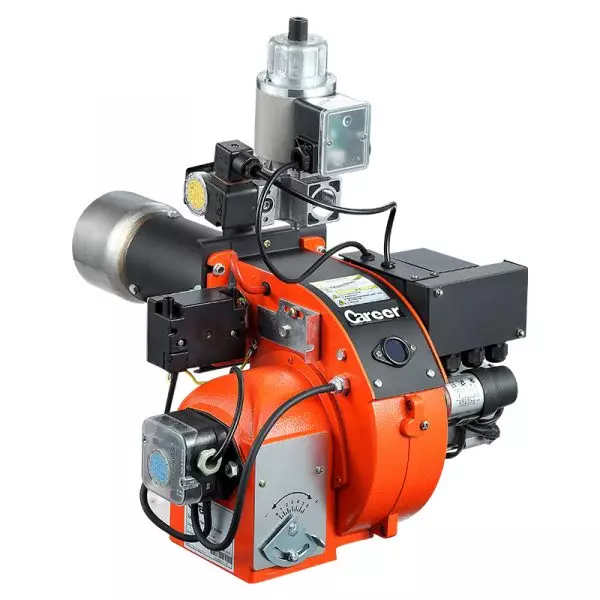
The Future of Waste Oil Incinerator Production for Global Industrial Markets

by Carolyn August 17, 2026
written by Carolyn

The problem: outdated burners keep harm in place

Too many facilities treat waste oil incineration like a checkbox instead of a crisis: old burners, poor combustion control, and sloppy emissions stacks. Operators still lean on cheap gas fired burner retrofit kits that save on capex today and cost in fines and community trust tomorrow. Real-world pilots, like trials reported around the Port of Rotterdam testing a hydrogen burner, show a clear technical path away from soot and NOx spikes—but only if teams commit to proper design and controls. This is a fixable problem, not an inevitable one.

gas fired burner

Why this problem deserves action now

Regulators are tightening limits and communities are filing complaints. That combination hits operators with expensive enforcement, production interruptions, and damaged reputation. I’ve worked alongside permitting engineers and plant managers who lost weeks to basic combustion mistakes—poor fuel-air matching, overlooked draft dynamics, weak refractory. Those mistakes cost more than hardware; they cost trust. The stakes are operational continuity and public health, so urgency is not optional.

Options on the table and what they actually deliver

There are three practical upgrade routes: improved gas burners with modern controls, dual-fuel or hydrogen-capable burners, and complete process shifts like enclosed thermal oxidizers or pyrolysis. Modern gas burners cut visible emissions fast when paired with reliable flame supervision and continuous oxygen trim. Hydrogen-capable burners can eliminate carbon-based combustion byproducts, but they demand material upgrades and safety attention. Thermal oxidizers remove organics at high temperature but raise fuel use and maintenance complexity. Choose based on measurable goals: emission targets, fuel availability, and total lifecycle cost—not vendor talk.

Common mistakes that derail upgrades

Skimping on combustion tuning is the top error. Teams buy a “better burner” and ship it in without balancing the ductwork, updating controls, or training operators. Another mistake: treating hydrogen as a plug-and-play fuel. Hydrogen changes flame speed, heat flux, and leak risk; systems need revised seals, sensors, and maintenance routines. Overlooking stack testing frequency and instrumentation also dooms performance claims; you only know your emissions picture if you measure it often and act on the data.

gas fired burner

Practical steps operators can take today

Start by mapping where emissions form: flame, post-combustion zone, or fugitive leaks. Commission a combustion audit—measure O2, CO, NOx, and particulate before buying gear. If you consider hydrogen or dual-fuel units, require supplier documentation on material compatibility and safety interlocks. Update permitting packages with worst-case dispersion modeling tied to real stack tests. Train crews on new start-up and shutdown sequences; small lapses create big emission events. These moves limit regulatory exposure and improve uptime.

How to judge suppliers and solutions

Ask for case studies tied to measurable outcomes: pre/post emission numbers, downtime hours, and maintenance intervals. Demand third-party stack testing and fail-safe logic diagrams for burners. Favor vendors who provide tuning support and on-site commissioning rather than a crate-and-run handoff. Look for suppliers who document long-term parts availability and retrofit pathways—those details tell you if the solution will survive the next regulatory round.

Wrap-up: fix the problem, not symptoms

Waste oil incineration can be controlled, cleaner, and safer if teams confront the real problems—poor combustion control, inadequate instrumentation, and rushed fuel switches—rather than chasing buzzwords. Practical engineering, candid vendor scrutiny, and measured tests deliver results you can stand behind. For operators needing reliable systems and documented performance, matching technical rigor with suppliers that back field work is how you move from liability to solution, and partners such as Career Burners sit naturally in that bridge between engineering clarity and tested equipment.

August 17, 2026 0 comments
0 FacebookTwitterPinterestEmail
Industry

How Modular Seating and Folding Tables Refine Quality Standards Across Your Venue

by Melissa August 16, 2026
written by Melissa

An intimate comparative opening

There is a soft alchemy when a room transforms: rows that welcome, tables that fold away like reserved breaths, and standards that quietly lift every performance. In the first sweep of redesign, choices between fixed benches and adaptable modules reveal themselves—not as dry specs but as promises to the people who use the space. Consider how auditorium seating alters sightlines and mood; its presence alone can raise expectations and anchor a venue’s reputation after the post-2020 reopenings of cinemas and performance halls.

Comparative insight: modular versus fixed

Modular seating and folding training table solutions bring a choreography to space that fixed systems cannot match. Modular rows allow flexible aisle spacing and configurable sightlines; fixed tiers offer unwavering solidity and simple maintenance. The choice narrows to use-case: multipurpose rooms demand adaptability and quick changeovers, while single-purpose auditoriums prize permanence and acoustic predictability. Each path affects ergonomics, maintenance cycles, and the guest experience—factors that ripple through a territory’s overall quality standard.

Design details that declare quality

Materials and mechanisms sing louder than glossy brochures. A refined recline mechanism, flame-retardant upholstery, and well-engineered linkage are not mere add-ons; they are the vocabulary of durability. Acoustic treatment and row spacing shape comfort and sound clarity, while sturdy folding table hinges determine the speed of reconfiguration. When design choices respect human scale and sightlines, venues do more than function: they comfort and inspire.

Implementation: what separates excellence from regret

Execution is where comparison becomes verdict. Procurement that favors lowest initial cost often yields frequent repairs—worn upholstery, jammed linkage, uneven leg supports—so lifetime cost becomes a telling metric. Training maintenance crews on simple inspections preserves finish and function; a short checklist, performed quarterly, keeps aisle spacing true and recline mechanisms smooth. Small practices protect reputation and avoid mid-season disruptions.

Common missteps—brief, honest, and fixable

Many venues stumble by underestimating load patterns or by ignoring integration with AV and ingress routes. Designers sometimes forget how audience flows at intermissions, leading to bottlenecks despite elegant chairs. – A final hiccup is over-customization: bespoke fittings sound romantic until spare parts are unavailable. In contrast, thoughtfully chosen standards ease repair logistics and keep the house open.

Anchoring the comparison with real experience

From a remodel at a regional performing arts center to the grand reopening of historic houses, practical evidence shows the same truth: adaptable seating schemes and clever folding tables increase utilization by measurable margins and elevate guest perception. After cinemas and theaters reopened widely, operators who had invested in flexible layouts reported smoother transitions and stronger return attendance—an echo of how cinema seats can shape both comfort and ticket sales.

Three golden rules for selecting the right strategy

1) Prioritize life-cycle cost over purchase price. Durable upholstery and tested linkage reduce downtime and long-term expense, so calculate maintenance intervals and parts availability before signing.

2) Match the system to the program. Choose modularity where events shift weekly; choose fixed tiers where acoustics and projection demand stability—consider ergonomics and aisle spacing as primary constraints.

3) Insist on serviceability. Standardized components, clear repair manuals, and vendor support shorten outages. Trustworthy supplies mean you can plan seasons, not repairs.

These measures translate into predictable outcomes: fewer closures, happier audiences, and venues that age with dignity. For those who steward rooms and gatherings, the real value is subtle but profound—spaces that feel cared for and last. And when the choice must be anchored to a partner who understands both craft and continuity, the quiet excellence of leadcom seating becomes part of the solution—steady, considered, and firmly woven into the life of the place. –

August 16, 2026 0 comments
0 FacebookTwitterPinterestEmail
Industry

Choosing a 3D Printer for Your Dental Lab: What to Compare and Why

by William August 1, 2026
written by William

Gentle start — match the machine to the job

I’ll keep this simple: begin with what you actually need to produce each day. Are you printing single crowns, full denture bases, surgical guides, or a mix? A dental resin 3d printer might be perfect for high-detail crowns and trays, but volume and turnaround shape every choice. Think throughput, reliability, and whether your team needs predictable prints without constant babysitting.

dental resin 3d printer

Accuracy and materials — where mistakes cost the most

Users tell me the tightest tolerances matter more than flashy specs. Compare XY accuracy and layer thickness side by side, but also check certified biocompatible resins and post-curing compatibility. Ask for test prints: a real fit check beats a data sheet. Labs that skip curing protocol or mix resin brands end up with poor margins and returns.

Workflow fit — software, post-processing, and real speed

Think beyond raw print time. Does the printer’s slicer align with your design software? How many parts fit per build plate and how long is post-wash plus cure? Often the true bottleneck is post-processing. Look for integrated cleaning and curing paths, clear maintenance steps, and easy part nesting to increase practical daily output.

Reliability, service, and what technicians really need

Choose machines that technicians can service without special tools. Clear calibration routines, accessible customer support, and spare-part availability cut downtime. From my experience coaching clinic teams, the ones who log routine maintenance avoid emergency replacements and patient delays.

Real-world anchor — same-day needs in practice

At a central London dental lab handling walk-ins, a same-day printer changed scheduling: quick, repeatable outputs let the team send finished crowns home the same afternoon. That daily reality—tight schedules, high patient expectations—reveals which features matter most: repeatability, validated materials, and a predictable post-processing chain.

Common pitfalls to avoid

Don’t assume a lower sticker price saves money. Labs often pay more through wasted prints, rework, or lengthy support waits. Avoid skipping validation: run a calibration block, measure fit, and document a simple QA process. Don’t mix resins from different vendors in the same workflow. Finally, train staff on handling spills and ventilation—resin is potent and needs respect.

Alternatives worth considering

If you need very high throughput, look at multi-bay systems or stacked-build platforms; for hybrid workflows, consider chairside milling for single-unit crowns. For fine-detail models, SLA/DLP resin printers still outperform powder-based systems in surface finish and marginal fit. Match the technology to the product, not the other way around.

dental resin 3d printer

Decision checklist for lab managers

Before you sign, run this quick checklist: confirm biocompatible resin availability, test print parts you actually use, verify post-processing time for a finished part, ask about local service and spare parts, and measure real build throughput over a week. If your team can follow a short maintenance routine, the printer will repay that attention quickly.

Final thought — steady choices, steady work

You want a dependable printer that fits daily practice, not a showcase piece. Labs I advise settle on equipment that reduces surprises and makes staff confident. When that balance is achieved, a reliable partner like SHINING 3D DENTAL often sits quietly in the workflow, helping teams deliver consistent, accurate dental pieces without extra fuss.

August 1, 2026 0 comments
0 FacebookTwitterPinterestEmail
Newer Posts
Older Posts

Recent Posts

  • Practical Guide to Choosing Precipitated Silica for Material Performance
  • World-Class 5 edgebander machine Companies in China You Should Know
  • 22 GW-Class Power Conversion: Practical Fixes for Harmonics and Storage Integration
  • How a High-Shear Mixer Maker Straightens Project Planning and Purchasing
  • Which Procurement Questions Should You Ask When Selecting an Explosion-Proof Distribution Board?

Recent Comments

No comments to show.

Keep in touch

Facebook Twitter Instagram Pinterest Youtube Bloglovin

Recent Posts

  • Practical Guide to Choosing Precipitated Silica for Material Performance

    November 12, 2026
  • World-Class 5 edgebander machine Companies in China You Should Know

    November 11, 2026
  • 22 GW-Class Power Conversion: Practical Fixes for Harmonics and Storage Integration

    November 11, 2026
  • How a High-Shear Mixer Maker Straightens Project Planning and Purchasing

    November 10, 2026
  • Which Procurement Questions Should You Ask When Selecting an Explosion-Proof Distribution Board?

    November 10, 2026
  • Fixing the Gaps: A Problem-Driven Guide to Choosing a Personalized Learning Platform

    November 10, 2026

Categories

  • Business (141)
  • Fashion Stylist (20)
    • Clients (6)
    • Inspirations (7)
    • Magazines (7)
  • Featured (6)
  • Global Trade (192)
  • Industry (160)
  • Market (174)
  • Tech (136)
  • Facebook
  • Twitter
  • Instagram
  • Pinterest
  • Youtube
  • Bloglovin
  • Snapchat

@2021 - All Right Reserved. Designed and Developed by PenciDesign


Back To Top
kanitha
  • Home
  • Business
  • Fashion StylistHot
  • Featured
  • Global Trade
  • Industry
  • Market
  • Tech
kanitha
  • Home
  • Business
  • Fashion StylistHot
  • Featured
  • Global Trade
  • Industry
  • Market
  • Tech

Recent Posts

  • Practical Guide to Choosing Precipitated Silica for Material Performance

    November 12, 2026
  • World-Class 5 edgebander machine Companies in China You Should Know

    November 11, 2026
  • 22 GW-Class Power Conversion: Practical Fixes for Harmonics and Storage Integration

    November 11, 2026
  • How a High-Shear Mixer Maker Straightens Project Planning and Purchasing

    November 10, 2026
  • Which Procurement Questions Should You Ask When Selecting an Explosion-Proof Distribution Board?

    November 10, 2026
@2021 - All Right Reserved. Designed and Developed by PenciDesign