
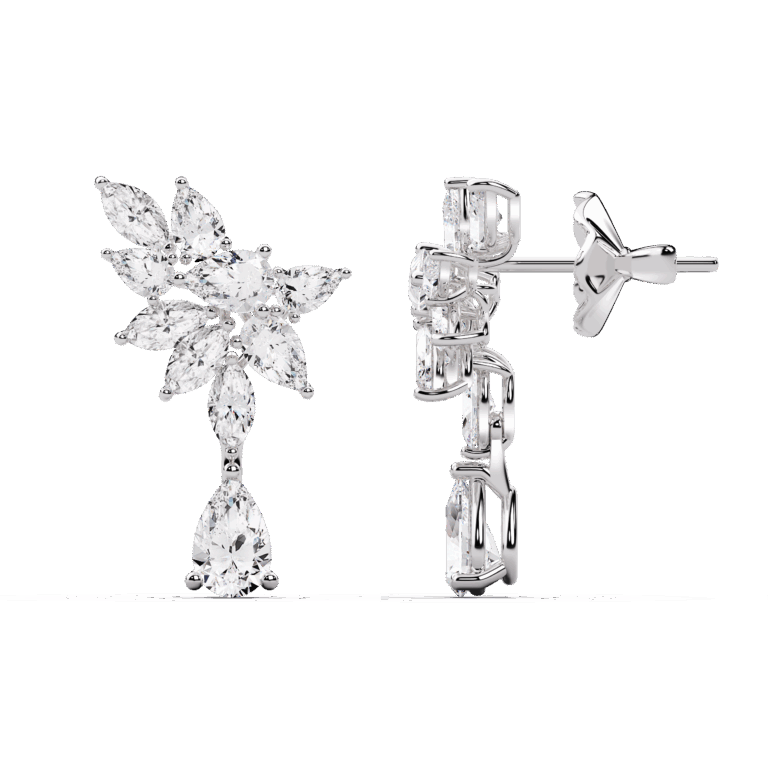
A Quiet Glance, A Sharp Light
A late sun dips through the shop window, and a single stone catches it just right. Classic jewelry pieces sit nearby, each holding a small archive of touch and time. When you try on a pear cut diamond ring, the room seems to slow—(soft light, quiet hands). Industry reports keep noting steady interest in heritage cuts, and the pear keeps whispering its way back into view. Yet here’s the question: why does this old silhouette still feel new, and what sits beneath its grace? The answer begins with structure—crown angle, table percentage, and the quiet strength of the girdle—then moves to how your life meets the stone day by day. In that meeting, we often find both beauty and friction. We should name both.

Let’s step under the loupe together and look for the patterns, then move toward what helps them shine with less strain. Next comes the deeper layer.
Hidden Frictions Behind the Pear: Where Beauty Meets Use
Why does the tip test our patience?
Start with design physics. The pear’s point concentrates stress; that’s where chips occur if the girdle runs thin or facet symmetry goes off by a hair. A long pavilion depth can invite the “bow-tie,” a dull band where light escapes. The fix isn’t magic; it’s measurement. Look, it’s simpler than you think: seek a protective prong at the tip, balanced table percentage, and calibrated crown height to guide light return. Daily wear adds more. The shape pivots on the hand; without a snug shank or low-set prong system, snagging happens—funny how that works, right? Comfort is also optical: uneven scintillation makes the stone feel restless, especially under office LEDs. Fluorescence can help or hurt depending on intensity, so observe it in mixed lighting. The real pain points hide in misaligned micro-geometry: culet position, girdle thickness, and polish grade that can turn sparkle into flicker. Traditional advice says “just choose VVS clarity and a good cut.” But if the calibration misses—facet indexing, pavilion angle—clarity won’t save the performance. A pear thrives when the map of light is planned, not guessed.

Comparing Paths Forward: Precision Tools, Calmer Lives
What’s Next
Now, step from problems into principles. New optical-mapping tools trace rays through each facet, revealing where the pear’s mass should live to avoid the bow-tie while keeping fire. Think ASET-style analysis, digital hearts-and-arrows overlays adapted for asymmetry, and CAD that tests crown angle sweeps before a single cut. Setters follow suit with low-profile prong architecture and reinforced tip claws that guard the point without stealing light. In this quiet evolution, a well-proportioned pear brilliant cut diamond doesn’t need to compromise between drama and daily peace—its pavilion depth, culet alignment, and facet symmetry are tuned as a system. And the band matters too: a balanced shank, a subtle cathedral rise, and secure seat geometry lessen rotation on the hand. The result is less snagging, steadier sparkle, more calm. — And yes, I smiled too.
Let’s ground this in choices you can make today, without hurry. First, evaluate performance, not just stats: view the stone in daylight, warm interior light, and cool LEDs; watch how the bow-tie shifts. Second, read the structural clues: girdle thickness at the point, polish symmetry, tip prong design, and whether the table percentage pairs well with pavilion angle. Third, consider life-fit: do you need a bezel kiss over the point or a tapered V-prong, and will a slightly thicker band prevent spin? These aren’t trends; they’re habits that keep the piece kind. We’ve moved from hidden friction to designed ease, from old rules to clearer tools. Evaluative close: measure light behavior in varied lighting, check protective engineering at the tip, and confirm ergonomic stability on the hand. In that balance—performance, protection, and comfort—you give form to meaning. Vivre Brilliance