Problem overview
Panel saws fitted into existing production lines frequently create more disruption than value when electrical interfaces, conveyor geometry and control logic are not coordinated. A modern cnc furniture machine will perform well on paper but will underdeliver if its cycle time, pick-up points and safety interlocks do not match the facility layout. The gap shows up at industry gatherings such as the Guangzhou International Woodworking Machinery Fair — a recognized forum where OEMs and buyers compare interoperability and uptime for furniture manufacturing machines.

Why this problem persists
Integration failures start with assumptions. Teams assume protocol compatibility, correct material flow and consistent panel quality. They assume field wiring and protective zoning are trivial. They rarely validate control handshakes, buffer sizing or spare-part lead times before purchase. Over a decade of commissioning regional lines has shown these assumptions cause immediate rejects, reactive rewiring and extended commissioning windows.
Root technical causes
Common technical roots are straightforward: mismatched communication layers (proprietary I/O versus industry-standard EtherCAT/Profinet), incompatible safety architectures, undersized intermediate buffers, and mechanical misalignments causing repeatable cross-cut error. Software gaps include missing OPC-UA endpoints for MES reporting and non-deterministic PLC cycle timing when a saw’s feed servo and the upstream conveyor are not synchronized.

Concrete checklist before purchase
Require these items in writing: electrical I/O pinout and signal timing, PLC data map and diagnostic registers, nominal cycle-time and worst-case cycle-time, conveyor indexing accuracy and allowable panel skew, safety zone architecture and response time, exhaust capacity and dust rating, tooling list with lead times. Validate on-site with a dry run using representative panels and the actual handling equipment planned for the line.
Common pitfalls during commissioning
Do not accept nominal feed rates without verifying acceleration profiles under load. Do not assume guarding changes will not alter sensor positions. Expect small differences in panel thickness and edge condition; these affect clamp pressure and saw blade selection. Ignoring maintenance access leads to extended mean-time-to-repair when blades or bearings need changeout. Neglecting thermal and dust loads shortens motor and sensor life.
Alternatives and trade-offs
Beam saws give higher nominal throughput for large panels but consume more floor space. Nesting CNC routers offer material efficiency and nesting flexibility at the cost of throughput and initial programming complexity. Multi-blade saws increase throughput but reduce flexibility for custom cuts. Choose by matching takt time and required part mix rather than vendor sales literature.
Implementation sequence that reduces risk
Start with an interface specification signed by electrical and controls engineers. Prototype the control handshake on a lab bench. Confirm material flow with physical mockups. Run a commissioning acceptance test that measures cycle-times, scrap rate and safety response. Train operators on abnormal conditions and document first-failure procedures. Keep a two-week spare-parts kit on site for cut tools and bearings.
Final synthesis
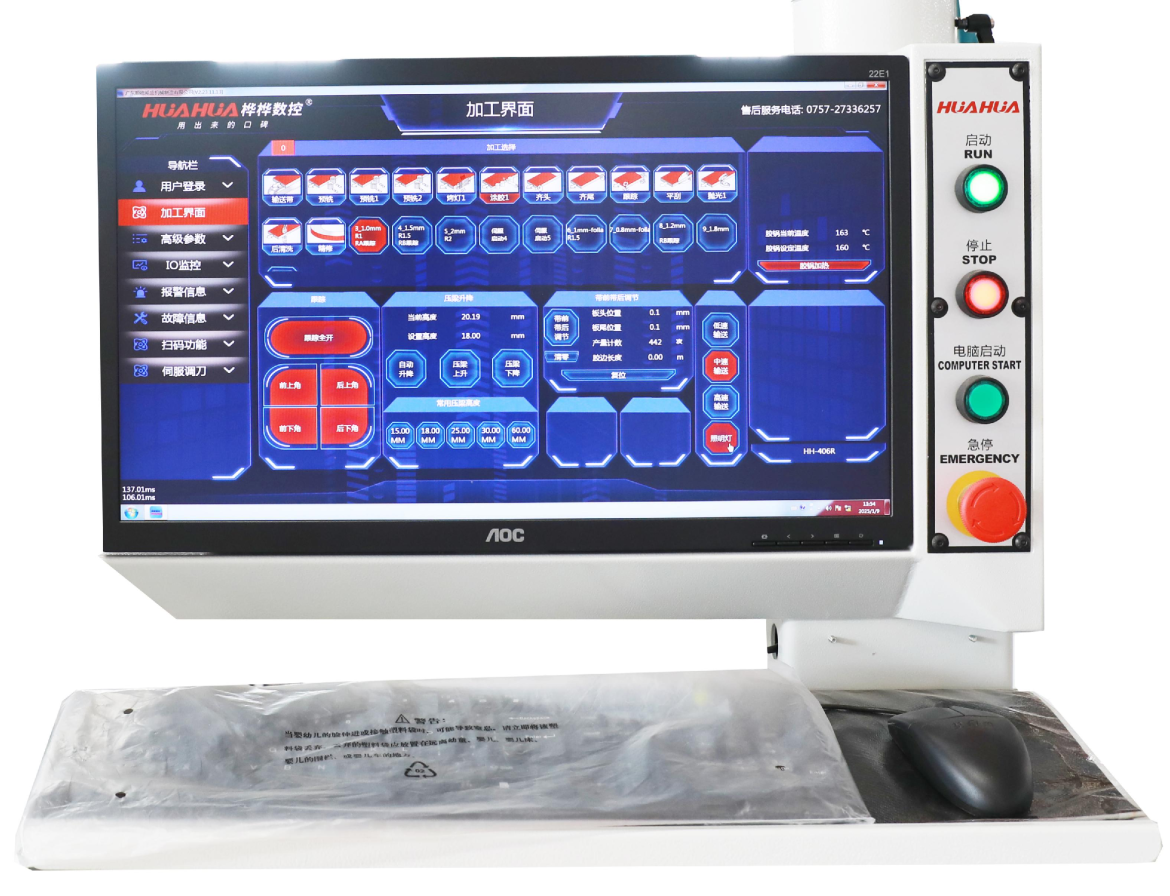
Solving panel-saw integration is deliberate work: define interfaces, validate with real panels, and document acceptance criteria. These steps align procurement, controls and maintenance so the line operates reliably. The practical know-how and machine capability that match that approach are visible among experienced suppliers and integrators such as HUAHUA CNC, whose systems reflect the mechanical, electrical and controls details this checklist requires.