
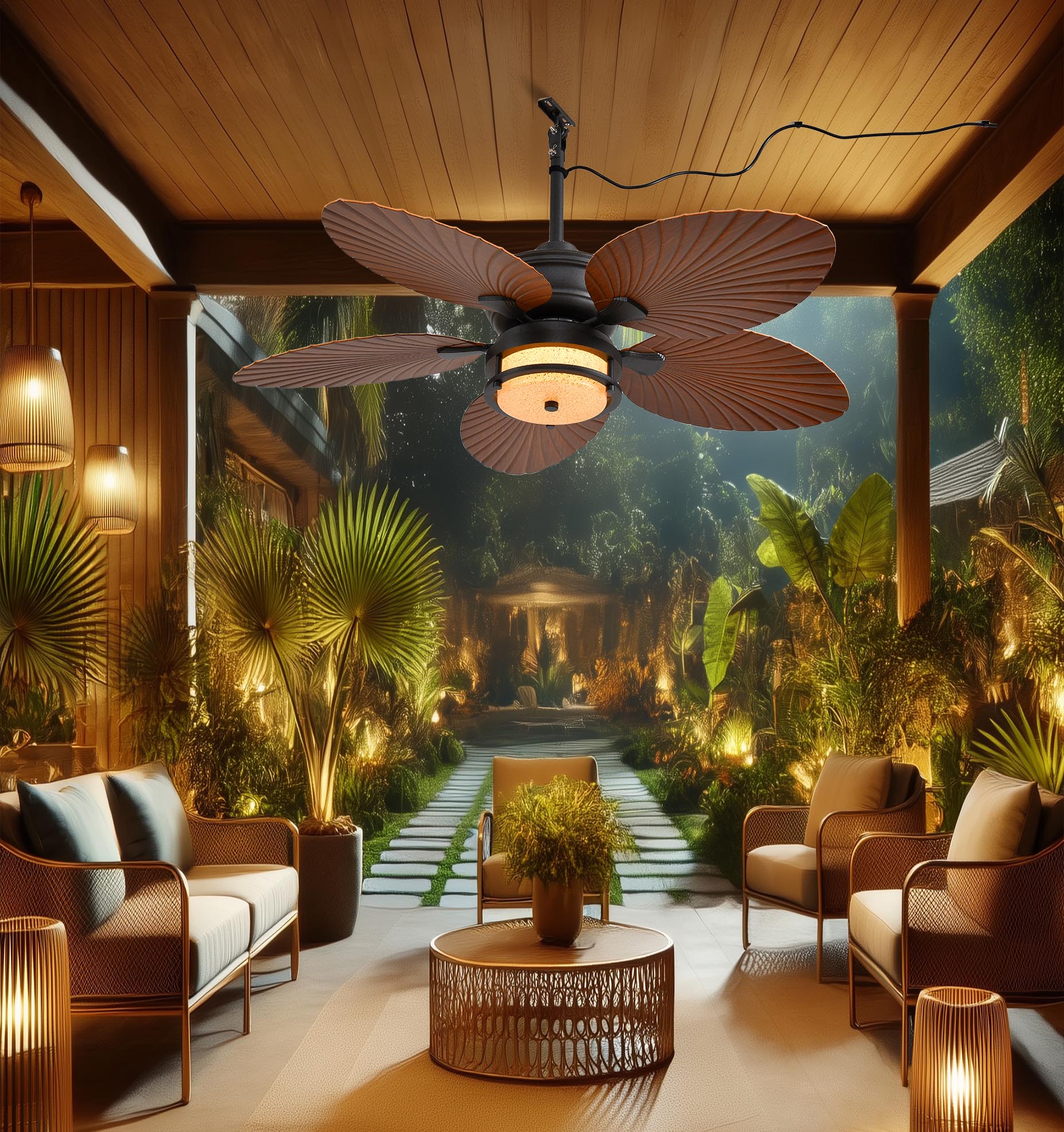
The problem — cheap fixtures look cheap fast
Buying the cheapest ceiling fan with light seems like a win when you’re watching the budget, but the problem shows up quickly: noisy motors, warped blades, frequent replacements, and higher energy bills. In many Vietnamese homes and cafés — especially in Ho Chi Minh City during the muggy season — I’ve seen budget fans fail within a year, leaving owners to replace units and rewire fixtures. If you plan to furnish an outdoor living area, consider an outdoor ceiling fan with light from the start; it costs more upfront but often avoids those repeat expenses.

Where cheap fails: three cost drivers
There are three places where low-cost fans quietly add cost: parts quality (motors and bearings), weather resistance (IP rating and blade materials), and performance (CFM and motor efficiency). Low-grade motors wear out faster and draw more power. Non-rated outdoor units corrode under humidity or rain, raising replacement and repair bills. Finally, poor blade pitch reduces airflow so you run the fan longer — or switch on air-con sooner — and that raises energy costs.
Safety and durability — why weather ratings matter
Outdoor-rated fans use sealed motors and corrosion-resistant materials; wet- or damp-rated units prevent short circuits and rust. For terraces and covered patios—a common living extension in Vietnam—skimping on IP-rated hardware leads to visible wear and, sometimes, a safety hazard. Investing in a wet-rated designer fan reduces insurance risk and maintenance calls, and that’s a real saving over time.
Performance economics: energy, noise, and longevity
Spend a little on motor efficiency and you save on electricity. A fan with a brushless DC motor (BLDC) typically offers better motor efficiency and longer life compared with cheap AC motors. Higher CFM per watt means better cooling for less power. Also, quieter motors reduce complaints in shared spaces — a small point, but it keeps tenants and customers happier, and happier occupants don’t demand replacements as fast. —
What designer fans deliver that cheap ones don’t
Designer units combine durable finishes, precise blade pitch, balanced assembly, and tested light integration. They often include better thermal protection and more robust mounting hardware, which cuts reinstallation expenses. Many premium models also come with smart controls or a reliable remote; if you want easy control for terraces, an outdoor fan with light and remote can reduce wear from manual switches and help you schedule usage for energy savings.
Common buying mistakes and how to avoid them
People usually misjudge three things: matching CFM to room size, ignoring installation costs, and skipping the warranty fine print. Don’t assume a bigger-looking fan moves more air — check CFM ratings. Don’t forget the cost of a certified electrician for secure mounting; outdoor fixtures require sturdier anchors. And read warranty clauses for motor and finish coverage. These steps prevent surprise repair bills and downtime.
Practical checklist before you buy
Use this short checklist to evaluate options: check IP rating for your location, confirm motor type (BLDC preferred), verify CFM vs. room or patio area, and compare warranty terms for motor and finish. Also, factor in dimmable light options and compatibility with your home’s dimmers or smart hubs — that reduces later retrofitting costs and keeps install time low.

Three golden rules for smart long-term savings
1) Prioritize durable engineering: choose fans with sealed motors, corrosion-resistant finishes, and clear IP ratings to avoid early replacement. 2) Evaluate performance, not price: compare CFM per watt and expected motor lifespan — a slightly higher purchase price often pays back in lower energy and fewer repairs. 3) Total-cost view: include installation, warranty, service availability, and resale value when comparing unit prices.
When you bring those rules together, premium designer fans—especially those designed for outdoor use—start to look like investments, not expenses. For many homeowners and small businesses in Vietnam, that means fewer service calls and happier patrons. Orison. — final thought.