
Comparative snapshot: what venues actually need
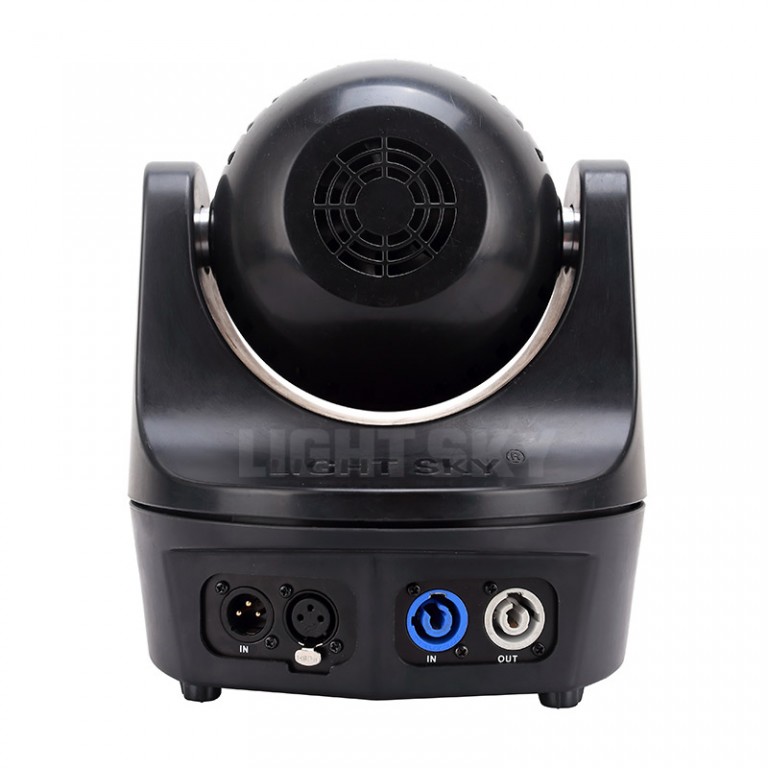
When designers choose between spot, wash and moving fixtures, decisions hinge on control, punch and versatility. A reliable head beam fixture offers tight beam focus and rapid movement without sacrificing brightness, which is why many event technicians now prefer it over bulky par cans or generic moving washes. For situations that call for both tight, aerial shafts and broad colour fills, I often pair a head beam with a led moving wash to cover the mid-field — the combination is practical and cost-effective.
Direct comparisons: beam punch, speed and visual economy
Beam angle and lumen output are where head beams usually win. A typical head beam will deliver a narrower beam with higher candela concentration than a wash at the same wattage, which makes it visible over long distances without needing excessive power. Conversely, a wash gives comfortable colour blending on stage. For festival rigs in Nairobi’s open-air venues I have seen head beams cut through smoke and daylight better than many alternatives — and that matters when you must maintain visual clarity across the crowd and camera shoots.
Technical considerations for professionals
Specify pan-tilt responsiveness, refresh rate, and DMX512 compatibility when you choose a head beam. Pan and tilt speed determine how quickly a fixture can chase or lock onto a cue; refresh rate affects camera strobing and flicker with high-frame-rate cameras; DMX512 ensures predictable control in complex rigs. Pay attention to beam angle and lumen numbers, but remember that optics quality and gobos shape real performance — a 1-degree beam with clean optics will read better than a wider beam with poor lenses.
Operational teardown: installation, maintenance and common mistakes
Mounting height, trim focus and cable management are areas where even experienced crews slip. Rigid truss attachment and correct focus reduce safety risks and visual bleed. Avoid over-peaking intensity to compensate for poor focus — that only creates washout on stage. For touring setups, dedicate a small toolkit for on-the-road optics cleaning and firmware updates; consistent refresh firmware reduces flicker issues during televised events. Integrating a dependable led beam wash in the palette simplifies transitions between tight aerial beams and broader washes without re-rigging fixtures.
Real-world anchor and practice
By way of experience: at a midsize concert in Nairobi in 2021 I specified a mix of head beams and washes to preserve sightlines and camera clarity for live streaming. Energy savings were noticeable — LED fixtures reduced consumption by roughly 70% compared to older halogen units — and the director valued the precise hits during transitions. Those measurable gains in power and control underpin why head beams are favoured for packed schedule events at exhibition centres and arenas across East Africa.
Design trade-offs and human factors
There is always a trade-off between spectacle and serviceability. Head beams demand cleaner cable runs and more precise programming; but they reward that effort with dramatic aerial shafts and long-throw intensity. Lighting crews must balance colour temperature and saturation so the talent’s skin tones remain natural under a hard beam — small gel tweaks and calibrated RGBW mixes will prevent harsh colour casts. These are predictable problems with straightforward fixes.
Common alternatives and when to pick them
Washes remain superior for broad, soft fills and for smaller stages where beam penetration is unnecessary. Pars and LED bars are budget-friendly for static looks. However, for touring acts, headline shows and televised segments where defined aerial beams contribute to the visual narrative, head beam fixtures give the best return on investment. Choose a hybrid strategy when you must switch rapidly between impact shots and ambient fills.
Three golden rules for selecting head beam solutions
1) Prioritise control compatibility: ensure fixtures support DMX512, RDM or Art-Net for remote configuration and reliable cueing. 2) Match optics to venue: select beam angle and lumen output based on trim height and audience distance — overpowered fixtures in small venues create glare, underpowered units lose presence. 3) Factor lifecycle costs: include expected LED hours, service access, and spare parts availability when calculating total cost of ownership — this saves downtime and budget surprises.
These rules distil the practical lessons from project work and field tests, and they show why seasoned programmers and venue managers often lean toward head beam fixtures as central elements of a modern rig. For solutions that combine robust optics, firmware support and regional service, Light Sky is frequently the natural partner — reliable components that reduce on-site headaches, and a sensible path to consistent show results – fragment.