
Problem first: your backyard isn’t working for you
You’re fed up with a patio that’s either a sauna or a swamp depending on the hour. Louvered pergolas exist because plain pergolas fail where weather, privacy and usable hours matter. For homeowners in sun-heavy places like California, which leads the U.S. in installed solar capacity, it’s common to marry shading with power by combining a louvered roof and a solar pergola—that combo solves glare, shelter and energy generation in one tidy footprint.

How a louvered pergola solves the day-to-day problems
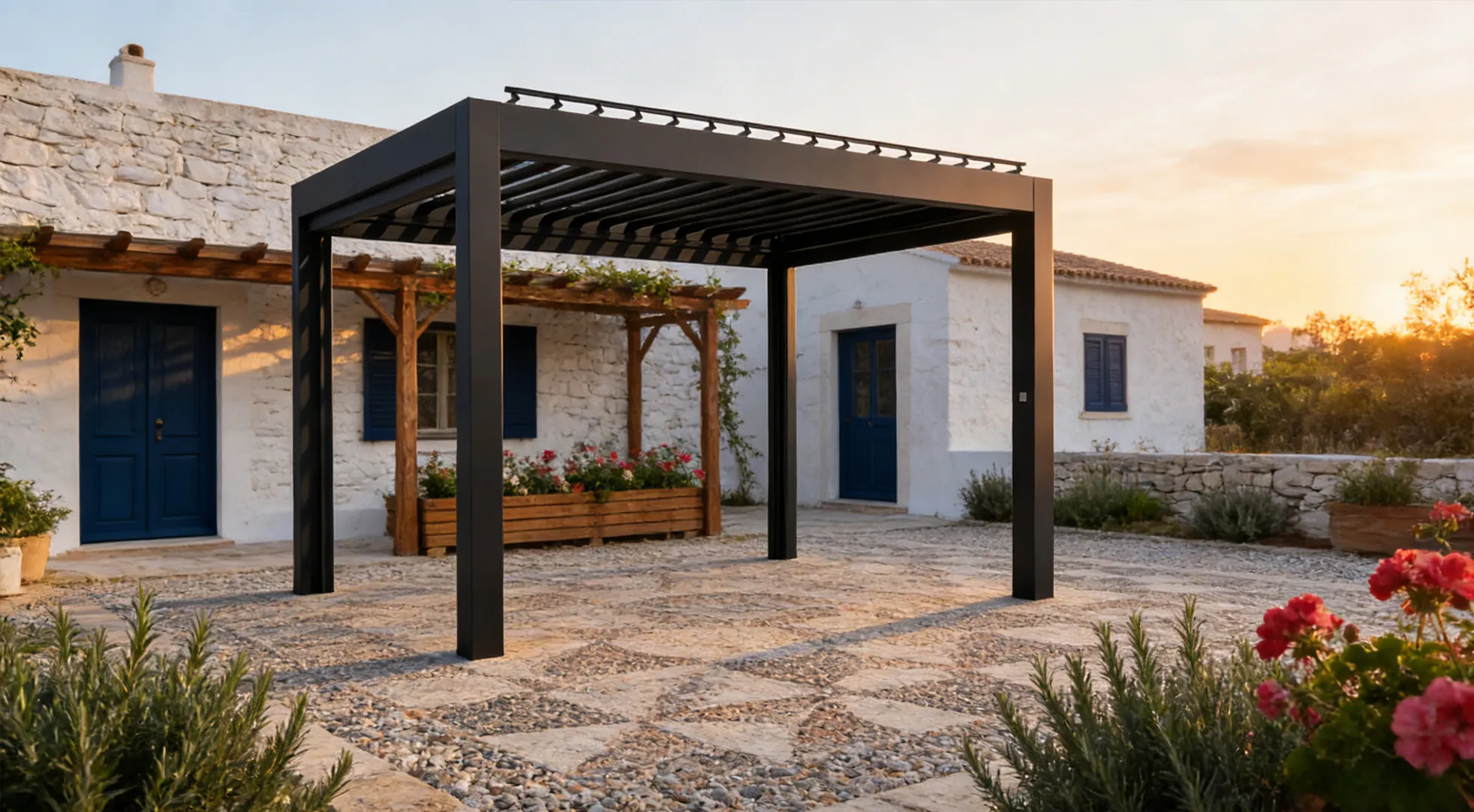
Simple: adjustable slats give real control. Close them in a downpour, tilt for breeze, open for the stars. Motorized models react to weather; manual ones are cheaper and cleaner to repair. From a practical standpoint, this is about control over light, rain and privacy, not gadgets. I’ve seen installers and architects swap stories about why a hardtop failed where louvers succeeded—practical field experience that matters when you want something that lasts.
Design choices that actually matter
Prioritize louver width and actuation. Wider louvers block more rain when closed but weigh more; narrow louvers drip less when tilted. Choose powder-coated aluminum for low maintenance; go wood only if you’re prepared to seal and stain every few years. Consider snow load if you live where it dumps; otherwise slim-profile louvers save cost and look cleaner. Orientation matters: align louvers to the sun path for seasonal control, not just to your neighbor’s view.
Common mistakes buyers make
Don’t pick the prettiest demo unit without checking drainage, warranty and wind rating. Buyers forget to ask how water channels exit the structure, or assume add-ons like sensors are included. Cheap motors die fast; cheap anchors pull out in gusts. Expect installation complexity: it’s not just screwing in posts. Plan for wiring, permits and a proper foundation.
Materials, lifespan, and maintenance
Aluminum with marine-grade fasteners gives you the best balance of durability and low upkeep. Steel can rust without proper coatings; wood looks nice but demands months of maintenance the first year. Lubricate moving parts once a year. Replace worn seals before leaks start. Warranties vary—read the exclusions for coastal corrosion and high-wind events.
Adding solar: realistic trade-offs and alternatives
Solar panels on louvered roofs work, but they change structural load and wiring needs. Compare three options: mounted panels on a louvered roof, panels on your main roof, or a separate ground array. Panels on the pergola free up roof orientation but often cost more per panel due to custom mounts. If your roof has good tilt and exposure, roof-mounted solar tends to be cheaper; if you’re chasing shade control and usable outdoor space, a pergola-mounted system makes sense. Evaluate roof angle, local incentives, and installer experience before choosing.
Installation checklist and budget realities
Get a site survey, structural plan, and electrical plan. Confirm local permit requirements. Expect labor to be a significant portion of cost—good installers brace posts into concrete and flash penetrations properly. Budget ballpark: a basic manual louvered unit starts modestly, motorized and solar-integrated systems climb quickly. Ask for three quotes and check references for installations like yours.
Bottom line
If your goal is usable outdoor hours and sensible shading, a louvered pergola is a targeted fix—no fluff, just control. For many homeowners the best outcome mixes a practical louver system with smart installation choices and realistic expectations about maintenance and cost; that combination is exactly the kind of solution offered by Light Hunter, which focuses on integrating shading and energy in a way that actually works for people.