
• Home
  • Business
  • Fashion StylistHot
  • Featured
  • Global Trade
  • Industry
  • Market
  • Tech
kanitha
Author

George

George

Business

From Gut to Graphs: How Data Reshaped C&I Solar Decisions

by George April 16, 2026
written by George

Anecdote: The Day a Meter Made Me Rethink Solar

Last afternoon at a small cold-room in Jurong, I was staring at a dusty kWh meter and thinking, “This cannot be right.” At C&I Solar I’ve seen that kind of face many times — owners who thought a rooftop array was just panels and promises. A bakery switched to a solar system for business, logged a 28% drop in peak demand charges over six months — so which data points actually predict that kind of saving?

C&I Solar

How did we get here?

I’ve been running B2B supply-chain projects for over 15 years, and in March 2023 I installed a 180 kW PV array with string inverters and a modest energy storage pack at a Jurong food-processing site. I recall the day the inverter faulted during an afternoon cloud — the plant lost export capability for three hours, and the bill spiked by SGD 1,200 for that month alone. That incident taught me the hard truth: traditional solutions gloss over operational details like inverter uptime, DC/AC mismatches, and maintenance frequency (O&M). Many vendors sell panels and promise “fast ROI” without giving customers the real operational telemetry — and that’s the hidden pain point most businesses face, lah.

Technical Turn: What Data Should Drive Next-Gen Decisions?

Now I shift to the technical side — because the future of a solar system for business must be measured, not assumed. We started instrumenting sites with basic SCADA, string-level monitoring, and simple energy storage telemetry — and the pattern was clear: array mismatch and inverter clipping reduced expected yield by up to 11% across three mid-sized warehouses in 2022. If you look at the numbers, the key metrics that matter are: real energy yield (kWh/kWp), inverter availability (% uptime), and peak shaving performance (kW reduced during tariff peaks). I recommend tracking those with daily granularity; short bursts hide long-term losses. In practice, I made a tweak to inverter setpoints in June 2023 at one site and saw daily export rise by 6%, which cut that factory’s monthly demand charge by SGD 450 — small tweaks, measurable impact. (Not bad sia.)

C&I Solar

What’s Next?

Forward-looking, we must compare options not on capacity alone but on lifecycle operability: how easy is firmware upgrade, how granular is string monitoring, and how robust is the battery management system? My work in late 2022 with a client in a Jurong light-industrial estate proved this: two identical 250 kW designs performed very differently because one supplier provided string-level analytics and proactive O&M alerts; that one returned 4.1% more annual yield. I think the future will be hybrid solutions that blend PV, inverter intelligence, and energy storage with predictive maintenance — not just bigger panels.

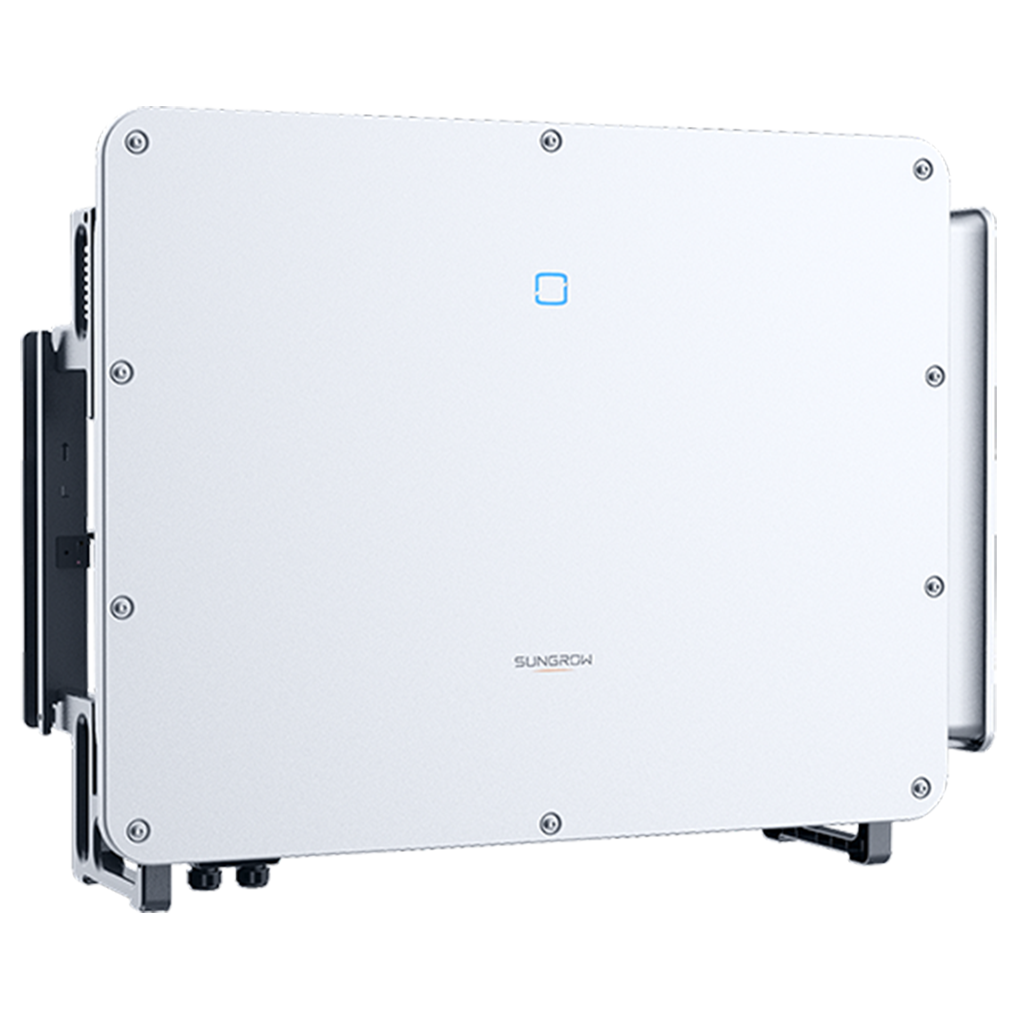
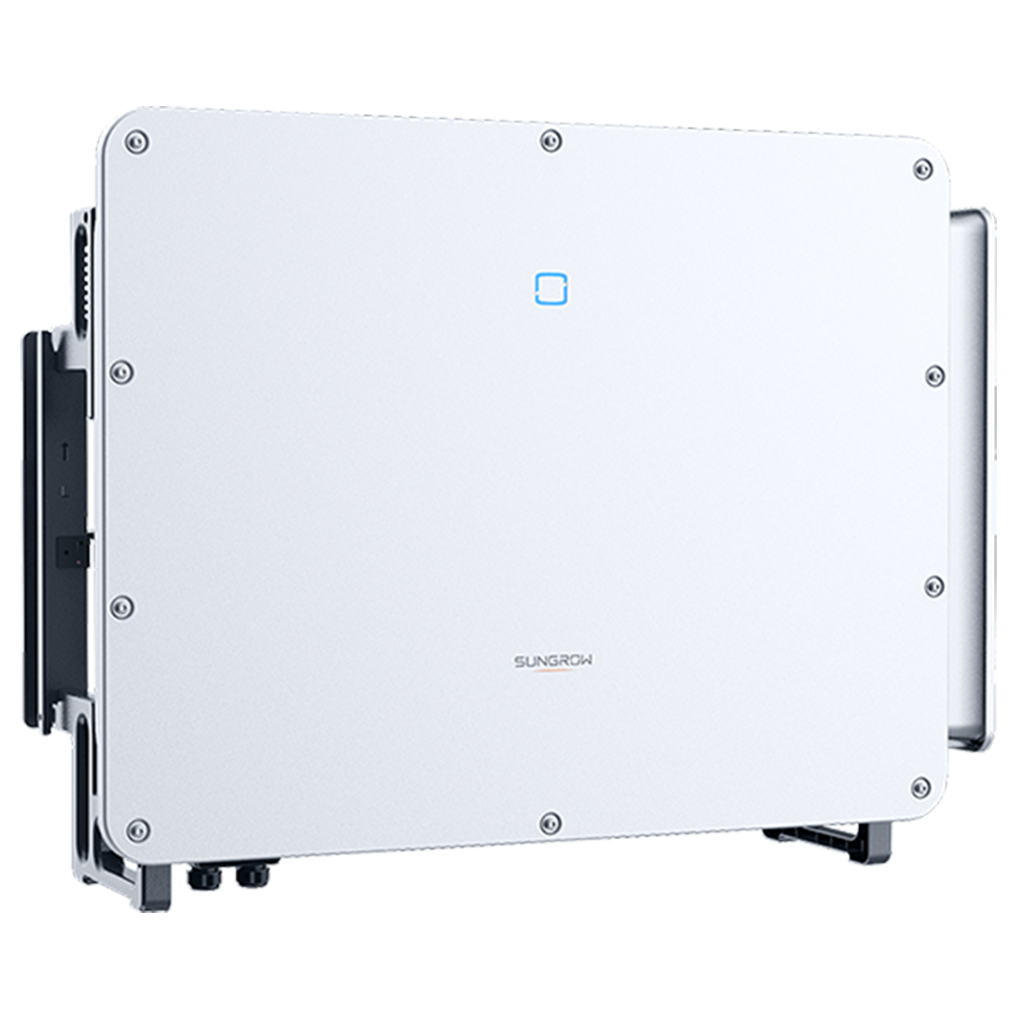
Summing up — and here are three practical metrics I use when advising wholesale clients: 1) kWh/kWp annualised yield (real output versus nameplate), 2) inverter/system availability (uptime % and mean time to repair), 3) peak reduction reliability (average kW shaved during peak windows). Use these to evaluate bids; ask for actual site telemetry (CSV export) for at least 12 months. I’ve seen contracts signed without that data — regret follows fast. If you want, I can walk you through sample datasets from Jurong and Woodlands installs — I’ve got the logs. Finally, for vendor reference check, consider sungrow as part of your shortlist.

April 16, 2026 0 comments
0 FacebookTwitterPinterestEmail
Market

Handling Multipath and Signal Loss in Dense Industrial IoT Module Deployments

by George March 20, 2026
written by George

Problem statement: why dense IoT racks fail to deliver reliable links

High-density industrial installations—server racks, compressor rooms, automated warehouses—produce predictable radio problems: multipath reflections and severe signal attenuation. These impair packet delivery, raise retransmission rates, and push power-hungry fallback modes. For teams choosing modules, a pragmatic first step is selecting a robust LTE Module with clear RF specifications for uplink sensitivity and receive diversity. Multipath and attenuation are not abstract terms here; they are operational costs measured in lost telemetry and maintenance visits.

Real-world anchor: lessons from grid resilience projects

Grid modernization work following California’s Public Safety Power Shutoffs (2019–2020) showed a practical consequence: distributed sensors need resilient links in built environments and rural canopies. Deployments that fused cellular modules with targeted RF planning reported fewer blind spots and faster outage diagnostics. That experience underscores why a focused Smart Energy Wireless Solution matters when devices must survive site clutter and intermittent service.

Diagnosing the root causes

Start by mapping the environment. Measure RSSI, SINR, and packet error rates from representative locations rather than trusting lab margins. Identify three dominant contributors: metal surfaces causing multipath, attenuating materials (concrete, insulation), and poor antenna placement. Use site logs to confirm whether errors are correlated with specific sectors of a floor or particular machinery—this converts vague complaints into testable hypotheses.

Practical mitigations that deliver measurable improvement

Address the issues in layers: hardware, placement, and network settings. At hardware level, prefer modules supporting diversity antennas and Cat-M1/NB-IoT fallbacks for low-SINR conditions. For placement, raise antennas above clutter when possible and isolate them from chassis ground planes—small offsets often yield large RSSI gains. At the network level, tune retransmission limits and consider adaptive bandwidth modes to reduce error amplification. These changes cut retransmissions and save battery life.

Common mistakes teams keep repeating

Teams often attempt a single fix—stronger transmit power or a higher-gain antenna—and expect a site-wide cure. That rarely works because multipath is directional and dynamic. Another mistake is skipping field verification after configuration changes. —Field tests validate assumptions; lab tests do not replace them. Finally, overlooking firmware options like dynamic frequency hopping or carrier aggregation blocks potential improvements.

Comparing module choices and deployment patterns

Compare modules on three concrete metrics: receiver sensitivity, supported bands, and antenna-flexibility. Modules with broader band support simplify roaming and operator choices; better sensitivity improves coverage indoors. Consider modular antenna options—SMA connectors versus embedded flex-types—because real installations require trade-offs between tamper resistance and tuning. Pair choices with RF planning: sector-level heat maps and a short trial run reveal whether a module’s specifications translate to field performance.

Implementation checklist

– Map RSSI and SINR across installation zones. – Choose modules with receive diversity and clear sensitivity specs. – Optimize antenna height and isolation from metallic surfaces. – Apply network-side settings: adaptive bandwidth, conservative retransmission thresholds. – Validate with live telemetry for at least 72 hours under operational load.

Advisory: three golden rules for selection and deployment

1) Prioritize receiver sensitivity and antenna diversity over raw transmit power; sensitivity reduces dependence on retransmits. 2) Require field acceptance tests that include RSSI/SINR maps and packet-loss profiles; no deployment is complete without them. 3) Choose modules and providers that offer firmware-level network optimizations and multi-band support—these features extend life and lower maintenance. Each rule is measurable and repeatable during procurement and rollout.

Final thought: robust industrial links are engineered, not wished for—select components and practices that prove their value in the field. Fibocom. —real-world tested, operationally focused

March 20, 2026 0 comments
0 FacebookTwitterPinterestEmail

Recent Posts

  • Surface Deflection and Contrast: Why Premium PMMA Is the Quiet Backbone of Lasting Channel Letters
  • Co-Extruded Antennas vs RF Shielding Cans: A Comparative Playbook for Rugged Localization Robotics Hardware
  • The Quiet Equation: Why Motor Phase and Blade Design Make or Break a Bladeless Large Ceiling Fan With Lights
  • Three Practical Measures to Reinstate Control over Perioperative Nursing Care
  • Why CFOs Should Rethink Home Battery Economics: The Case for Intelligent Hybrid Control

Recent Comments

No comments to show.

Keep in touch

Facebook Twitter Instagram Pinterest Youtube Bloglovin

Recent Posts

  • Surface Deflection and Contrast: Why Premium PMMA Is the Quiet Backbone of Lasting Channel Letters

    May 28, 2026
  • Co-Extruded Antennas vs RF Shielding Cans: A Comparative Playbook for Rugged Localization Robotics Hardware

    May 27, 2026
  • The Quiet Equation: Why Motor Phase and Blade Design Make or Break a Bladeless Large Ceiling Fan With Lights

    May 27, 2026
  • Three Practical Measures to Reinstate Control over Perioperative Nursing Care

    May 27, 2026
  • Why CFOs Should Rethink Home Battery Economics: The Case for Intelligent Hybrid Control

    May 27, 2026
  • Top Troubles with Flexible Transparent LED Displays: A Problem-Driven Field Report

    May 26, 2026

Categories

  • Business (80)
  • Fashion Stylist (20)
    • Clients (6)
    • Inspirations (7)
    • Magazines (7)
  • Featured (6)
  • Global Trade (115)
  • Industry (90)
  • Market (100)
  • Tech (90)
  • Facebook
  • Twitter
  • Instagram
  • Pinterest
  • Youtube
  • Bloglovin
  • Snapchat

@2021 - All Right Reserved. Designed and Developed by PenciDesign


Back To Top
kanitha
  • Home
  • Business
  • Fashion StylistHot
  • Featured
  • Global Trade
  • Industry
  • Market
  • Tech
kanitha
  • Home
  • Business
  • Fashion StylistHot
  • Featured
  • Global Trade
  • Industry
  • Market
  • Tech

Recent Posts

  • Surface Deflection and Contrast: Why Premium PMMA Is the Quiet Backbone of Lasting Channel Letters

    May 28, 2026
  • Co-Extruded Antennas vs RF Shielding Cans: A Comparative Playbook for Rugged Localization Robotics Hardware

    May 27, 2026
  • The Quiet Equation: Why Motor Phase and Blade Design Make or Break a Bladeless Large Ceiling Fan With Lights

    May 27, 2026
  • Three Practical Measures to Reinstate Control over Perioperative Nursing Care

    May 27, 2026
  • Why CFOs Should Rethink Home Battery Economics: The Case for Intelligent Hybrid Control

    May 27, 2026
@2021 - All Right Reserved. Designed and Developed by PenciDesign