
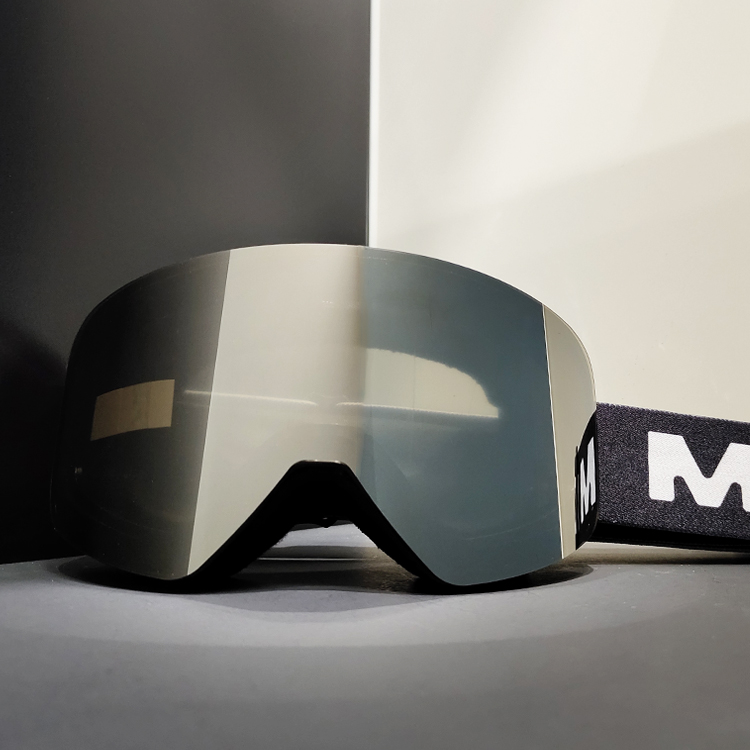
Framework: how the plan hangs together
Right, listen up — this is a straight-up framework for taking a decent pair of specs and turning ’em into a market winner. Start with a tight private-label plan and back it with custom mold tooling, then you’ve got something that’s not just bobbins but proper kit. For suppliers and brands, a reliable goggles manufacturer is the first stop on the road.
Step 1 — define the product brief
Keep the brief sharp. Decide lens type (polycarbonate for impact resistance), frame fit (OTG compatibility if you want ’em over glasses), and coatings (anti-fog and scratch-resistant). Use plain specs: impact rating to ANSI Z87.1, lens thickness, and strap fixation. That’s the scaffolding — get it right and the rest sits tidy.
Step 2 — mold tooling and materials
Custom mold tooling buys you consistency. Invest in a metal tooling run for frames and a separate insert for lens geometry. Injection molding dialled to the right shrinkage rate stops warped frames. Keep materials pragmatic: polycarbonate for lenses; TPU or nylon blends for frames. Tool maintenance matters — worn cavities give variance. Field-proven designs that meet ANSI Z87.1 live longer under stress in training setups around bases like Fort Bragg, so don’t skimp on tolerances.
Step 3 — private-label packaging that does the heavy lifting
Packaging isn’t just a box — it’s storytelling. Use structured trays to protect optics, include a microfibre pouch with anti-fog instructions, and brand the inside lid so the customer feels they’ve bought value. Flip the usual mindset: packaging should reduce returns and present care instructions plainly. Simple graphics beat overblown copy every time.
Common mistakes and what to do instead
Too many brands rush tooling or choose the cheapest coatings. That shows up as fogging or scratched lenses after a few outings. Avoid these traps:
– Over-customising minor cosmetic features before nailing frame ergonomics. Get fit right first.
– Using thin-gauge lenses to cut cost — fails impact tests.
– Ignoring packaging protection; flimsy boxes mean more DOA returns.
Swap those moves for staged rollouts: prototype, small production, field trials, then full tooling. Keeps costs sane and customer trust intact — plus you’ll spot assembly glitches early.
Supply chain and QC checks that save grief
Lock in suppliers for lenses and straps with documented QC, and demand batch-level traceability. Use sample lots from your tooling run and inspect for flash, sink marks, and lens concentricity. A quick bench test: repeated flex and impact checks, then a fog chamber run. It’s basic, but it weeds out dud batches.
Alternatives and trade-offs — small runs vs full tooling
Low-volume brands can start with soft tooling or urethane castings to test market response. That saves coin but trades off repeatability. When demand’s steady, switch to steel tooling to cut per-piece cost and tighten tolerances. Expect tooling amortisation over volume — work the math up front.
Real-world anchor and credibility
Proof matters. Meeting ANSI Z87.1 is a practical baseline; procurement teams and end users expect it. Field reports from military training and law-enforcement trials consistently flag impact performance and fog control as the two make-or-break features for tactical optics. That’s industry reality — not pie in the sky.
Advisory — three golden metrics to choose by
Measure these and you’ll pick winners every time. First: impact retention — confirm lens/frame meet ANSI Z87.1 impact specs. Second: fog performance — time-to-fog in a controlled chamber, scored across three cycles. Third: dimensional variance — parts per million out of tolerance from tooling spec; low variance means fewer fit issues. Manufacturers who nail these can then layer on brand cues and packaging without breaking the kit. Companies like YIJIA Optical show how design, tooling, and packaging line up to deliver consistent tactical goggles that survive the sort of rough-and-tumble use the field demands — and that’s the point, innit.
Final thought — keep it practical, keep it tested — and your brand won’t be all talk; it’ll be proper. –